Osmond Resources — homeASX: OSM · Orión Project

Minerals Hub / Mining & Production / Exploration

8 articles

Mining & Production · Section 01 of 08

Exploration
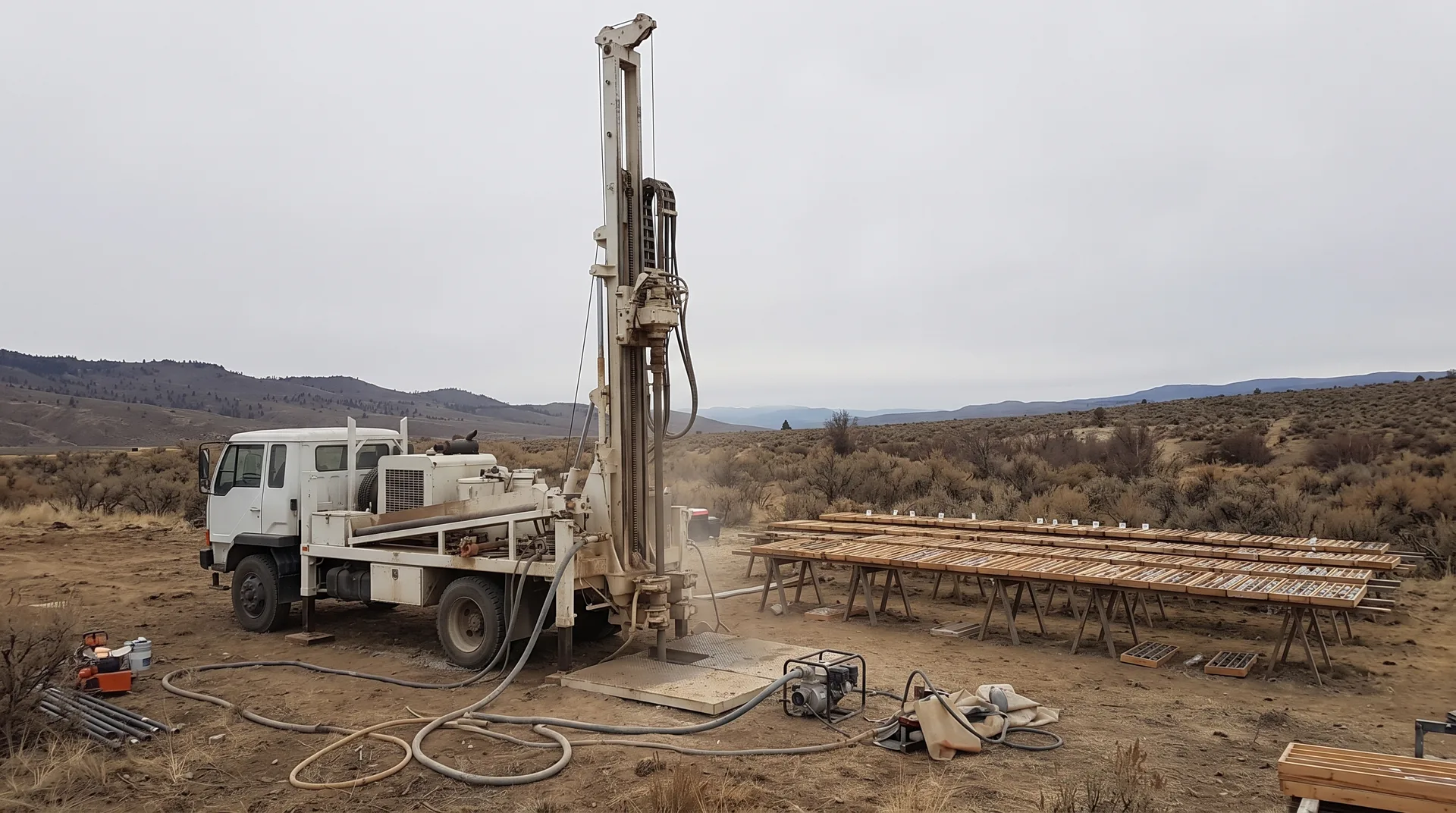
A drill rig with its mast raised on cleared open ground, a rack of core trays laid out on trestles in the middle distance behind it.
Illustrative artwork: a drill rig and core racks of the kind used in mineral exploration. Not a facility, equipment or material connected to this project. · Illustration · Osmond Hub

Exploration here is the work of finding and defining a deposit — sampling, drilling, assaying, and the reporting standards that govern what an explorer may claim. (For the technologies that make that work possible, see Exploration Technology under Innovation & Technology.)

Defining a mineral-sands deposit asks a question that most exploration does not. It is not enough to establish how much heavy mineral is present; what matters commercially is which minerals make up that fraction, in what proportions, and whether the valuable ones can be separated from the rest. A sand containing a given quantity of heavy mineral may be an ore or may be nothing at all depending on how much of it is rutile, ilmenite and zircon rather than iron oxides and altered material with no market. Sampling and laboratory work therefore run in parallel: a heavy-mineral determination on one hand, an assemblage determination on the other, with grain size, slimes content and oversize all recorded because each will later decide what a plant can do.

The sequence is a discipline in its own right: sample collection and the drilling styles suited to unconsolidated and cemented ground, quality control and the duplicate and standard sampling that makes a result defensible, and the reporting codes themselves — how an Exploration Result differs from a Mineral Resource, who signs for it, and why a competent person's judgement is the pivot on which any disclosure turns. The vocabulary of announcements is precise rather than decorative, and an announcement read against it says exactly what it does and does not establish.

The instruments themselves belong to Exploration Technology, which this page is written against. Metallurgy takes up the testwork that follows sampling, Mining Methods what a defined deposit could support, Exploration Companies the firms doing this work, and Zirconium/Zircon one of the minerals whose proportion in the assemblage decides so much.
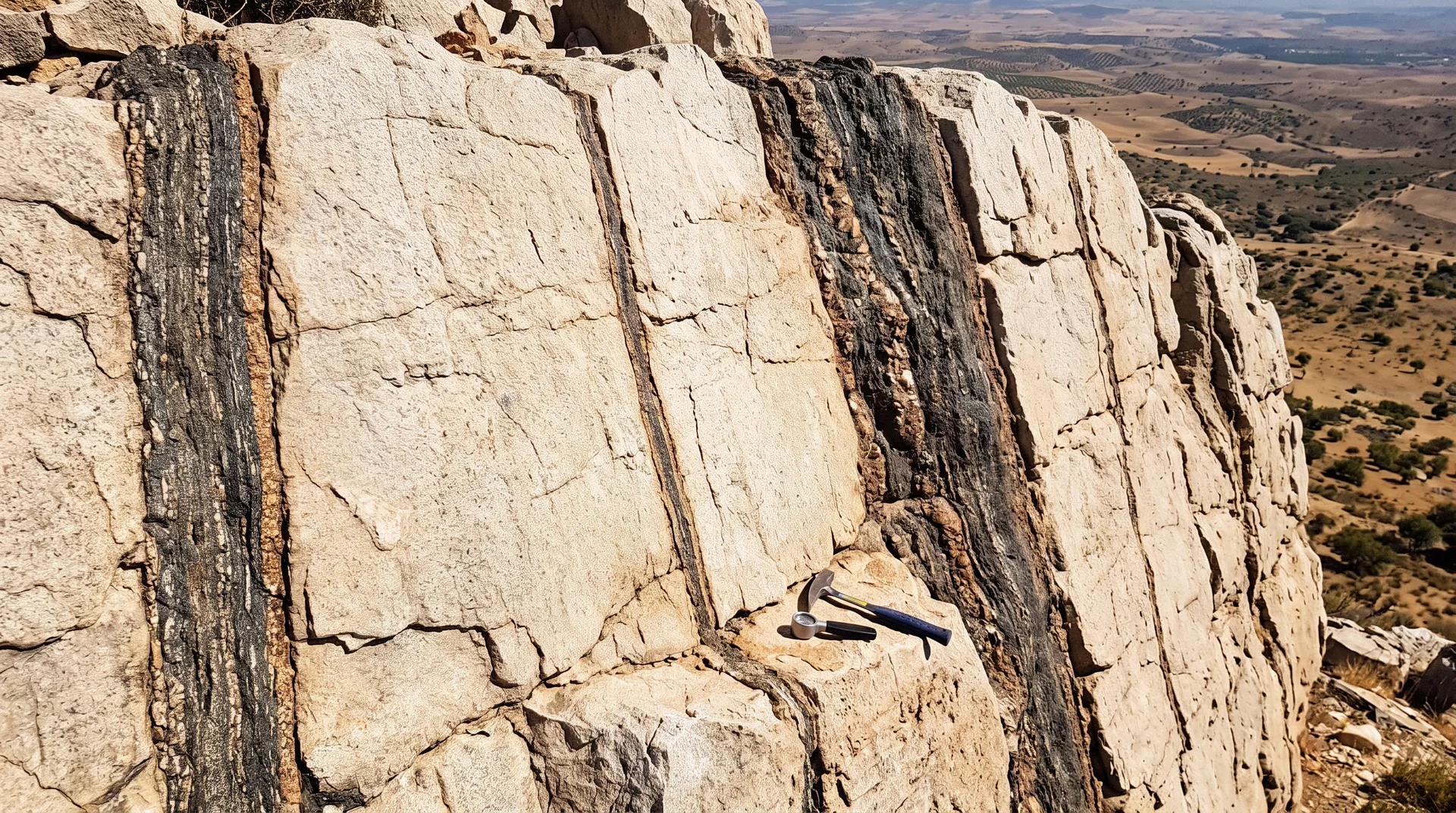
A wide upland of dry grass and pale limestone, ridges receding into haze under a bright overcast sky.RutileOrión Project OverviewA lithified heavy-mineral placer in southern Spain — what has been measured, who holds it, and what the exploration programme has not yet produced.7 min readA pale rock face crossed by dark vertical bands, with a geological hammer and hand lens resting on a ledge below them.RutileReading the Orión seams: what the heavy-mineral layers tell usOrión's heavy minerals are sorted into dense layers within the quartzite — and reading those layers is where its zircon story begins.6 min readA short cylindrical drill bit on a dark surface, its cutting crown studded with coarse metallic grit and its steel body heat-tinted.RutileFrom outcrop to 187.8 metres: what the maiden drilling foundOsmond's first holes turned a mineralised outcrop into a downhole discovery — rutile-rich, with a step-out nearly ten kilometres away that Osmond interprets to correlate.5 min readA mid-century portable survey instrument with a leather carry strap, coiled fabric cable and cylindrical probe, resting on a concrete floor.RutileExplored for uranium. Worked for lead. Not, on the record, for titanium.A historic lead mine sits inside the permit and mid-century prospectors once explored here for thorium and uranium — but everyone walked past the sands that matter now.3 min readA row of small capped glass vials holding different sands and granules, with two standing empty among them.GarnetPresent, but not yet quantified: garnet and titanite in the sandsTwo minerals sit inside Osmond's definition of the Orión heavy-mineral assemblage — yet neither has ever been given a grade. Here's why that gap is the honest answer.5 min readA wide beach at low tide, dark streaks of heavy sand fanning in braided lines across pale flats toward a grey sea.RutileWhat a lithified placer actually isOrión is an ancient beach turned to stone — which is a specific kind of deposit with a specific geological meaning worth unpacking.4 min readA close view of densely packed pale sand grains, with a single amber grain and two dark ones scattered among them.XenotimeThe accessory suite: xenotime, allanite and the trace rare earthsBeyond monazite, Orión's assemblage names a handful of minor rare-earth minerals — quantified only in bulk samples, and honest about how little that says.4 min readRacked steel drill rods stacked in rows and seen end-on, their threaded collars catching light against dark bores.ZirconZircon at Orión: the exploration results to date, and the EU supply picture they sit inOsmond's zircon numbers from Jaén are exploration results, not a resource — here is what has actually been sampled, what preliminary metallurgy has achieved, and the European market context they sit alongside.12 min read
OnwardExploration TechnologyMetallurgyMining MethodsExploration CompaniesZirconium/Zircon