Minerals Hub / Mining & Production / Present, but not yet quantified: garnet and titanite in the sands
Mining & Production · Garnet · 5 min read
Present, but not yet quantified: garnet and titanite in the sands
Two minerals sit inside Osmond's definition of the Orión heavy-mineral assemblage — yet neither has ever been given a grade. Here's why that gap is the honest answer.
Reviewed by Peter Uppal
The short version
Garnet and titanite are both named in Osmond's own definition of the Orión "Heavy Minerals" assemblage, but neither has been individually assayed or assigned a grade in any of the company's three 2026 ASX releases. At this stage they are present in the assemblage, not yet quantified. Reporting them that way — named, but without a number — is exactly the distinction an exploration-stage disclosure is supposed to make.
What the assemblage actually lists
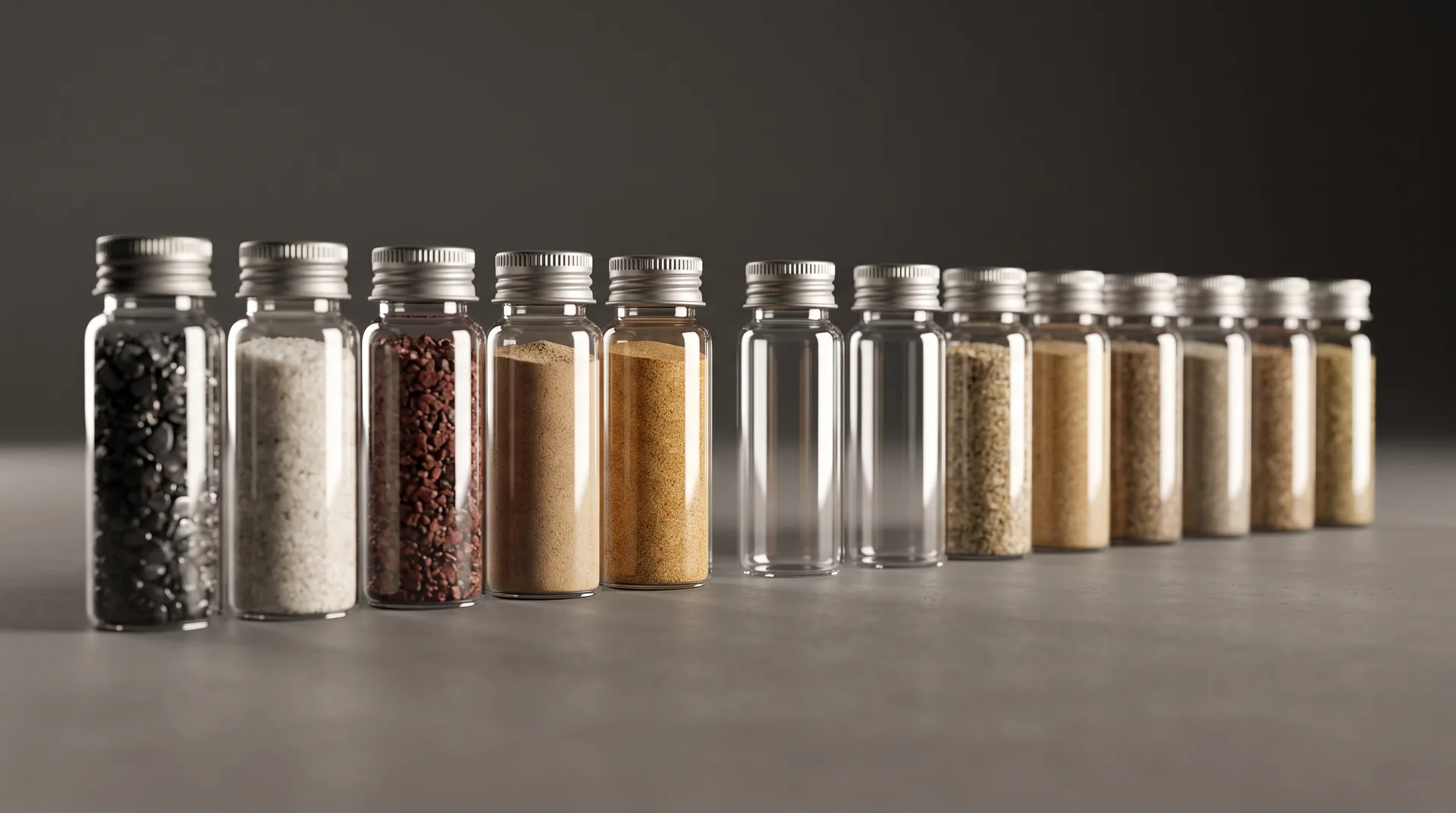
When Osmond reports "Heavy Minerals" at Orión, that phrase has a specific, published meaning. In the same footnote carried across all three 2026 releases, the company defines its heavy-mineral suite as allanite, monazite, xenotime, garnet, titanite, zircon, ilmenite and rutile. Garnet and titanite are on that list by name.
That matters, because "Heavy Minerals" is not an abstraction at Orión — it is a headline number. Mineral percentages here are mass-balance estimates — calculated from oxide assays rather than directly measured — and that basis applies to every mineral percentage in this article. The heavy-mineral concentration reaches up to roughly 40% in a single downhole estimate (AV-01bis), with bulk channel samples measured between 29.4% and 32.8%, and the July 2026 release headlining "up to 30%." Garnet and titanite are counted somewhere inside those totals. What the releases never do is break out how much of that heavy-mineral fraction is garnet, and how much is titanite.
Named, but not numbered
Look down the assay tables and the difference becomes obvious. Rutile, ilmenite, zircon and monazite — the economic minerals Osmond is actually chasing — each get their own row and their own percentage in bulk samples and drill intercepts. Even the trace accessory minerals are pinned to numbers: allanite is reported at 0.02–0.24% and xenotime at 0.03–0.04% in the bulk channel samples (both mass-balance; treated as negligible in the drill holes).
Garnet and titanite get neither. There is no bulk-sample percentage, no drill-hole grade, no concentrate figure — nothing, in any of the three releases. They appear only once each, in the definition of what "Heavy Minerals" contains.
They are on the list of what's in the sand. They are not yet on the list of what's been measured. The gap between those two lists is the whole story.
This is not an oversight to paper over with an estimate. It's a normal feature of early-stage mineralogy. A company assays first for the minerals that carry the project's value case — at Orión, the titanium minerals (rutile and ilmenite), zircon for zirconium and hafnium, and monazite for rare earths. Minerals that are present but not central to the near-term product get identified but not yet individually quantified. Garnet and titanite are in that second category today.
What garnet and titanite are, in general
A little general mineralogy helps here — and to be clear, none of the following comes from Osmond's releases; it is standard reference background about the minerals themselves.
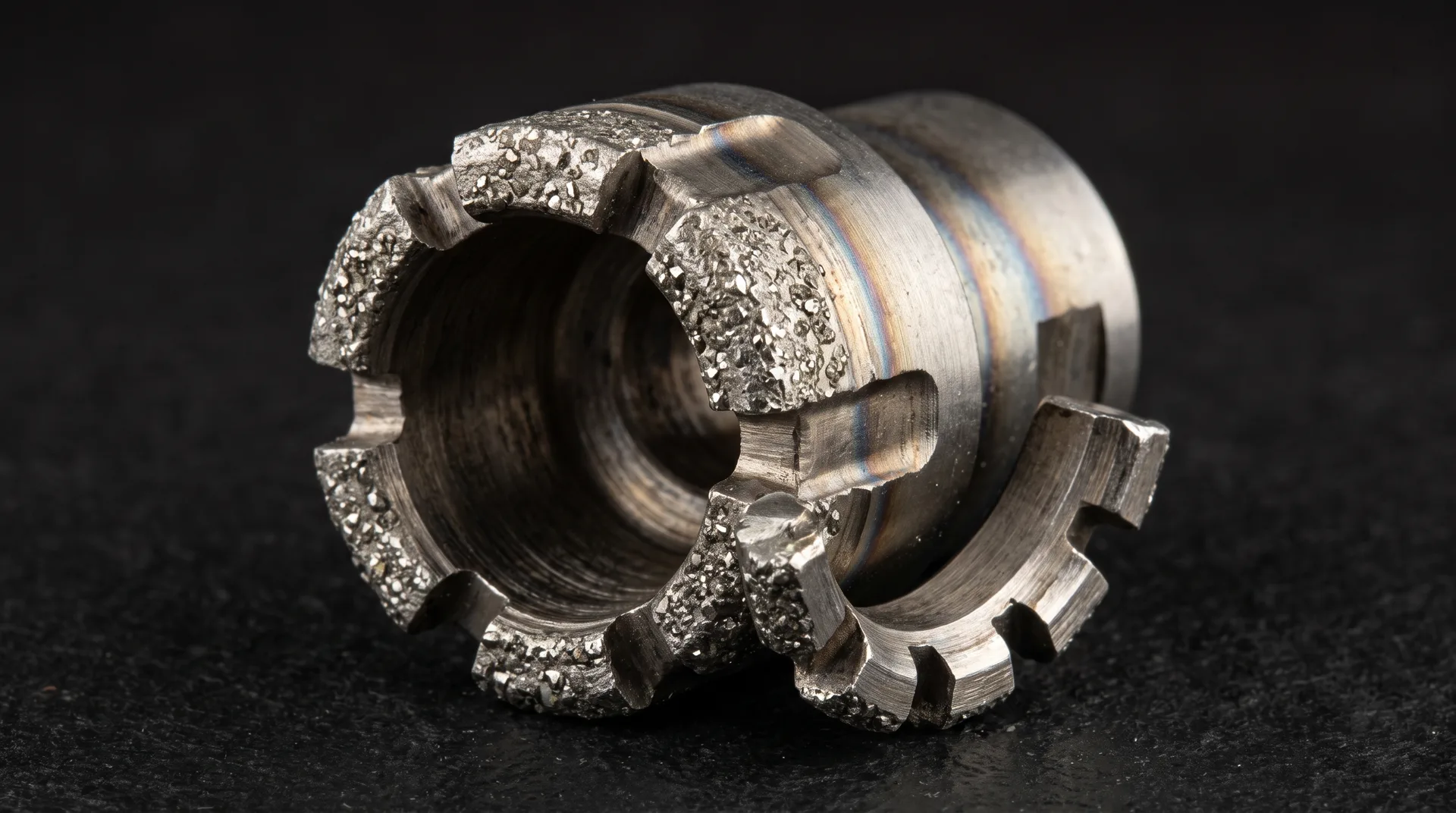
Garnet is not a single mineral but a family of silicates. Away from any one deposit, it's best known industrially as a hard, angular abrasive — the grit used in waterjet cutting, sandblasting and water-filtration media — precisely because it is dense and durable, which is also why it turns up in heavy-mineral sands.
Titanite, also called sphene, is a calcium-titanium silicate. As a titanium-bearing mineral it is chemically distinct from the rutile and ilmenite that drive Orión's titanium story, and it is generally an accessory phase rather than a primary feedstock. Its presence in the assemblage is consistent with a titanium-rich mineral system — but at Orión, again, it carries no reported grade, so nothing about its abundance or contribution can be stated from the releases.
The key point is that knowing what a mineral is tells you nothing about how much of it a specific deposit holds. That second question — the grade — is answered only by assays, and for these two minerals the assays haven't reported one.
What would change the picture
None of this is permanent. The reason garnet and titanite have no number yet is simply that the testwork to date hasn't produced one, not that they're absent. As Orión moves toward its maiden Mineral Resource Estimate and the more detailed mineralogical and metallurgical characterisation that goes with it, individual phases that are currently folded into the "Heavy Minerals" total may be broken out — or may remain grouped, if they aren't material to the product mix.
Until a release actually reports a figure, the responsible thing to write is the thing the data supports: garnet and titanite are present in the Orión assemblage, not yet quantified. If you see a garnet grade or a titanite grade attached to Orión anywhere, it did not come from Osmond's disclosures — and that's worth noticing.
Orión data card — Garnet & Titanite
| Status | Present in the assemblage, not yet quantified |
| Grade | Not stated — no individual assay reported in any 2026 release |
| Role at Orión | Named within Osmond's "Heavy Minerals" definition (with rutile, ilmenite, zircon, monazite, allanite, xenotime) |
| Heavy-Minerals context | Total HM up to ~40% (AV-01bis estimate); bulk samples 29.4–32.8%; headline "up to 30%" (all mass-balance) |
| Sources | osm_grade (19 Feb 2026); osm_zircon (3 Mar 2026); osm_drivers (3 Jul 2026) |
→ See the full Garnet and Titanite dossiers in the mineral hub.
Exploration results and mineralogical estimates only. Orión has no JORC-compliant Mineral Resource or Reserve; maiden MRE and Scoping Study pending, targeted Q3 CY26.
Related reading
- Reading the Orión seams: what the heavy-mineral layers tell us (The Deposit · Zircon)
- The accessory suite: xenotime, allanite and the trace rare earths (Science · Xenotime, Allanite)
- What a lithified placer actually is (Science)
Sources
- PRIMARYosm_grade — ASX:OSM release, 19 Feb 2026, 'High-Grade Assay Results Confirm Potential Scale at Orión' (Table 3 and Heavy-Minerals definition footnote, p.8).
- PRIMARYosm_zircon — ASX:OSM release, 3 Mar 2026, 'Preliminary Mineral Processing Testwork Delivers Strong Zircon and Monazite Results' (Table, p.7).
- PRIMARYosm_drivers — ASX:OSM release, 3 Jul 2026, 'Positive Initiatives to Drive Shareholder Value' (Table, p.7).
- COMMON-KNOWLEDGEGeneral mineralogy of garnet and titanite is described from standard reference knowledge and is explicitly not an Osmond figure.Non-public document · no public URL