 ASX: OSM · Orión Project
Minerals Hub / Mining & Production / Ore Processing
Mining & Production · Section 03 of 08
Ore Processing
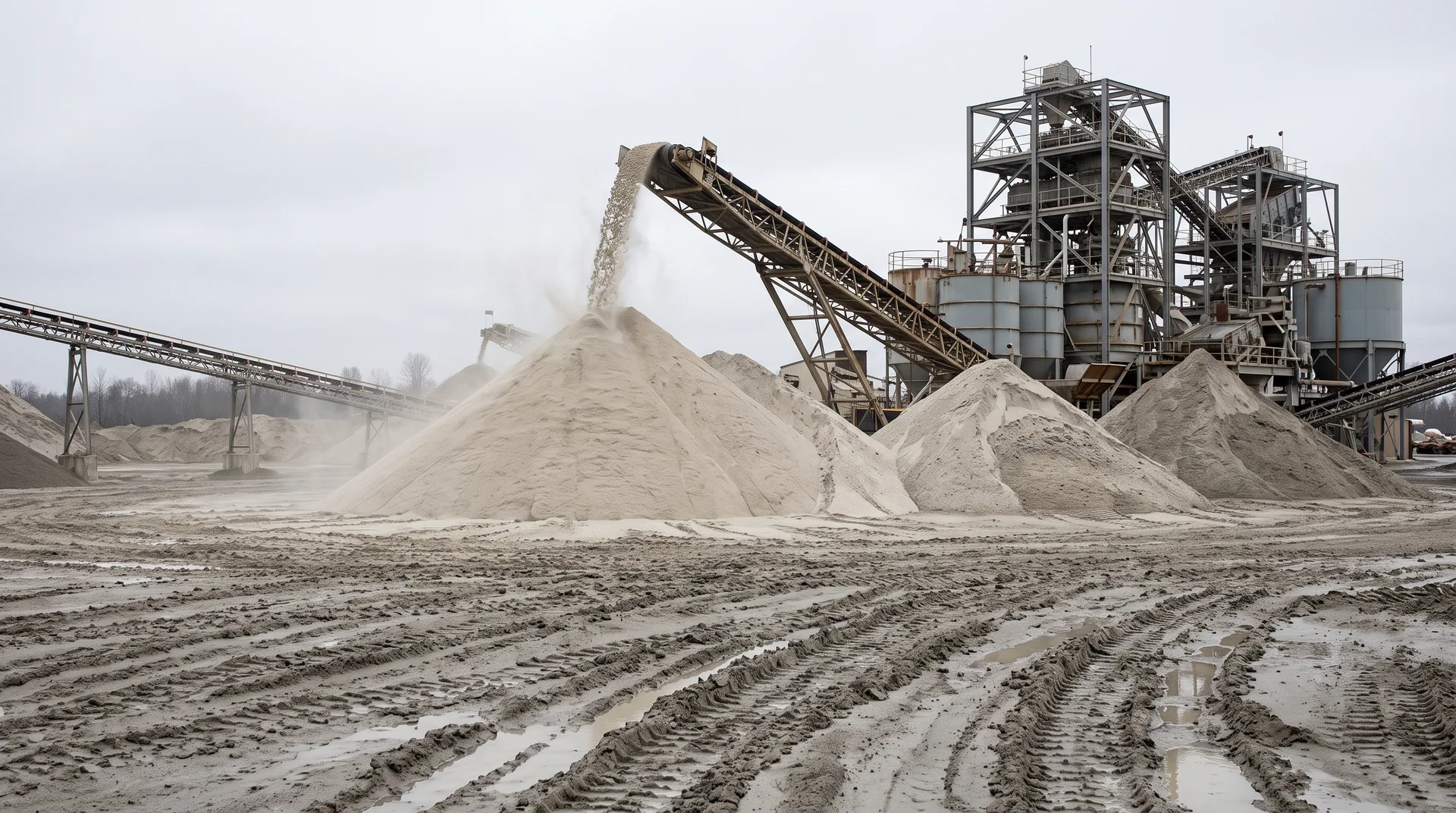
Nothing is dissolved, smelted or chemically changed at this stage. The minerals arrive as they formed and leave as they formed; all that happens in between is sorting, exploiting the fact that the valuable grains are denser, or more magnetic, or better at conducting electricity than the quartz sand surrounding them. That physical character is what makes heavy-mineral processing distinctive, and this section follows one ore through it.
The sequence has two halves. In the first, run-of-mine material is screened and deslimed to remove clay and oversize, then passed through gravity separation — spirals arranged in banks — which exploits density to reject the bulk of the quartz and produce a heavy-mineral concentrate. In the second, that concentrate is dried and taken through magnetic and electrostatic separation, which sorts it into individual mineral products: ilmenite responds to a magnetic field where rutile and zircon do not, rutile conducts where zircon does not, and monazite behaves differently again. Attrition scrubbing removes surface coatings that would otherwise hold a product below specification. Every one of these stages is a place where recovery is lost or a contaminant carries through.
The circuit is an operation rather than a diagram: recovery is governed differently at each stage, fine and slimy material is where value most often escapes, water is recirculated through the wet plant rather than consumed by it, tailings from a heavy-mineral operation consist largely of the quartz that was rejected, and control becomes a live problem when feed characteristics change as mining advances across a deposit.
Processing Technology sets out the equipment classes involved as the industry uses them, and Metallurgy the testwork that establishes what a given ore will do. Refining continues past the separated minerals, Water covers the resource this circuit depends on, and Titanium/Rutile the products it is built to make.