Minerals Hub / Mining & Production / What a lithified placer actually is
Mining & Production · Rutile · 4 min read
What a lithified placer actually is
Orión is an ancient beach turned to stone — which is a specific kind of deposit with a specific geological meaning worth unpacking.
Reviewed by Peter Uppal
The short version
A placer is a natural concentration of dense, durable minerals sorted by moving water — the process that builds mineral-rich beach and river sands. A lithified placer is one that was later buried and cemented into solid rock. Osmond describes Orión as a lithified tidal-sand placer, hosted in weakly laminated Pochico Formation quartzite, with "very low levels of deleterious elements" (osm_grade) — deleterious elements being, in general terms, the contaminants that can complicate mineral processing. Everything else about the deposit follows from that starting description.
First, the placer
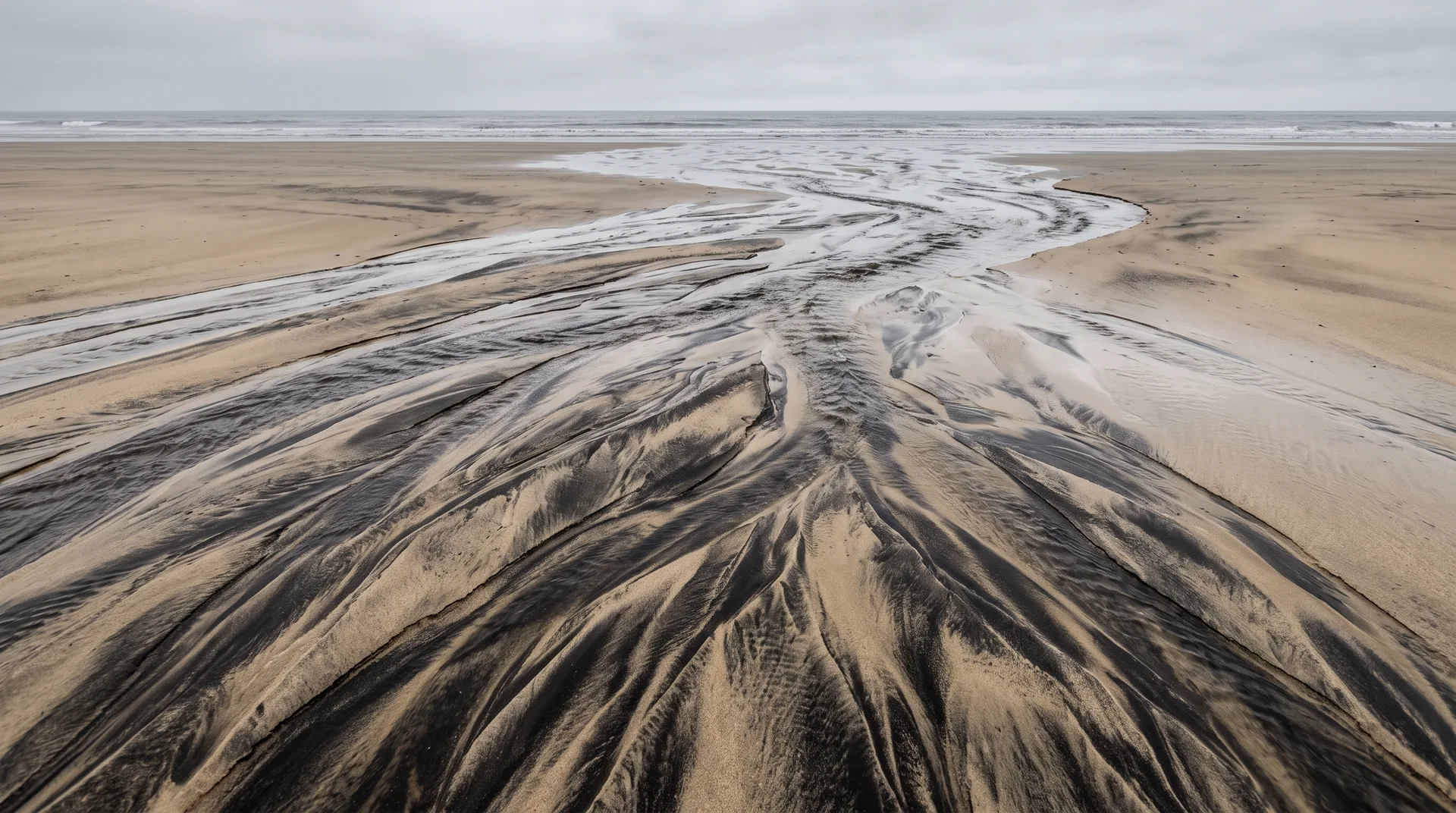
The word "placer" (from the Spanish for a sandbank) describes a deposit built not by chemistry but by motion. As general geology — not an Osmond figure — when water carries a mix of sand grains, the flow sorts them by density: because moving water drops heavy particles far sooner than light ones, the dense, durable minerals accumulate while lighter quartz is carried away (Britannica). Do that over and over, on a beach or in a tidal channel, and the heavy minerals pile up into concentrated layers.
The minerals that survive this sorting are the ones that are both dense and resistant to weathering — which is exactly why placer deposits are classic hosts for rutile, ilmenite and zircon. They are heavy enough to settle out and tough enough to endure the tumbling. A placer, in other words, is nature running a gravity concentrator for millions of years.
Then, the "lithified" part
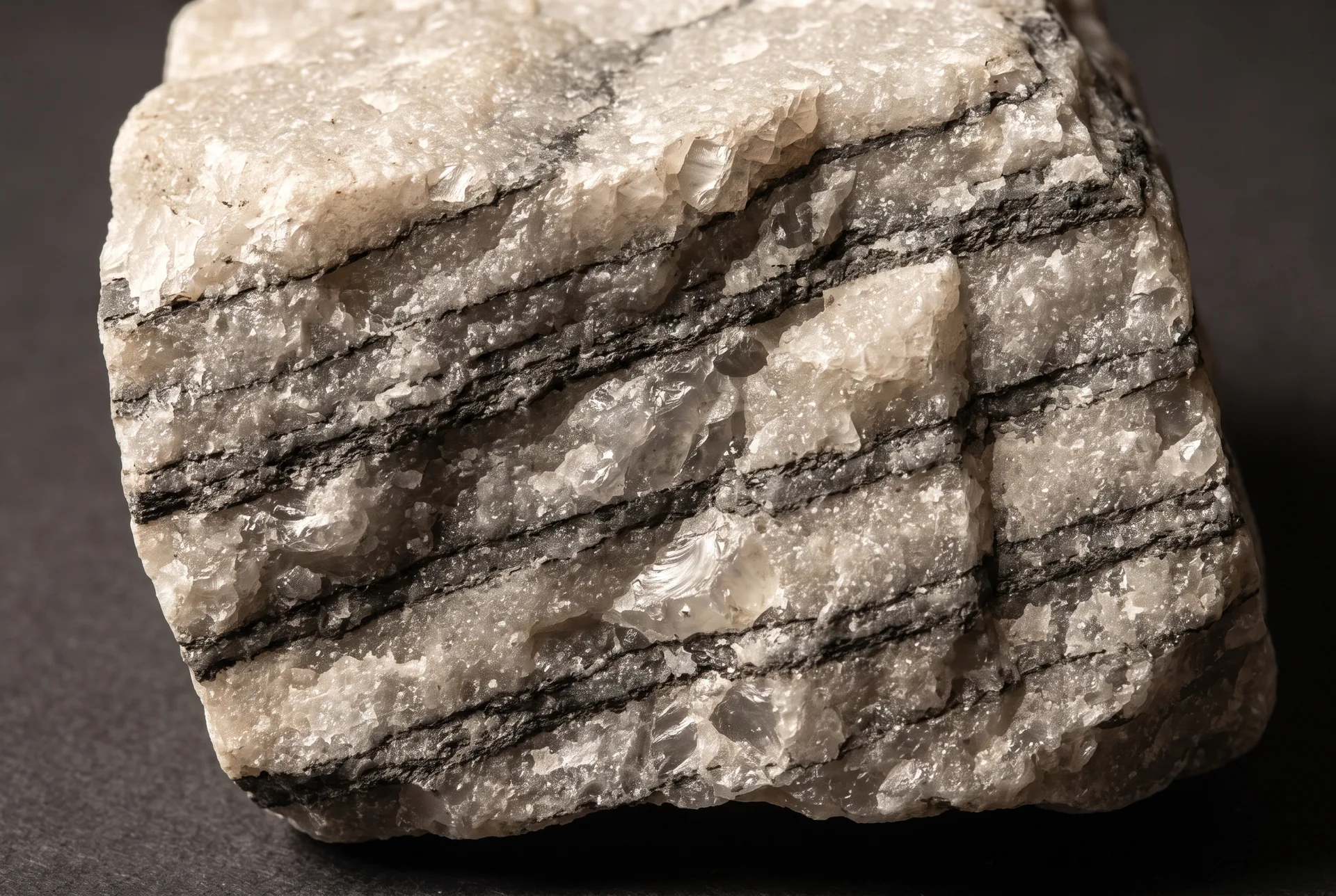
Most familiar placers are loose: the black-sand streaks on a modern beach, the gravels a gold panner works. Orión is not loose. It is a lithified placer — a fossil, or "paleo," placer.
As general background, a paleoplacer is an ancient placer whose host sediment has since been buried, compacted and cemented, so that the once-loose sand is now consolidated rock. The heavy-mineral concentration formed the same way an ordinary beach placer does; it just happened long ago, and the sand around it has since turned to stone. That is the sense in which Osmond describes Orión: a lithified tidal-sand placer, its host now a weakly laminated quartzite of the Pochico Formation (osm_grade). The "tidal-sand" points to the environment that sorted it; the "quartzite" tells you what the buried sand became.
A beach placer is nature's concentrator caught mid-process. A lithified placer is the same machine, switched off millions of years ago and set in stone.
What the description does — and doesn't — tell us
A few things follow directly from that sourced description, and it is worth being disciplined about staying within it.
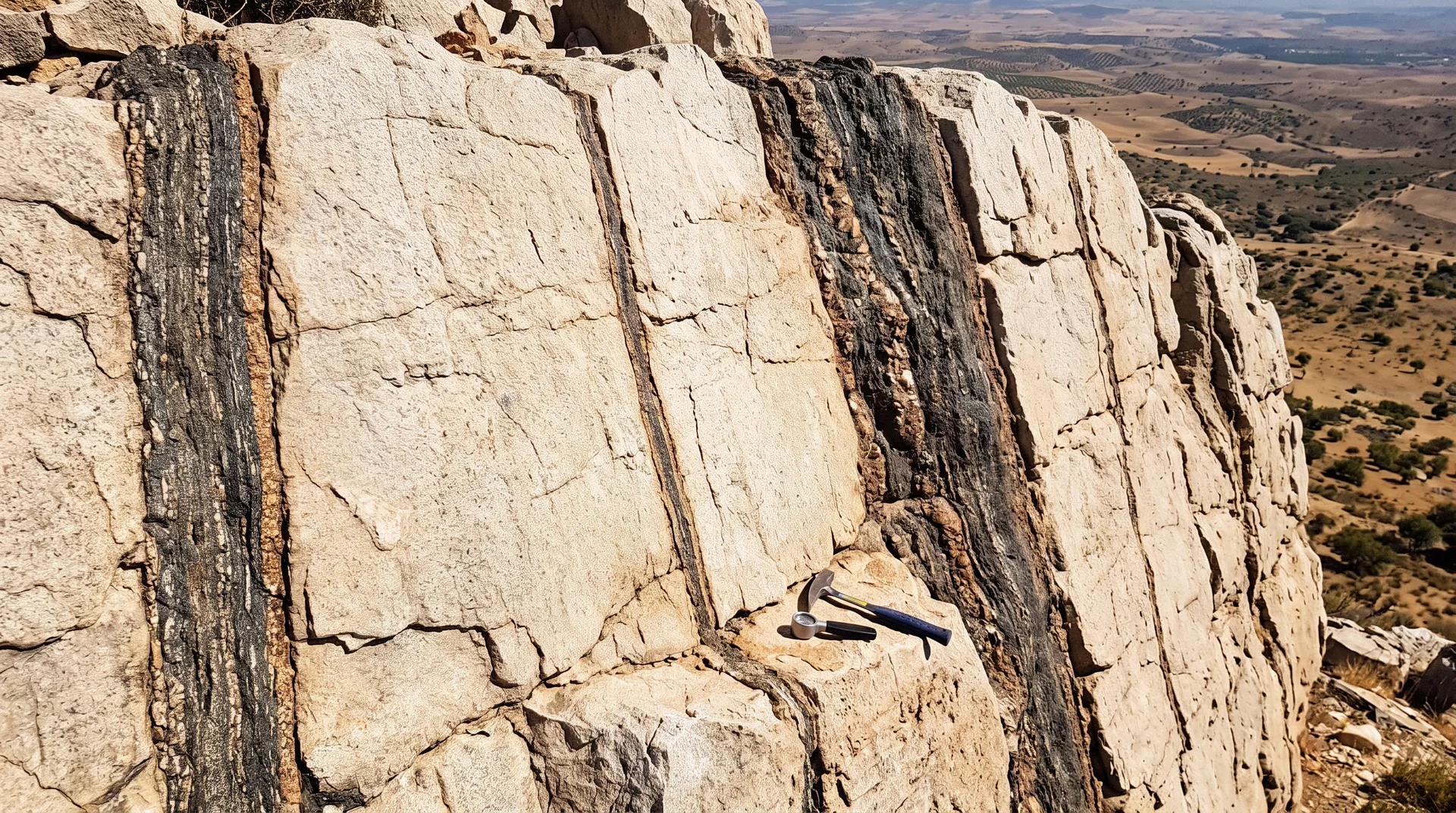
The ASX release reports heavy-mineral layers 0.3 to 4.0 metres thick (osm_grade). Layered geometry of that kind is characteristic of a placer origin, where sorting lays mineralisation down in sheets rather than veins. Osmond's website — not the release — goes further, describing "two primary seams that appear to be pervasive" across the permit, over some 12 kilometres of outcrop; that lateral-continuity claim is the website's mapping interpretation, quoted here with its hedge and not treated as a released result. Osmond also notes the deposit carries "very low levels of deleterious elements" (osm_grade) — the phrase itself, and the claim, are Osmond's.
What the description does not license is inference beyond it. It is tempting, with a placer, to reason outward to all sorts of "it must therefore also…" conclusions about the sands. This article resists that: where Osmond hasn't stated a property of Orión's rock, it isn't asserted here, however geologically plausible it might feel. (Osmond's release also frames the deposit in more technical terms, as a "siliciclastic geological system" — both descriptions are the company's own; this hub keeps to "lithified tidal-sand placer" as its consistent term.)
Why the distinction matters
The lithified-versus-loose distinction is not pedantry. A modern sand placer can be dug and the minerals separated from free-flowing sand; a lithified placer is rock, and Osmond's own description — quartzite — says as much. That single fact sets the terms for how such a deposit would be understood, sampled and, eventually, tested. Everything the rest of this hub says about grades, seams and testwork sits on top of this one geological identity: an old tidal beach, its heavy minerals sorted by water, now held in stone.
Deposit card — Orión
| Deposit type | Lithified tidal-sand placer — also "siliciclastic geological system" (osm_grade) |
| Host rock | Weakly laminated Pochico Formation quartzite (osm_grade) |
| Layers (releases) | HM layers 0.3–4.0 m thick (osm_grade) |
| Seams (website, not releases) | Two primary seams that "appear to be pervasive"; ~12 km outcrop |
| Economic minerals | Rutile, ilmenite, zircon, monazite (osm_grade) |
| Deleterious elements | "Very low levels," per Osmond (osm_grade) |
→ See the Orión project overview in the hub.
Exploration results and mineralogical estimates only. Orión has no JORC-compliant Mineral Resource or Reserve; maiden MRE and Scoping Study pending, targeted Q3 CY26.
Sources
- Osmond figure: [osm_grade — 19 Feb 2026] (ASX:OSM release)
- Encyclopaedia Britannica — Placer deposit
Related reading
- Reading the Orión seams: what the heavy-mineral layers tell us (The Deposit · Zircon)
- Rutile vs ilmenite: why the split matters (Science · Rutile, Ilmenite)
- Explored for uranium. Worked for lead. Not, on the record, for titanium. (The Deposit)
Sources
- PRIMARYosm_grade — ASX:OSM release, 19 Feb 2026 [REL] (Orión described as a lithified tidal-sand placer — also, in the same release, a 'siliciclastic geological system' — in weakly laminated Pochico Formation quartzite; economic minerals rutile, ilmenite, zircon, monazite; 'very low levels of deleterious elements'; heavy-mineral layers 0.3–4.0 m thick).
- SECONDARYosmondresources.com.au, Orión project page [WEB] — 'two primary seams that appear to be pervasive' and mineralised outcrops over ~12 km; website only, NOT in the assay release. Attributed to the website in the text and not linked; not used as a release fact.Non-public document · no public URL
- SECONDARYEncyclopaedia Britannica, 'Placer deposit' — formation of placers by gravity sorting of dense, weathering-resistant minerals: https://www.britannica.com/science/placer-deposit
- COMMON-KNOWLEDGEGeneral geology of paleoplacers (fossil placers) — ancient placer concentrations whose host sediment has been buried and cemented into consolidated rock; described from standard reference knowledge.Non-public document · no public URL