 ASX: OSM · Orión Project
Minerals Hub / Mining & Production / Mine Automation
Mining & Production · Section 07 of 08
Mine Automation
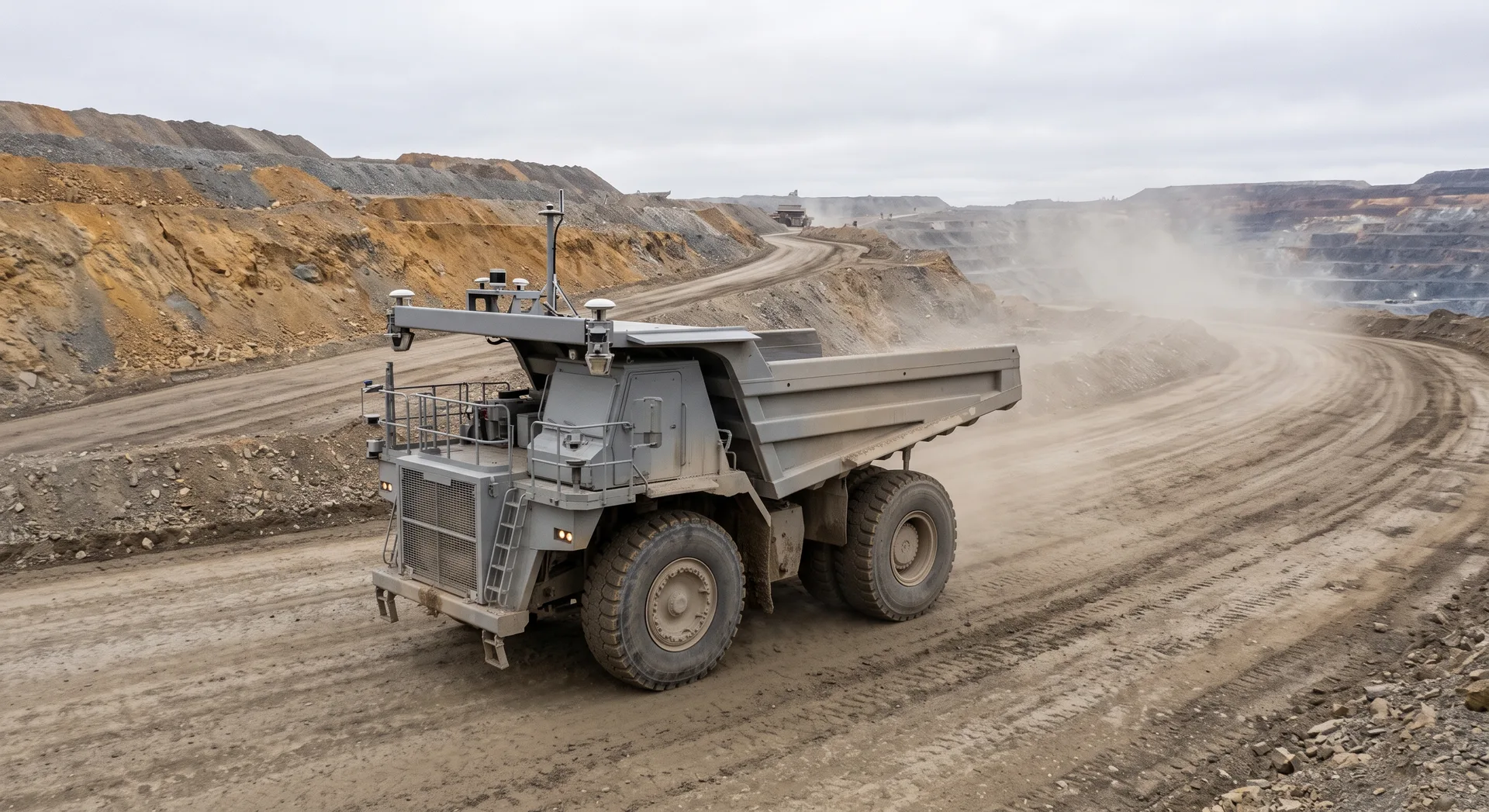
Mine automation here is the practice on site — autonomous haulage, automated drilling, remote operations centres and what they change about how a mine is run day to day. (For the wider technology shift, see Automation under Innovation & Technology.)
Kept to the site, the subject is concrete and often unglamorous. An autonomous haulage fleet changes traffic management, road design and the position of every person who used to be in a cab. Automated drilling changes shift handover, because a rig that does not stop between shifts alters when maintenance can be done at all. A remote operations centre relocates decisions to a building that may be in another region entirely, which changes who is available at three in the morning and how quickly someone can physically reach a fault. Maintenance becomes the discipline that governs availability, and the skills a site needs shift from operating machines to keeping systems running.
The fit for heavy-mineral operations is a question of its own. Mineral-sands mining units and concentrators are often smaller, more mobile and reconfigured more frequently than the large fixed pits where autonomous fleets first proved themselves, which changes the payback on automating them and sometimes points toward automating the plant rather than the mining. Partial deployment, where automated and manned equipment share ground, brings a further set of safety systems with it. Connectivity across a working area that moves is a further constraint, and one that decides more deployments than the equipment specification does.
Automation under Innovation & Technology is the counterpart page, taking the same shift at industry scale rather than site scale. For the machines in isolation there is Robotics under Innovation & Technology; Mining Methods describes the operations being automated, Digital Mining the data layer any of this rests on, and Technology Providers the firms supplying it.