Minerals Hub / Mining & Production / Automating a mine that keeps moving
Mining & Production · · 6 min read
Automating a mine that keeps moving
Autonomous mining equipment runs on a surveyed description of its working area — and a heavy-mineral operation is built to relocate.
Pending review
The short version
An autonomous haulage system runs on a described environment as much as on its own sensors: network coverage across the working area, satellite positioning, and routes and boundaries that a survey department maintains — at the operation described by one consultancy, re-issued to the trucks daily. Heavy-mineral operations are built to relocate, with mining units and concentrators moved as the face advances, and one Australian producer counts those moves inside its plant availability figures. The interesting question for automating this kind of mine is therefore not whether the machines work, but how often the description they depend on has to be rebuilt.
What an autonomous truck is actually driving on
The machinery is the visible part of an autonomous fleet and the smaller part of the problem. Underneath it sits a maintained model of the site.
A consultancy summary of open-cut implementations puts the infrastructure plainly: Wi-Fi or LTE coverage must be established throughout the trucks' operating environment, and the trucks carry positioning and detection hardware on top of that. A peer-reviewed review of mine planning for these systems states that, from a mine planning perspective, communication architecture must be treated as critical infrastructure, and concludes that reliable communication is, in the authors' words, not merely supportive but structural to the system's safety and operational continuity.
The part that gets less attention is the survey layer. The same consultancy account states that survey must be high quality and frequently updated, and separately that routes and boundaries are usually updated on a daily basis and then sent out to the trucks, because the layout of a mining operation changes. The review adds that autonomous trucks require precise and consistent road geometry, particularly on curves, and that autonomous operating zones need clear demarcation and controlled access points. None of that is a one-off installation. It is a standing obligation to keep a description of the ground true while the ground changes.
The ground that does not stay put
Heavy-mineral deposits are worked laterally rather than deepened in one place. The USGS deposit model notes that most heavy-mineral sands deposits range in coherence from unconsolidated to poorly consolidated, and are for that reason generally easy to excavate — a sentence about digging, but also about geometry, because ground that is easy to take is taken across a wide front.
What follows is an industry that moves its plant. An Australian producer's 2015 business briefing carries a heading "Flexible Mine Move Capability", citing the relocation of one Murray Basin plant 25 km to another mine location. A separate slide in the same briefing, carrying its own source line to an earlier site visit at a different operation, reports plant availability with the note that the figure includes maintenance and mining-unit-plant move outages. A plant move there is not an exception to normal operation. It is a line item inside it.
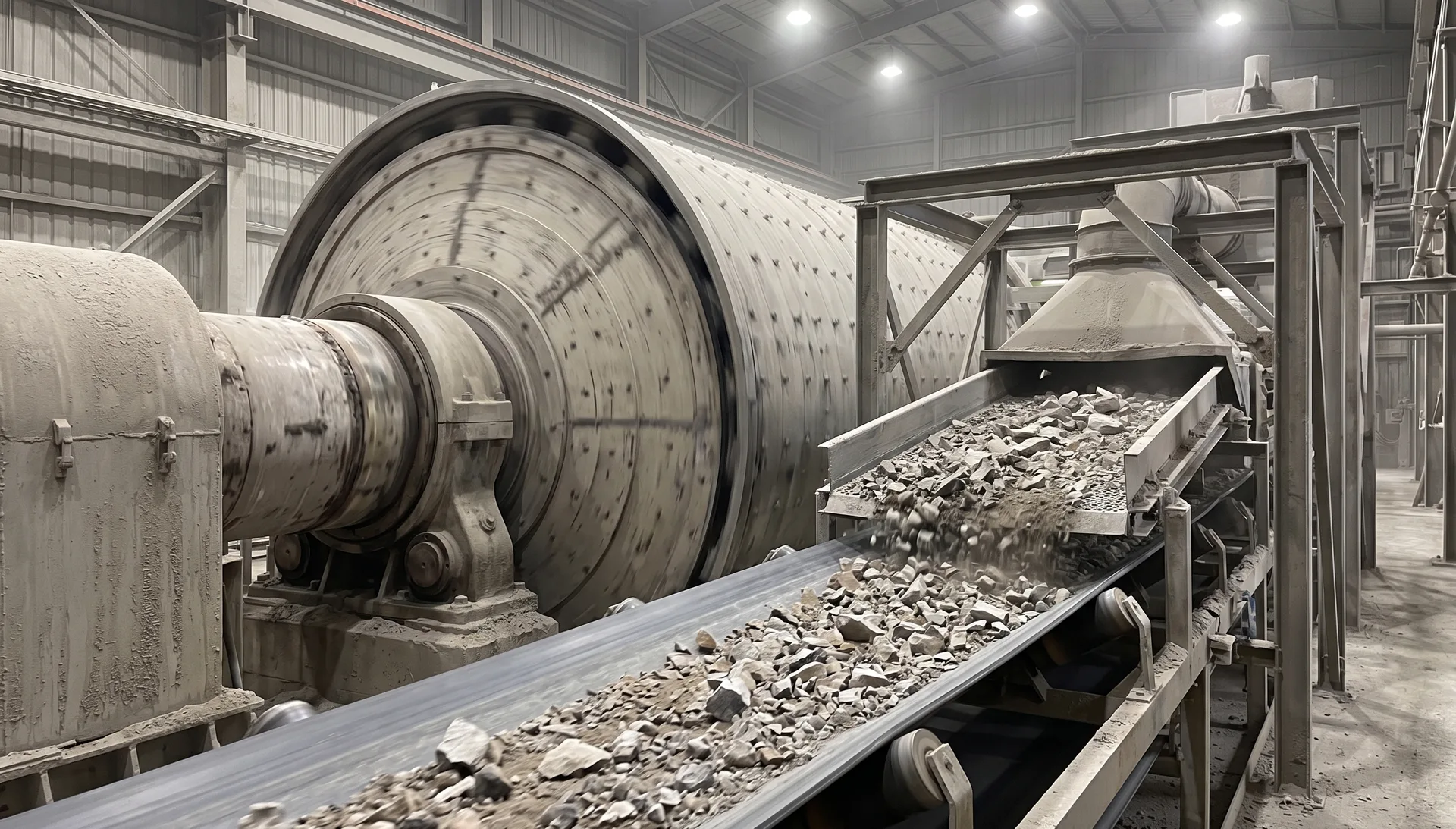
The mining equipment itself has been built around that mobility. Trade coverage of one deployment describes a mobile mining unit into which dozers push run-of-mine ore to a hopper loaded by hydraulic excavator, the material then crushed to a size suitable for pumping as slurry, with the manufacturer's claim, reported in the same article, that the unit offers complete remote control by tablet, eliminating the need for on-board personnel. That is already an automation of a kind — and it is a mobile one.
An autonomous fleet does not drive on ground. It drives on a description of ground, and somebody has to keep the description true.
Where the two pictures pull against each other
It would overstate the sources to say that autonomy is a poor fit for this kind of mining; none of them says so. What the consultancy account does say is that it is now more commonplace for new mines, and those with sufficient remaining mine life, to consider running an autonomous haulage system — a statement about where the case is being made, not about where it fails.
Our own reading, stated as ours and not as a sourced conclusion, is narrower and follows from the two halves above. A fixed pit answers the coverage, route-survey and zone-demarcation questions once and then maintains the answers. An operation that relocates its mining unit and its concentrator re-poses those questions each time it moves. That is a cost in setup rather than a technical obstacle, and it lands on the network and the survey office rather than on the equipment budget — which is not where a fleet purchase decision usually looks.
The mixed fleet is the standing case, not the transition
One further constraint holds regardless of how often the site moves. The consultancy account is blunt that, at the time of writing, there are no exclusive autonomous mining environments, and other equipment such as dig units, graders and light vehicles still operates around the autonomous trucks. The review notes that current systems may lack the informal cooperative behaviour human drivers use in mixed fleets.
A Western Australian regulator's incident report shows what that costs when the description and the ground disagree. Investigating a collision between an autonomous haul truck and a manned water cart, it records that the turnaround loop for the autonomous truck was released for use in the control system but the corresponding intersection was not delineated on the ground, and that the water cart driver was not fully aware of the truck's intended path. The control system and the physical site had drifted apart, and the drift was the hazard. A layout that changes often is a layout with more opportunities for that gap to open.
What this does and does not say about Orión
Nothing here describes Osmond's plans. Osmond has published no mining method, no equipment selection and no automation statement for Orión, which it describes as a lithified tidal-sand placer hosted in weakly laminated Pochico Formation quartzite — a host rock, incidentally, that sits outside the unconsolidated norm the USGS deposit model describes. The maiden Mineral Resource Estimate and Scoping Study are pending. What a study would eventually have to weigh is the general question this article sets out: not what the machines can do, but how often the site would have to be re-described for them.
Exploration results and mineralogical estimates only. Orión has no JORC-compliant Mineral Resource or Reserve; maiden MRE and Scoping Study pending.
Sources
- AMC Consultants — Considerations when implementing autonomous haulage in open cut mining
- Mining (MDPI) — Surface Mine Planning Adaptations for the Integration of Autonomous Haulage Systems: A Review
- Department of Mines and Petroleum (WA) — Significant Incident Report No. 226, approved for release 11 August 2015 (hosted by WorkSafe WA)
- Iluka Resources — Business Briefing, 22 May 2015
- USGS SIR 2010-5070-L — Deposit model for heavy-mineral sands in coastal environments
- Osmond figure: osm_grade — 19 February 2026 (ASX:OSM release)
Related reading
- Breaking rock without breaking the grains takes up what a cemented host does to the front of the flowsheet, which is the other half of what a mining method has to answer here.
- What a four-product plant asks of its controls covers the plant-side case for automation, which several of the sources above suggest is the stronger one in this industry.
- The robot in the sample preparation room follows automation into the laboratory, where the error it changes is a different kind.
Sources
- SECONDARYAMC Consultants, 'Considerations when implementing autonomous haulage in open cut mining', 21 December 2018 (communications coverage; survey-set routes and boundaries updated daily; mixed fleets; mine life).
- PRIMARY'Surface Mine Planning Adaptations for the Integration of Autonomous Haulage Systems: A Review', Mining (MDPI) 6(3), article 48 (planning-stage network requirements; communication as structural; road geometry; autonomous operating zones; mixed-fleet interaction).
- PRIMARYDepartment of Mines and Petroleum (WA), Significant Incident Report No. 226, 'Collision between an autonomous haul truck and manned water cart', approved for release 11 August 2015 (direct causes and contributory factors; hosted by WorkSafe WA).
- PRIMARYIluka Resources Limited, 'Business Briefing — Marketing, Technology and Development', Sydney, 22 May 2015 ('Flexible Mine Move Capability'; Kulwin plant relocation; availability figures stated to include MUP move outages).
- SECONDARYInternational Mining, 'Chemours deploying Mineral Technologies' mobile mining units at Trail Ridge South mineral sands mine', 13 July 2021 (dozer-fed hopper, crushing and slurrying, tablet remote control).
- PRIMARYUSGS Scientific Investigations Report 2010-5070-L, Van Gosen and others, 'Deposit model for heavy-mineral sands in coastal environments' (coherence and ease of excavation of heavy-mineral sands deposits).
- PRIMARYosm_grade — ASX:OSM release, 19 February 2026 (Orión described as a lithified tidal-sand placer hosted in weakly laminated Pochico Formation quartzite).
- ANALYSISOur framing: that each relocation of a mining unit re-poses the environment questions an autonomous system answers once at a fixed pit. No source consulted states this; it is our reading of the sourced material above.Non-public document · no public URL