Minerals Hub / Geography & Supply Chains / The rare-earth gap Europe can't recycle its way out of
Geography & Supply Chains · Monazite · 5 min read
The rare-earth gap Europe can't recycle its way out of
Europe imports almost all its separated rare earths, and its own recycling target tops out at a quarter — which is why new primary supply keeps mattering.
Reviewed by Peter Uppal
The short version
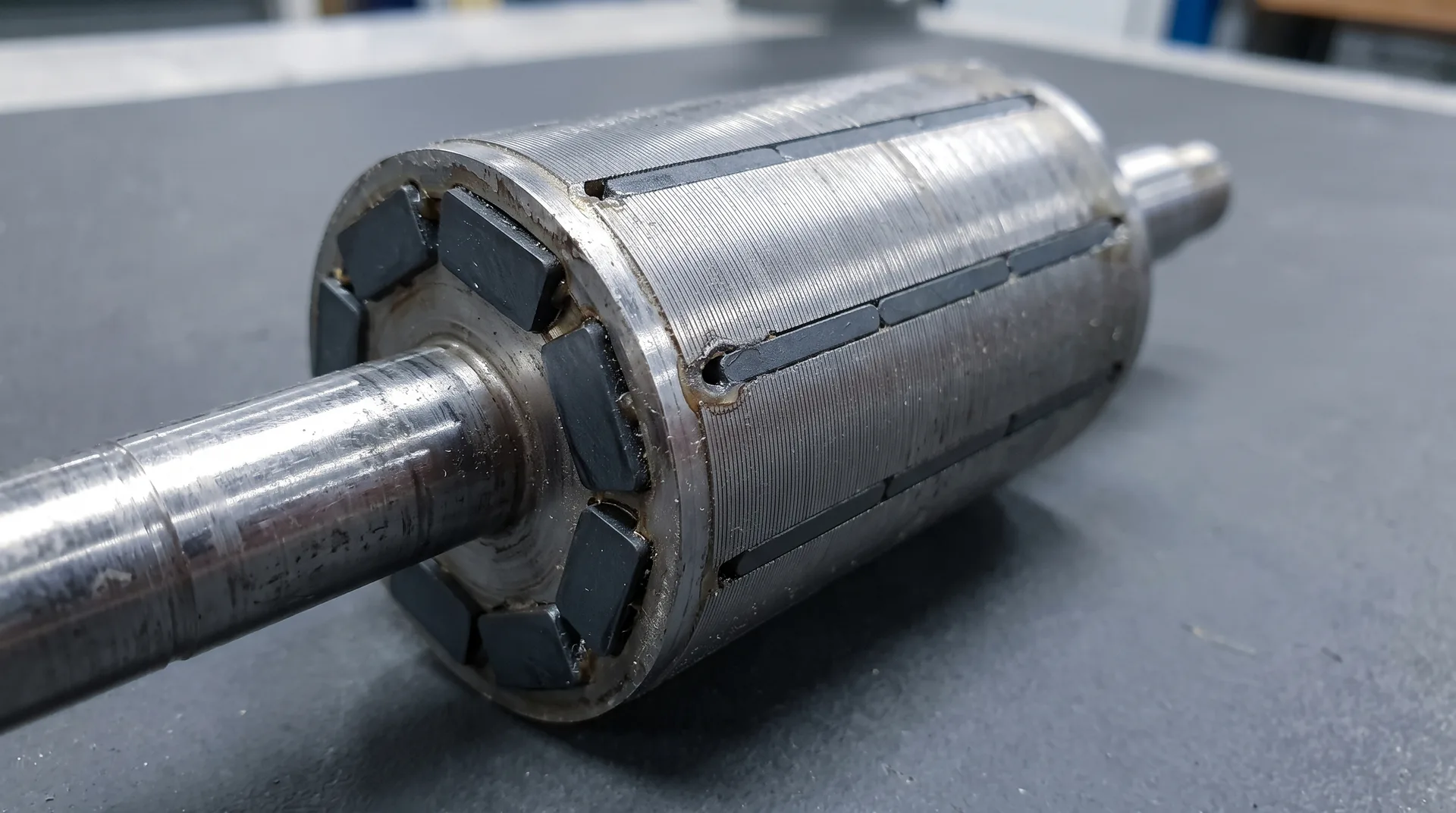
Europe is about 100% import-reliant on separated rare earths — the oxide-stage compounds that magnets are made from — consuming roughly 4,734 t/yr (REO-equivalent) on SCRREEN's 2016–2018 figures, with only token domestic separation. The EU's answer includes a 2030 recycling benchmark of 25%, but recycling is capped by reality: under 1% of end-of-life rare earths are recycled today, and the magnets already in service won't retire for years (IEA). That's why the same policy also targets domestic extraction — and why primary rare-earth minerals like monazite still matter.
What Europe has, and what it doesn't
Europe's rare-earth position comes into focus when you read it by stage — and the stage that feeds magnets is the one where the dependence is near-total.
On SCRREEN's figures (2016–2018 basis), at the oxide stage — separated rare-earth compounds, the REO-equivalent material that actually feeds magnet-making — the EU consumes about 4,734 t/yr and is roughly 100% import-reliant, with only token domestic separation in Estonia and France; upstream at the mine stage, EU production of rare earths in concentrate is about zero and import reliance is 100%. Those are 2016–2018 averages, not this year's figures, and they describe separated rare earths specifically — not mined concentrate, not finished metal, which are different quantities at different points in the chain. The dependence runs overwhelmingly to China, which dominates both mining and the processing that turns ore into separated oxides (USGS 2025; US DOE, 2022).
Why recycling can't close it
Faced with that dependence, the obvious hope is recycling — and the EU's Critical Raw Materials Act (Regulation (EU) 2024/1252, adopted 11 April 2024, in force 23 May 2024) sets a real target: at least 25% of the bloc's annual consumption of strategic raw materials from domestic recycling by 2030. The trouble is arithmetic and physics.
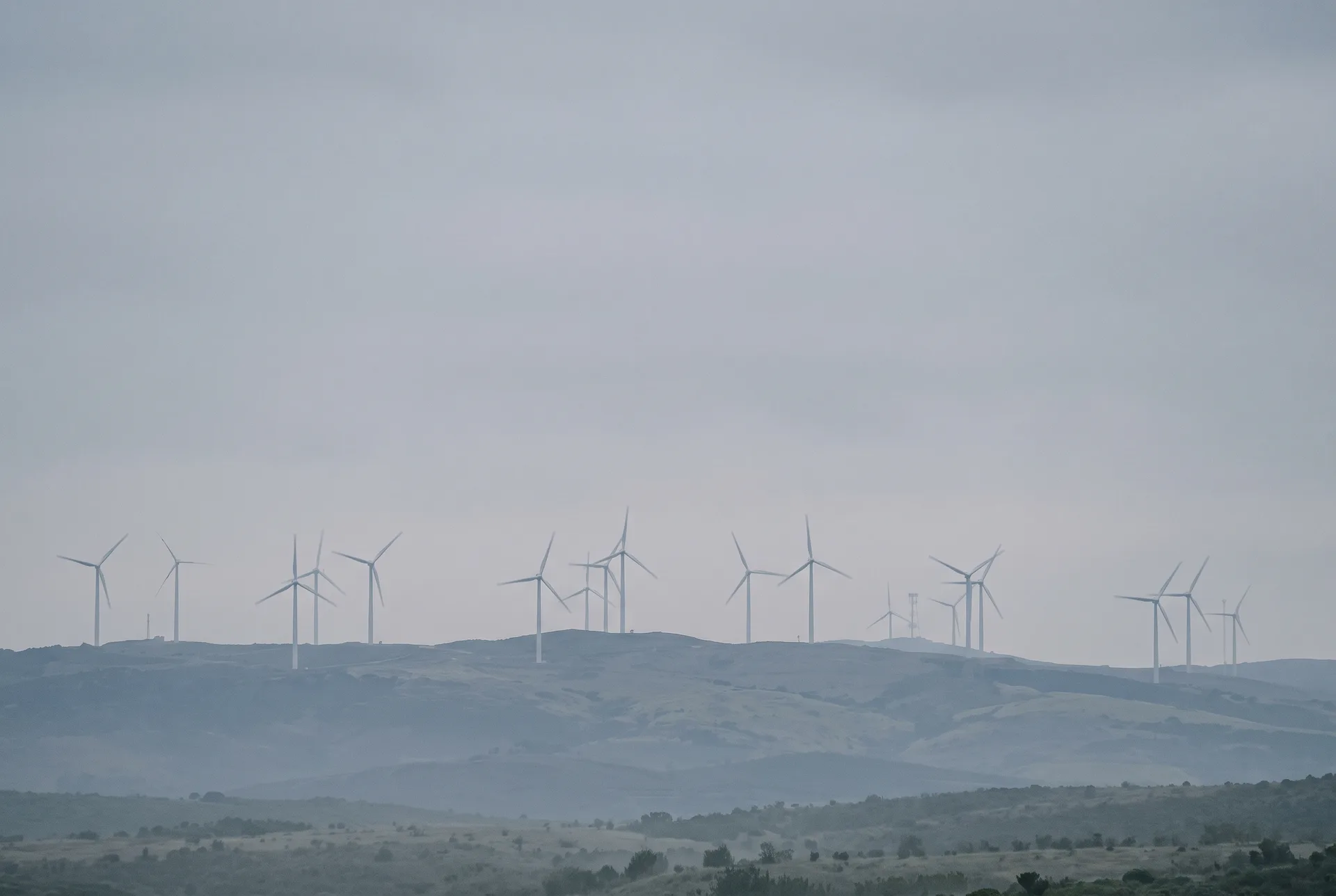
Start with the target itself: even fully achieved, 25% leaves three-quarters of demand to be met some other way. Now add today's reality. According to the IEA, less than 1% of end-of-life rare earths are currently recycled, held back by low collection rates and by the fact that magnets are small, glued in, and buried inside complex assemblies that are expensive to take apart (IEA). And there is a timing problem that no amount of effort fixes quickly: most rare-earth magnets are locked into long-life products — electric vehicles, wind turbines — that stay in service for a decade or two. You cannot recycle a magnet that is still spinning.
Europe's future recycling feedstock is currently driving down motorways and turning on hilltops. It won't be scrap for fifteen years.
Put those together and recycling looks like what it is: a necessary, growing, but partial contribution. That is precisely why the same Act pairs its recycling target with a 10% domestic extraction benchmark and a 40% processing benchmark for 2030. The EU's own policy design concedes the point — recycling is one lever of three, and the other two require getting more raw material, and more processing, onto European soil.
Where primary supply — and monazite — fits
If recycling can't close the gap alone, primary supply has to carry the rest, and that means minerals that concentrate rare earths in the ground — monazite among them. Mineral percentages here are mass-balance estimates — calculated from oxide assays rather than directly measured — and that basis applies to every mineral percentage in this article. For Orión, only Osmond's published numbers apply: in the Zone 1 bulk channel samples monazite runs 1.56–1.62% (mass-balance), with total rare-earth oxides (TREO) of 1.07–1.18% (osm_grade), and preliminary metallurgy produced a monazite concentrate grading 19.4% TREO (excluding yttrium), including 25% MREO — neodymium, praseodymium, dysprosium and terbium, as defined in that release — at about 76% recovery, reported by Osmond as roughly a 20× upgrade, on the basis stated in that release (osm_zircon). The full chain from monazite to magnet — and Europe's position in it — is covered in Monazite to magnets.
Two boundaries close this out. These are exploration and preliminary-testwork results, not a resource, and not a promise of European feedstock — the separation and processing chain that turns a monazite concentrate into magnet-grade oxides still has to be built and qualified. And nothing here says Orión will fill the gap. The point is structural: recycling is capped, demand is climbing, and Europe's own targets assume new primary rare-earth supply. Monazite is one of the few minerals that can provide it.
Orión data card — Monazite (with EU context)
| Status | Assayed / quantified |
| Bulk channel samples | Monazite 1.56–1.62% (mass-balance); TREO 1.07–1.18% (osm_grade) |
| Preliminary concentrate | 19.4% TREO (excl. Y); 25% MREO (Nd, Pr, Dy, Tb); ~76% recovery; ~20× upgrade (osm_zircon) |
| EU dependence (SCRREEN, 2016–2018 basis) | Separated REE (oxide, REO-eq): consumption ~4,734 t/yr; ~100% import-reliant; token EU separation |
| CRMA 2030 benchmarks | ≥25% recycling · ≥10% extraction · ≥40% processing |
| Recycling reality (IEA) | <1% of end-of-life rare earths recycled today |
→ See the full Monazite dossier in the mineral hub.
Exploration results and mineralogical estimates only. Orión has no JORC-compliant Mineral Resource or Reserve; maiden MRE and Scoping Study pending, targeted Q3 CY26.
Sources
- Osmond figures: [osm_grade — 19 Feb 2026], [osm_zircon — 3 Mar 2026] (ASX:OSM releases)
- EU figures: SCRREEN2 REE-EUROSTAT factsheet (Aug 2023) and EU Critical Raw Materials Act — Regulation (EU) 2024/1252, adopted 11 Apr 2024, in force 23 May 2024 — via Osmond source-of-truth v7.0 — separated-REE consumption 4,734 t/yr, ~100% import reliance (2016–2018 basis)
- IEA — Recycling of Critical Minerals (2024)
- US DOE — Rare Earth Permanent Magnets Supply Chain Deep Dive (2022)
- USGS Mineral Commodity Summaries 2025 — Rare Earths
Related reading
- Monazite to magnets: the rare-earth supply chain (Applications · Monazite)
- The monazite upgrade: what the preliminary testwork found (Science · Monazite)
- The accessory suite: xenotime, allanite and the trace rare earths (Science · Xenotime, Allanite)
Sources
- PRIMARYosm_grade — ASX:OSM release, 19 Feb 2026 (bulk-sample monazite and TREO grades; AV-01bis REE-oxide detail).
- PRIMARYosm_zircon — ASX:OSM release, 3 Mar 2026 (monazite concentrate 19.4% TREO excl. Y, 25% MREO (Nd, Pr, Dy, Tb), ~76% recovery, ~20× upgrade).
- SECONDARYSCRREEN2 REE-EUROSTAT factsheet (Aug 2023), via Osmond source-of-truth v7.0 — EU separated-REE (oxide stage, REO-equivalent) consumption 4,734 t/yr; ~100% import reliance; token EU separation (Estonia, France); mine-stage import reliance 100%, ~0 EU production. VINTAGE: 2016–2018 averages.
- PRIMARYEU Critical Raw Materials Act — Regulation (EU) 2024/1252, adopted 11 Apr 2024, in force 23 May 2024 — via Osmond source-of-truth v7.0 — 2030 benchmarks for strategic raw materials: ≥10% extraction, ≥40% processing, ≥25% recycling, ≤65% of any strategic material from a single third country.
- SECONDARYIEA, 'Recycling of Critical Minerals' (2024) — <1% of end-of-life rare earths currently recycled; low collection rates; long product lifetimes delay end-of-life scrap: https://www.iea.org/reports/recycling-of-critical-minerals/executive-summary
- SECONDARYUS DOE, 'Rare Earth Permanent Magnets: Supply Chain Deep Dive Assessment' (2022): https://www.energy.gov/sites/default/files/2022-02/Neodymium%20Magnets%20Supply%20Chain%20Report%20-%20Final.pdf
- PRIMARYUSGS Mineral Commodity Summaries 2025 — Rare Earths (China's share of mining and processing): https://pubs.usgs.gov/periodicals/mcs2025/mcs2025-rare-earths.pdf