Minerals Hub / Geography & Supply Chains / Europe makes the world's hafnium. It just can't dig it.
Geography & Supply Chains · Zircon · 5 min read
Europe makes the world's hafnium. It just can't dig it.
Hafnium is the one mineral in this set where Europe already leads the world — and it still begins with rock Europe has to import.
Reviewed by Peter Uppal
The short version
There is no European hafnium gap — there is a European hafnium lead. On SCRREEN's figures (2016–2020 basis), the EU consumes about 11.3 t/yr of hafnium (2016), produces roughly 35 t/yr in France, and has 0% import reliance. But hafnium is refined out of zirconium, which is made from zircon sand — and the EU imports about 83% of its zircon (SCRREEN, 2016–2020 basis). Europe's hafnium strength rests on imported rock. Osmond reports HfO₂ at 1,178–1,204 ppm in Orión's bulk channel samples (osm_grade): hafnium in the ground, and nothing more than that.
There is no hafnium gap
There is no European hafnium gap — there is a hafnium lead. On SCRREEN's figures (2016–2020 basis), the EU consumes about 11.3 tonnes of hafnium a year (2016) and produces about 35 tonnes a year, all of it in France, which leaves its import reliance at 0%. France, on these figures, is the single largest hafnium producer in the world, around 49% of global output.
And that production reaches well beyond Europe's borders. The USGS lists Germany (50%) and France (18%) as the leading sources of US unwrought hafnium imports — European suppliers feeding the American market. Europe is demonstrably a source of hafnium, not a sink.
Two honesty notes on the numbers. First, these EU figures are 2016–2020-basis averages — a specific vintage, not a live 2025 reading, and they shouldn't be quoted as if they were this year's. Second, the "world total" hafnium production of roughly 71 t/yr is SCRREEN's estimate alone. The USGS declines to publish one at all, stating plainly that "world primary hafnium production data were not available." A single-source world figure deserves to be flagged as exactly that.
Why France leads: hafnium is a by-product
The reason one country dominates comes down to how hafnium is made. Hafnium is not mined for its own sake. As the USGS puts it, hafnium metal "is produced as a byproduct of hafnium-free zirconium metal" — and that qualifier is the whole point.
Zirconium's great virtue in a nuclear reactor is that it barely absorbs neutrons. Hafnium, its chemical near-twin, does the opposite: it has a very high neutron-capture cross section (Britannica). So to make reactor-grade zirconium, refiners must strip the hafnium out — and the hafnium they remove becomes the world's hafnium supply. Hafnium exists, commercially, only because someone is purifying zirconium for nuclear use and separating the two.
Hafnium is what's left over when you clean zirconium for a reactor. No nuclear-grade zirconium industry, no hafnium.
France, with one of the world's largest nuclear sectors and the zirconium-refining capacity that feeds it, is therefore where much of the world's hafnium naturally falls out. The refining know-how — the hard, high-value part — is already European. That is the opposite of a gap.
The catch: it starts with imported rock
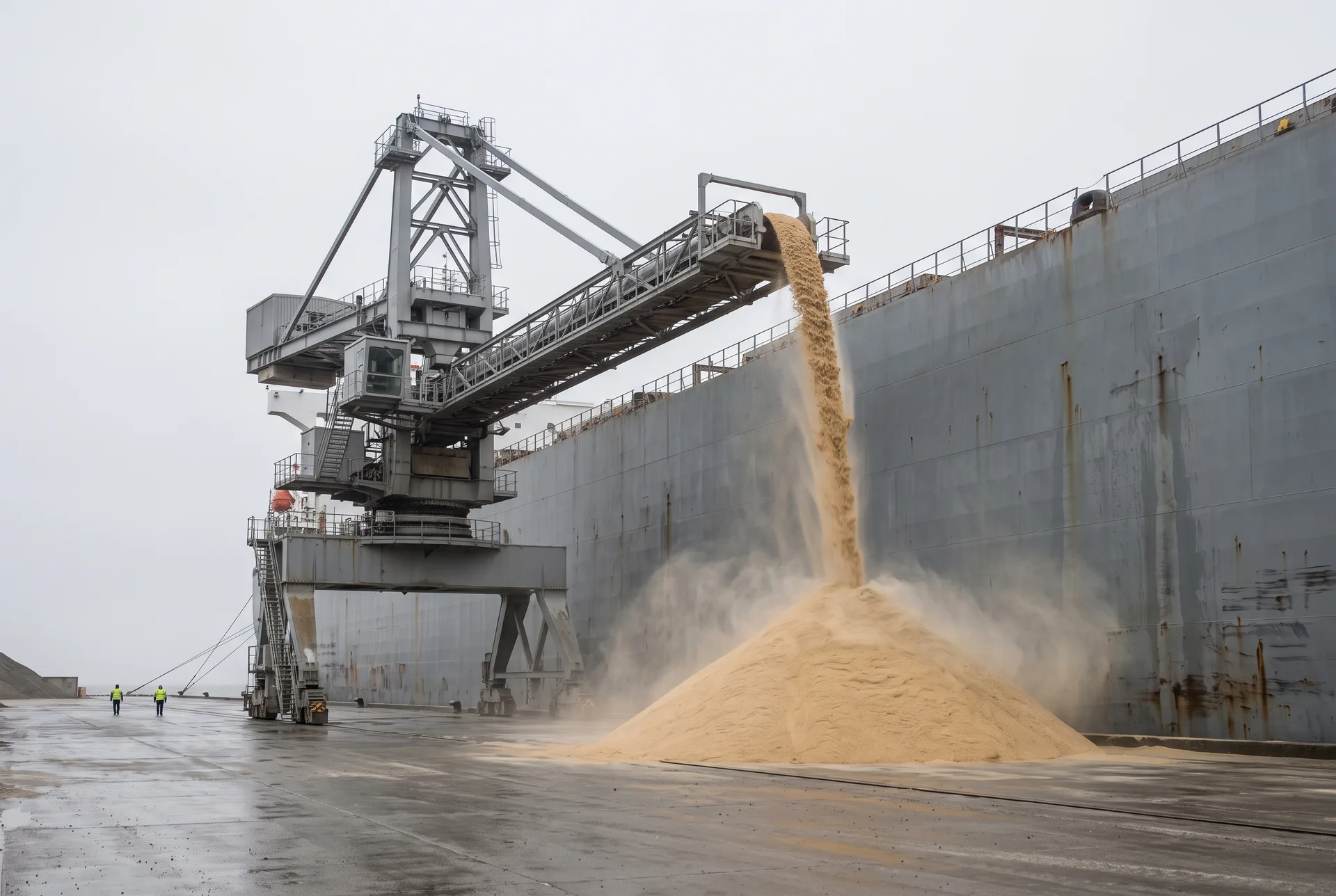
So where is the vulnerability? Upstream, at the very beginning of the chain.
Hafnium comes from zirconium; zirconium comes from zircon sand; and Europe does not dig much zircon. The EU's zircon import reliance is 83% (SCRREEN2 Zirconium factsheet). The continent that leads the world in turning zirconium into hafnium is overwhelmingly dependent on other countries for the raw zircon that the whole sequence starts from.
Hafnium is itself a listed critical raw material under the EU's Critical Raw Materials Act (Annex II) — critical, not strategic, so the Act's quantitative benchmarks do not attach to it.
That single fact is this hub's line in miniature: Europe's critical-minerals industry runs on imported rock. For hafnium — and the zircon it is refined from — the downstream chemistry is something Europe does well; France proves it. The bottleneck sits upstream, at extraction: getting the rock out of the ground on European soil. (That's a claim worth making precisely, not sweepingly — it holds cleanly for hafnium and zirconium; Europe's position at other stages, such as titanium metal, is a separate story.) Hafnium is the cleanest illustration because Europe already wins the downstream race and still depends on imported rock to run it.
Where Orión fits — the extraction end, nothing more
If hafnium's European weakness is extraction, then the relevant question for a project like Orión is upstream, not downstream. And here the discipline matters.
Osmond reports hafnium in the ground: HfO₂ at 1,178–1,204 ppm in the Zone 1 bulk channel samples (osm_grade). That hafnium occurs within zircon is settled mineralogy, covered on the hafnium reference page. The commercial reading we place on Orión's reported grades is our analysis, not Osmond's wording — the company has not characterised its results that way in a release. Just as important: Osmond has published no hafnium concentrate, no recovery rate, and no separation testwork. Nothing in the releases suggests Orión will produce hafnium metal, and this article does not imply it will. What exists is a reported hafnium grade in rock.
The honest link is therefore modest and structural. Europe's hafnium position is strong at the refinery and weak at the mine; hafnium's raw material is zircon; Orión is a zircon-bearing prospect on European soil that reports hafnium present in its sands. Whether any of that ever becomes European feedstock depends on a resource, a mine and a supply chain that do not yet exist. The point of the story isn't Orión's hafnium — it's that even Europe's one clear mineral lead still begins with rock someone else digs.
Orión data card — Hafnium
| Status | Assayed / quantified (in ground) |
| Bulk channel samples | HfO₂ 1,178–1,204 ppm (osm_grade) |
| Downstream | No hafnium concentrate, recovery, or separation testwork published |
| Our analysis (not Osmond's) | The commercial reading of the reported Zr–Hf grades; the mineralogical pairing itself is settled science |
| EU context (SCRREEN, 2016–2020 basis) | EU consumption ~11.3 t/yr (2016); EU production ~35 t/yr (France); import reliance 0%; EU zircon import reliance 83% |
| World output | ~71 t/yr — SCRREEN estimate only; USGS: world primary hafnium data "not available" |
→ See the full Hafnium dossier in the mineral hub.
Exploration results and mineralogical estimates only. Orión has no JORC-compliant Mineral Resource or Reserve; maiden MRE and Scoping Study pending, targeted Q3 CY26.
Sources
- Osmond figure: [osm_grade — 19 Feb 2026] (ASX:OSM release)
- SCRREEN2 Hafnium factsheet (update2, Jan 2024); SCRREEN2 Zirconium factsheet — EU consumption/production/import-reliance and zircon import reliance
- USGS Mineral Commodity Summaries — Zirconium and Hafnium
- Encyclopaedia Britannica — Hafnium
Related reading
- Zircon and the Critical Raw Materials Act (Supply & the EU · Zircon)
- Zirconium in the nuclear revival (Applications · Zirconium)
- Why co-products change mineral-sands economics (Investment · How the category works)
Sources
- PRIMARYosm_grade — ASX:OSM release, 19 Feb 2026 (bulk-sample HfO₂ grades, Table 3).
- SECONDARYSCRREEN2 Hafnium factsheet (update2, Jan 2024) — EU hafnium consumption 11.3 t/yr (2016); EU production ~35 t/yr (France); EU import reliance 0%; France ~49% of estimated world output; world production ~71 t/yr (SCRREEN estimate).
- SECONDARYSCRREEN2 Zirconium factsheet — EU zircon import reliance 83%.
- PRIMARYUSGS Mineral Commodity Summaries — Zirconium and Hafnium: 'World primary hafnium production data were not available'; hafnium metal 'is produced as a byproduct of hafnium-free zirconium metal'; US unwrought hafnium import sources — Germany 50%, France 18%: https://pubs.usgs.gov/periodicals/mcs2025/mcs2025-zirconium-hafnium.pdf
- SECONDARYEncyclopaedia Britannica, 'Hafnium' — hafnium's high neutron-capture cross section; separation from zirconium for reactor-grade metal: https://www.britannica.com/science/hafnium