Minerals Hub / Sustainability / Why aerospace titanium scrap ends up in steel
Sustainability · · 6 min read
Why aerospace titanium scrap ends up in steel
Titanium is collected diligently and recycled at scale — but much of it comes back as an alloying addition for steel rather than as titanium, and the reason is provenance rather than collection.
Pending review
The short version
Titanium is one of the metals recycling works best for: it is valuable, it is collected, and most of what a mill buys has been through a machine shop rather than out of the ground. What it is recycled into is the harder question. Aerospace alloy can only take back scrap whose history is known, because one foreign particle can condemn a rotating part — so much of the recovered metal is diluted, downgraded, or sold into ferrotitanium for steelmaking. The obstacle is provenance, not collection, and it cannot be solved by collecting harder.
Most of the metal never reaches the aircraft
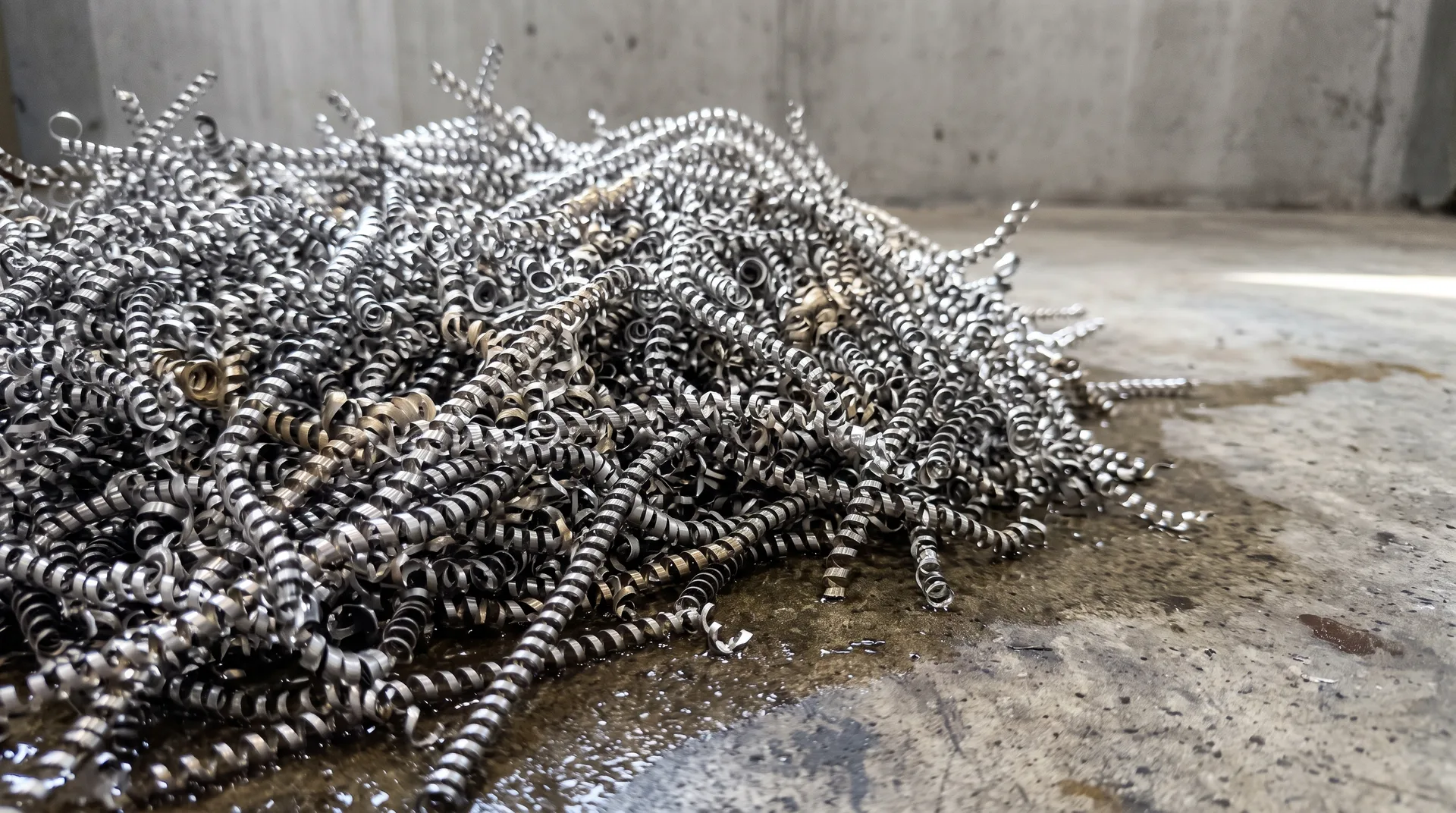
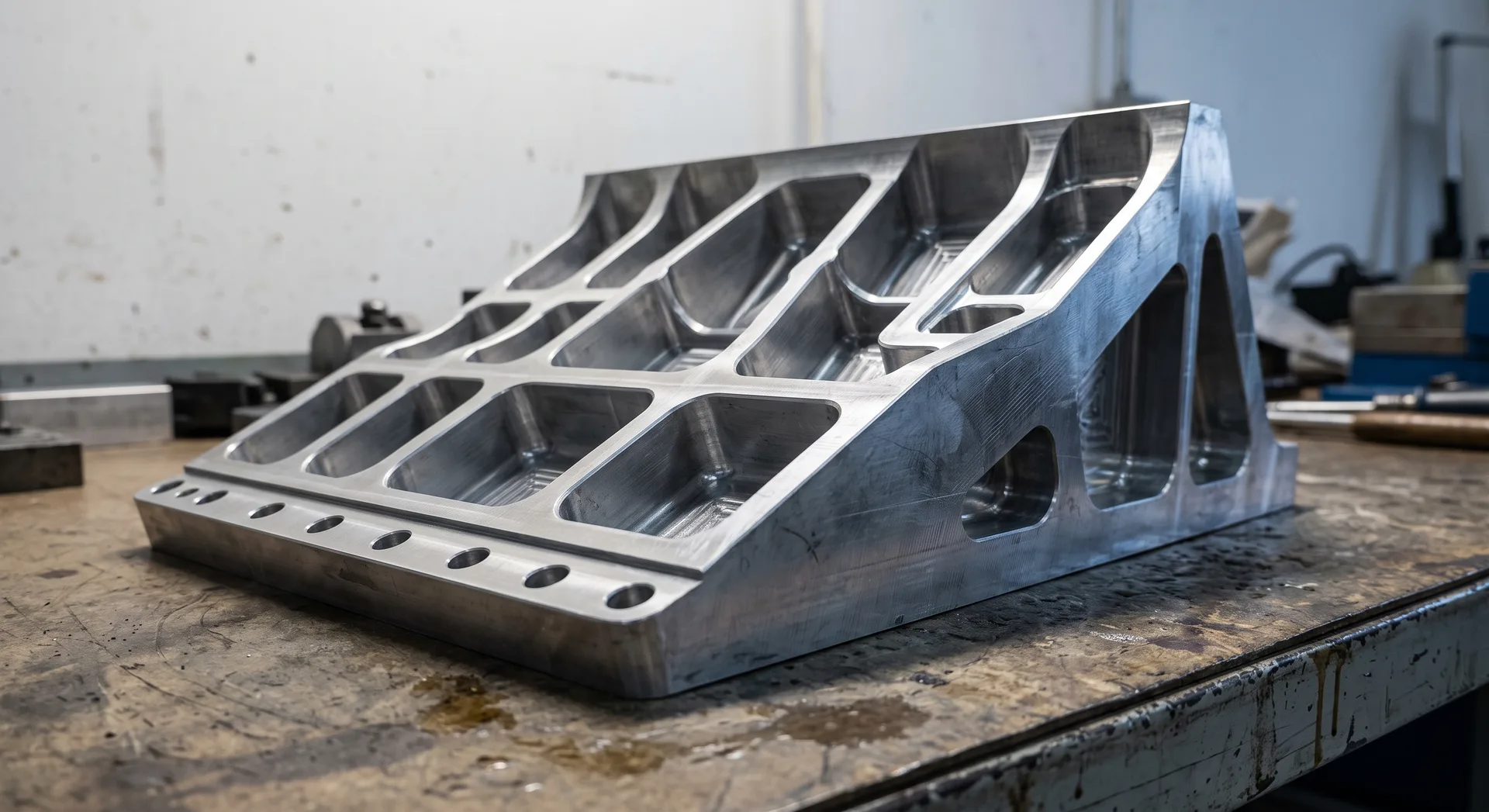
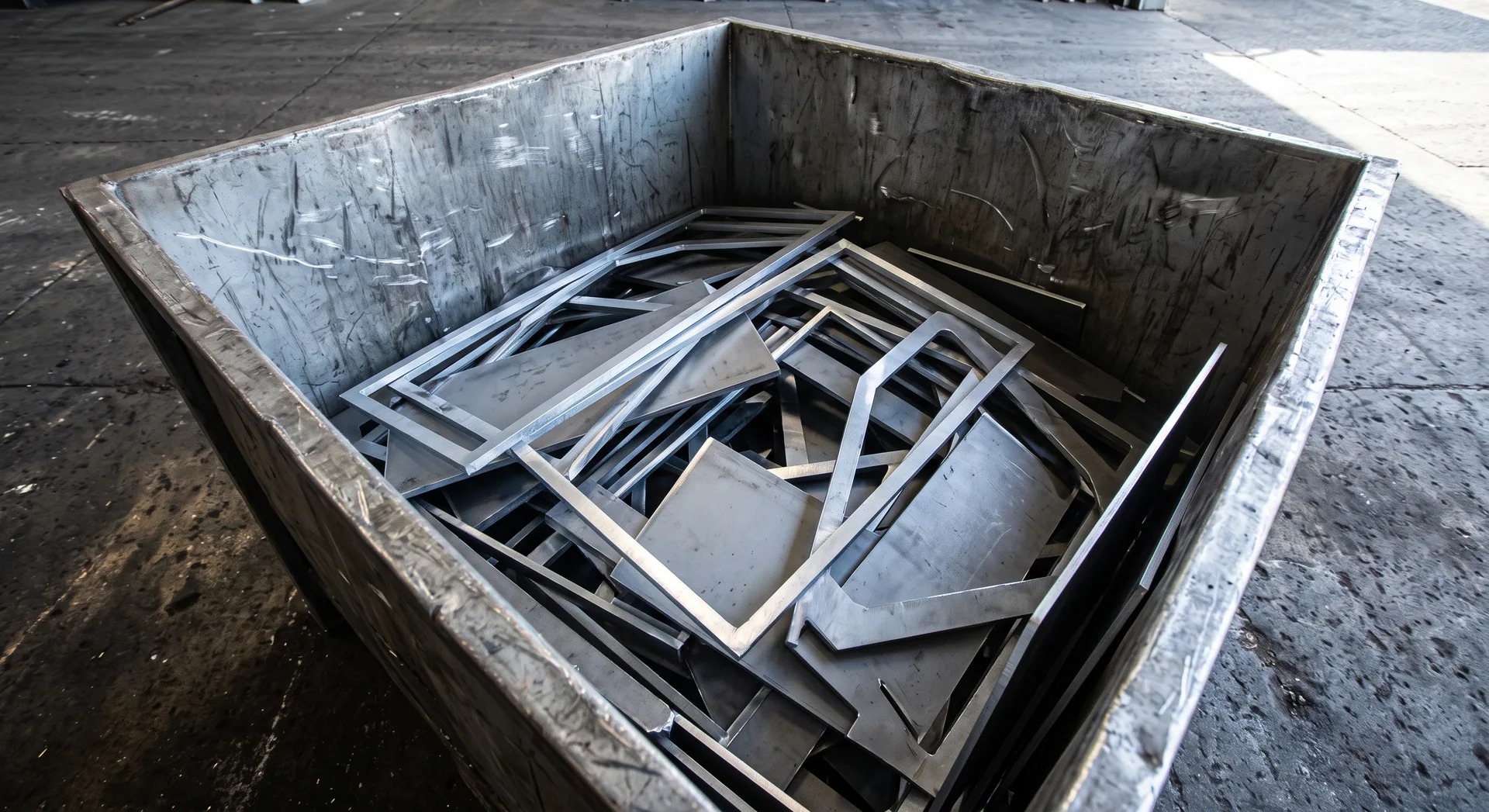
Aerospace parts are largely machined from solid, and the industry measures the waste as a ratio of what is bought to what flies. A NATO research paper begins from the "range of typical Buy:Fly ratios encountered on aero engine components of 6:1 to 25:1" as the given from which its cost conclusion follows; an Oak Ridge workshop report, recording an aerospace industry viewpoint, puts the general case more bluntly: typical "buy-to-fly ratios are 10:1 or greater". A national-laboratory review of titanium recycling gives the same fact as a mass fraction, hedges intact: machining loss is high, with "commonly" around "~90 wt.% of the material being converted to scrap". PNNL-36607 prints the figure twice, and the second time as an upper bound: traditional machining "may result in up to ~90 wt.% material loss as swarf during machining". At most and usually are not the same claim.
Oak Ridge also prices it: a "1 lb part would require 10 lbs of billet costing $250 which after machining would result in 9 lbs of chips worth $9".
The chips are not the problem. The gap between $250 and $9 is.
Two destinations for the same chip
Recovered titanium has two fates, and the choice is made on quality, not on effort.
One route returns the metal to titanium: cleaned, sorted by alloy and remelted into ingot. The constraint is chemistry that cannot be undone. Titanium picks up oxygen, and — as a matter of general metallurgy rather than any source cited here — it cannot be burnt out of the metal the way carbon is burnt out of steel. What the sources carry is the remedy, which is dilution: current approaches, the Pacific Northwest laboratory reports, require "that Ti scrap be diluted with ~50% fresh Ti sponge to manage oxygen content" — so recycling titanium into titanium consumes new sponge in roughly equal measure.
The other route leaves titanium behind. As "a result, scrap from high priced wrought Ti alloy turn into down-graded titanium ingot, which is used as feedstock material in the ferrotitanium industry". USGS describes the same destination: lower "quality scrap and some indeterminate amount of old scrap tend to flow to ferrotitanium production, which is essentially a clean-blend-and-melt operation".
Ferrotitanium is a real product with a real use, set out in The titanium scrap that cannot go back. But titanium entering a steel ladle is not coming back: it is a one-way recovery of an element from a metal that was made, at great cost in energy, to be something else.
Why the aerospace door is narrow
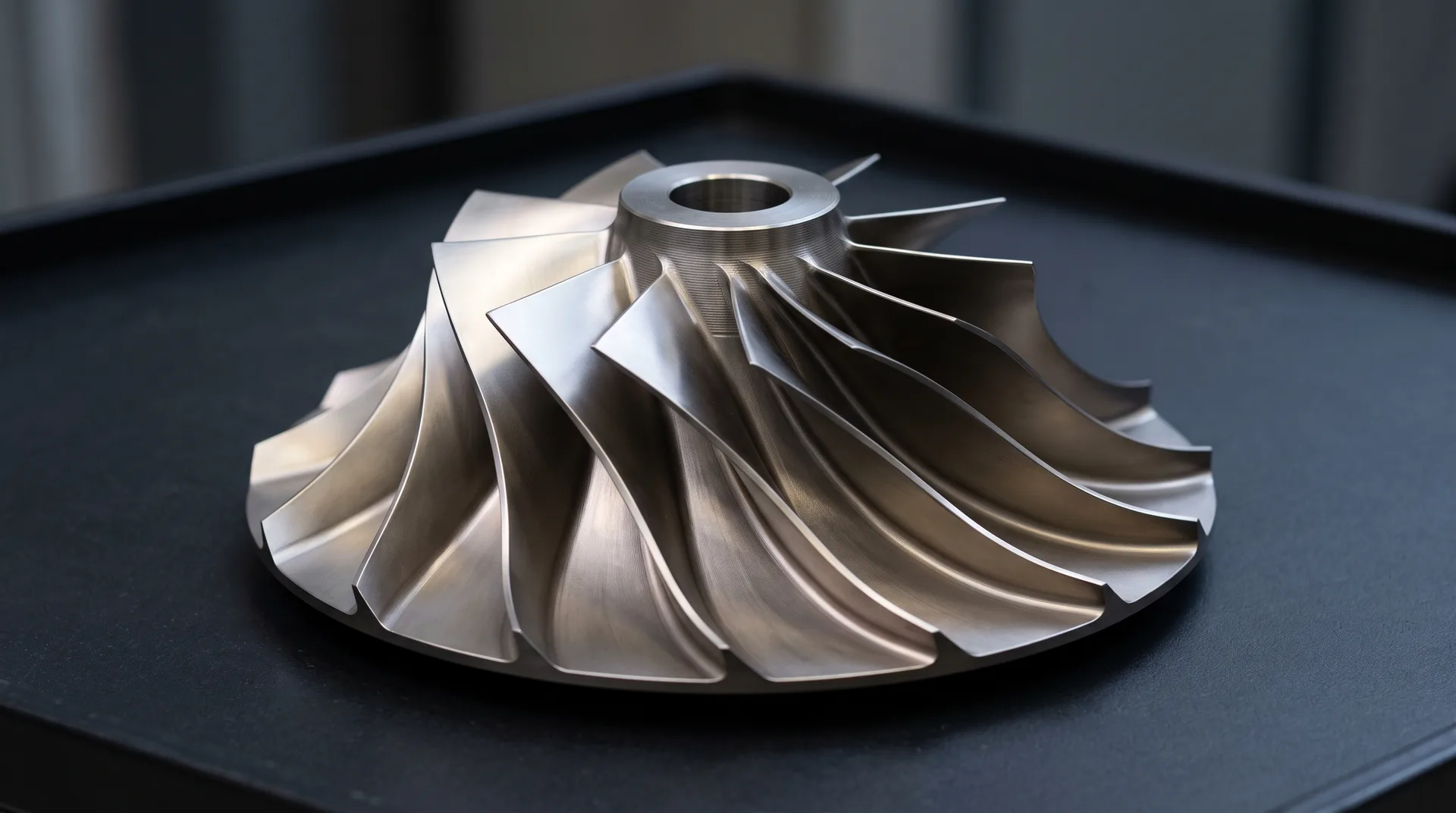
The restriction on the high-value route is not conservatism but a specific, well-documented failure mode. The FAA's advisory circular on premium quality titanium rotating parts defines the hazard precisely. A high density inclusion is a "region with a high concentration of refractory elements, usually tungsten, molybdenum, or columbium, having a higher density than the matrix". The circular's disposition rule is correspondingly absolute: any "heat which is shown, by billet/bar inspection and indication characterization, to contain an HDI or HID inclusion should be rejected for critical rotating part application". One particle, one heat, rejected.
Its recycling section then reads like an inventory of everything that can go wrong with a bin of scrap. For multiple-VAR material, in "general, only turnings should be permitted to be directly recycled in multiple VAR processed premium quality titanium alloy", and those turnings are to be segregated, crushed, cleaned and 100 per cent radiographically inspected for HDI-causing particles, with the particles removed. That second requirement is given unquoted: the text retrieved for this article carries it as a structured paraphrase rather than as continuous verbatim wording, so it should be read off the page before it is quoted. Elsewhere, recycling "of grinding products, dust, and sludge should be prohibited", and material that has been involved in fire is likewise prohibited — again carried in paraphrase rather than verbatim, so its exact scope is not quoted here.
Read that list against ordinary end-of-life material — mixed alloys, painted, corroded, cut with a torch, arriving without paperwork — and the boundary explains itself. The circular states means of compliance rather than mandatory rules, and its verbs are "should" — it says of itself that conformity with the guidance document is voluntary only. What it sets out is nonetheless the shape of what a mill is asked to satisfy to sell into rotating parts, and why scrap with a documented history is a different commodity from scrap without one; that the market actually requires it is this article's inference and not the circular's statement.
The vocabulary, and a hole in it
USGS defines home scrap as scrap "generated as process or runaround scrap and consumed in the same plant where it was generated", and old scrap as scrap "including (but not limited to) metal articles that have been discarded after serving a useful purpose". The word the trade actually runs on — "revert", used here for previously melted material returned to a melter, which is a working definition rather than a sourced one — has no authoritative definition that could be located for this article. The USGS circular does not use the word at all; whether the FAA circular uses it, and whether it defines it, is not established by the text retrieved here.
USGS also names why old scrap has historically stayed out: in "the past, old titanium scrap has had a tendency to hibernate because the stringency of titanium metal and alloy specifications mitigated its use". Hibernate, not disappear — the metal is still there, waiting for a specification it can meet.
What is no longer counted
There is a final, awkward fact: the public data has gone. The recycling section of the most recent Mineral Commodity Summaries reads, in its entirety: owing "to limited responses from voluntary surveys, consumption data for titanium scrap metal for the titanium metal industry were withheld. Consumption data for titanium scrap for the steel, superalloy, and other industries were not available". The same two sentences are recorded in editions back to 2022; the intervening editions were not read for this article, so that is a note rather than a checked fact.
The 2021 edition did publish a breakdown — about 45,000 tons consumed in 2020, split between the titanium, steel, superalloy and other industries (usgs_mcs21) — quoted, and read as supply, in The titanium scrap that cannot go back. Whether 2021 is the last such edition is not established here, for the same reason. No later share is calculated here, because none can be — and the question matters more now than then, since the "United States did not produce titanium sponge metal in 2025. The last domestic sponge plant closed in 2024."
Related
- Circular Economy — the wider frame, and why extractive residues sit under a separate legal regime
- Recycling Technology — the processes behind recovery, in technical detail
- Titanium/Rutile — the primary production these streams substitute for, and do not replace
- The titanium scrap that cannot go back (Markets & Economics · Recycling) — the same material read as a supply question rather than a practice
Sources
- PRIMARYU.S. Geological Survey, Mineral Commodity Summaries 2026, 'Titanium and Titanium Dioxide', February 2026. Recycling section quoted in full: 'Owing to limited responses from voluntary surveys, consumption data for titanium scrap metal for the titanium metal industry were withheld. Consumption data for titanium scrap for the steel, superalloy, and other industries were not available.' Also quoted: 'U.S. imports of titanium scrap were estimated to be 32,000 tons in 2025.'; 'The United States did not produce titanium sponge metal in 2025. The last domestic sponge plant closed in 2024.'; and (read but not quoted in the article) tariff lines 'Ferrotitanium and ferrosilicon titanium 7202.91.0000 3.7% ad valorem' and 'Titanium waste and scrap metal 8108.30.0000 Free.' Printed page folio not confirmed.
- PRIMARYU.S. Geological Survey, Mineral Commodity Summaries 2021, 'Titanium and Titanium Dioxide'. Recycling section quoted in full: 'About 45,000 tons of titanium scrap metal was consumed in 2020—35,000 tons by the titanium industry, 8,000 tons by the steel industry, less than 500 tons by the superalloy industry, and the remainder in other industries.' This is the most recent edition of the Summaries carrying a published breakdown.
- PRIMARYU.S. Geological Survey, Circular 1196-Y, Goonan, T.G., 'Titanium Recycling in the United States in 2004', 2010. Quoted: 'Lower quality scrap and some indeterminate amount of old scrap tend to flow to ferrotitanium production, which is essentially a clean-blend-and-melt operation that combines titanium scrap and iron scrap.'; 'In the past, old titanium scrap has had a tendency to hibernate because the stringency of titanium metal and alloy specifications mitigated its use.'; and the appendix definitions of home scrap, new scrap and old scrap. The word 'revert' does not appear in this document.
- PRIMARYBabu, S., Love, L.J., Peter, W., Dehoff, R., 'Workshop Report on Additive Manufacturing for Large-Scale Metal Components – Development and Deployment of Metal Big-Area Additive-Manufacturing (Large-Scale Metals AM) System', ORNL/TM-2016/202, Oak Ridge National Laboratory, May 2016. Quoted: 'Typical buy-to-fly ratios are 10:1 or greater.' and 'As an example a 1 lb part would require 10 lbs of billet costing $250 which after machining would result in 9 lbs of chips worth $9.'
- PRIMARYAllen, Jeff, 'An Investigation into the Comparative Costs of Additive Manufacture vs. Machine from Solid for Aero Engine Parts', RTO-MP-AVT-139, Paper 17, NATO Research and Technology Organisation, May 2006. Quoted: 'A term commonly used to compare the size of the original billet to that of the finished part is the Buy:Fly ratio.' and, as the subordinate opening of a sentence concluding on AM material cost, 'For the range of typical Buy:Fly ratios encountered on aero engine components of 6:1 to 25:1 the specific cost of the AM material has to lie in the range of £200 to £1000 per kilogramme.'
- PRIMARYWhalen, S.A., et al., 'Recycling of Titanium Scrap by Shear Assisted Processing and Extrusion (ShAPE)', PNNL-36607, Pacific Northwest National Laboratory, September 2024. Quoted: 'Current recycling approaches require that Ti scrap be diluted with ~50% fresh Ti sponge to manage oxygen content.'; 'As a result, scrap from high priced wrought Ti alloy turn into down-graded titanium ingot, which is used as feedstock material in the ferrotitanium industry.'; and 'commonly, machining loss is high with ~90 wt.% of the material being converted to scrap.' The same report states the figure a second time and elsewhere, as an upper bound rather than a typical case: 'Traditional machining operations are used to produce components, which may result in up to ~90 wt.% material loss as swarf during machining.' Both forms are quoted in this article; they are the same number on two different bases and the report carries both.
- PRIMARYFederal Aviation Administration, Advisory Circular AC 33.15-1A, 'Manufacturing Process of Premium Quality Titanium Alloy Rotating Engine Components', 8 September 2025. Section 8.1.1.7 'Recycled Material' quoted; Section 5 definition of High Density Inclusion quoted; Section 10.4.2.1 quoted. An Advisory Circular states means of compliance, not mandatory requirements; its verbs are 'should'.
- UNVERIFIEDGAP — no published figure exists for the share of titanium scrap entering ferrotitanium or steelmaking rather than titanium alloy production for any year after 2020. USGS states the data were withheld or not available in every edition of the Mineral Commodity Summaries from 2022 to 2026, and characterises the old-scrap portion as 'some indeterminate amount'. No share is asserted or calculated here.Non-public document · no public URL
- UNVERIFIEDGAP — no authoritative definition of the industry term 'revert' was located in any government, standards or peer-reviewed source. The FAA Advisory Circular uses the word operationally without defining it, and USGS Circular 1196-Y does not use it at all.Non-public document · no public URL