Minerals Hub / Innovation & Technology / The uses you can never recycle
Innovation & Technology · Rutile · 6 min read
The uses you can never recycle
Titanium has one of the best recycling records of any metal and one of the worst, depending on which titanium you mean — and the footnote is where the whole subject lives.
Reviewed by Peter Uppal
The short version
Some uses of a mineral put it somewhere nothing can get it back from — paint on a wall, opacifier fired into a glaze — and the USGS names this directly, observing that many materials dissipate with use and cannot be recycled. Titanium is the sharpest illustration, because its recycling figures look excellent and cover the small share of titanium that becomes metal: the UNEP recycling report's titanium figures carry the footnote "the figures relate to Ti metal or alloy, not oxide", while more than 95% of US titanium mineral concentrates go to pigment. A recycling rate is only meaningful alongside the question of which fraction of the material it describes.
The concept, in a government's own words
The idea has a plain formulation in a USGS study of titanium recycling: many materials dissipate with use and cannot be recycled — for example paint (which contains titanium pigment). It is not a statement about collection systems being immature or about technology being unavailable. Paint is applied in a film a few tens of microns thick over a surface it is bonded to, and the titanium dioxide in it is dispersed at the scale of individual particles. There is no process at any price that recovers it.
The same study extends the point to the market: the titanium market is otherwise dominated by pigment (titanium oxide) products, which generate dissipative losses instead of recyclable scrap. Dissipative loss is the category. It sits alongside collection failure and process limitation as a reason material does not come back, and it is the only one of the three that no amount of effort removes.
Where the numbers stop agreeing with each other
Titanium is the case worth working through slowly, because it produces two opposite headlines from the same element.
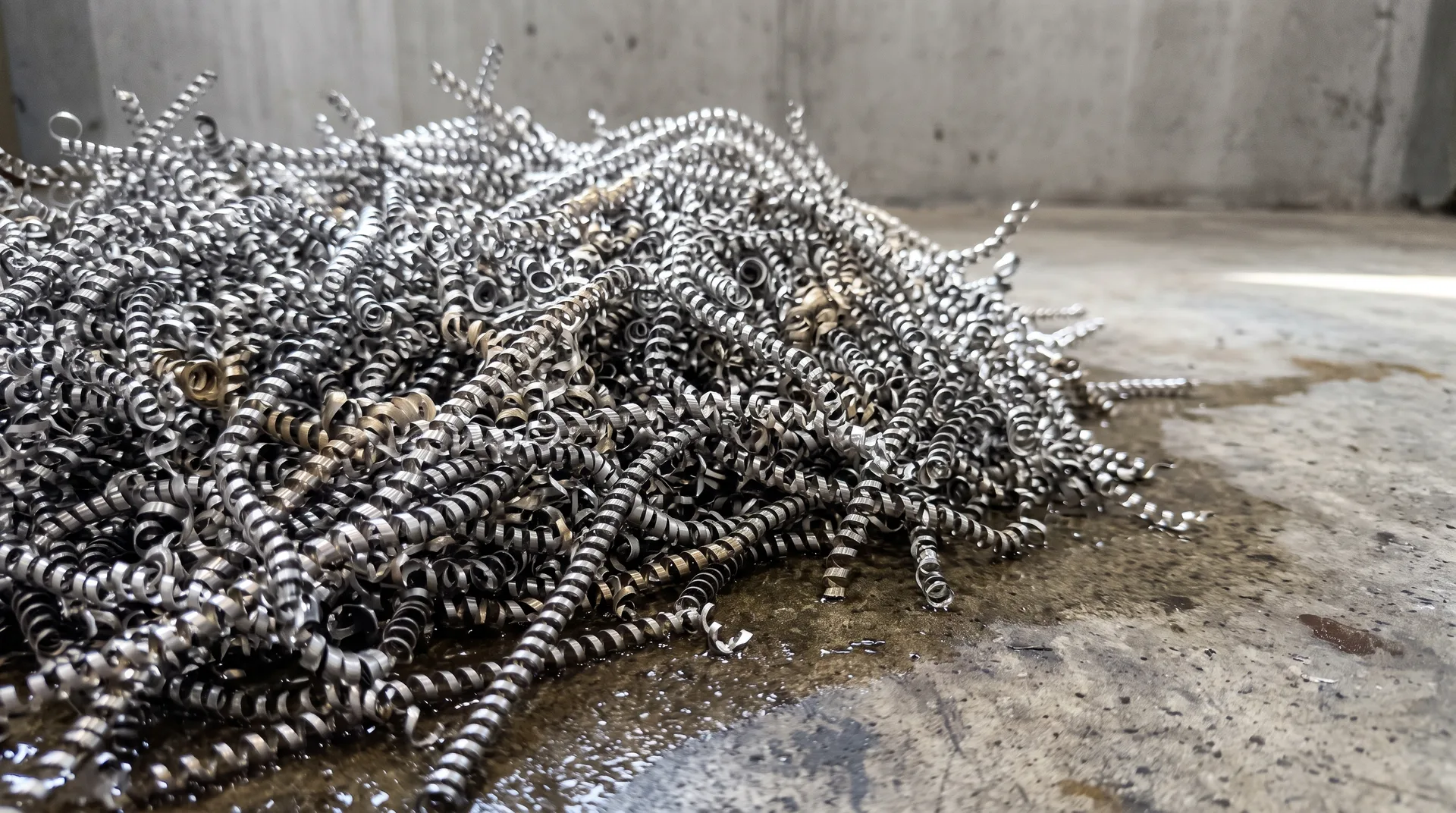
On the metal side the record is genuinely strong. The USGS study reports that recycling of new and home titanium scrap is robust and largely complete, and that in 2004 scrap, predominantly new scrap, was the source of roughly 54 percent of the titanium metal content of U.S.-produced titanium metal products. Aerospace machining generates a great deal of swarf and offcut, the metal is valuable, and the collection loop is short and industrial.
The UNEP International Resource Panel's status report on metal recycling tabulates titanium alongside the other metals, and attaches to its titanium figures a footnote that carries the whole argument of this article: the figures relate to Ti metal or alloy, not oxide. That footnote is doing more work than most of the table above it. Titanium's flattering recycling statistics — the USGS ones quoted above included — describe a slice of the element's use, not the element.
How large a slice? The USGS study covering 2004 records that in that year 98 percent of the titanium contained in the U.S. titanium mineral concentrate supply progressed through the pigment sector, and the position two decades on is similar: more than 95% of titanium mineral concentrates were consumed by domestic TiO₂ pigment producers. Both are United States figures and should be read as such.
So the honest summary is arithmetic rather than rhetoric. A high recycling rate applies to the several per cent of titanium that becomes metal. The rest becomes pigment, and pigment dissipates.
A recycling rate without the share it covers is not a fact about a material. It is a fact about a footnote.
The same test, applied to zircon
Zircon offers a milder version of the same structure. The USGS lists ceramics, foundry sand, opacifiers, and refractories as the leading end uses for zircon, with other end uses including abrasives, chemicals, metal alloys, and welding rod coatings.
Several of those are recoverable in principle and some in practice: the same summary notes that zircon foundry mold cores and spent or rejected zirconia refractories are often recycled but could not be quantified — a statement that is half encouraging and half a confession about data. Against that, an opacifier's whole function is to be dispersed through a glaze and fired to it, and an abrasive's function is to be worn away against something else. Those are dissipative by design in exactly the sense the USGS uses the word.
For hafnium the same source records simply that hafnium metal recycling was limited, which for an element produced in tens of tonnes a year is not surprising.
Rare earths sit at the far end of the same spectrum. The UNEP report gives the lanthanides end-of-life recycling rates of less than 1%, and notes that many specialty metals are mainly used as oxides or other compounds. Its definition matters here too: the EOL-RR always refers to functional recycling — recovering the material back into a use that needs its properties, not merely keeping it out of landfill.
What this does to a policy target
The distinction is not academic, because recycling targets are written against consumption.
The EU's Critical Raw Materials Act sets a 2030 benchmark for Union recycling capacity to produce at least 25% of annual Union consumption of strategic raw materials. That claim is stated here without a link: the hub's verified EU reference records it, but the article of the Regulation could not be opened directly at drafting, and the source entry rather than an inline citation is the record for it. The benchmarks attach to the strategic list, which is narrower than the list of critical raw materials.
Read alongside the dissipation figures, the shape of the challenge is clear enough. A recycling benchmark bites hardest on materials that go into durable, collectable, disassemblable products, and it cannot reach material that has been dispersed by design into paint, glaze or abrasive. That is not an objection to the target. It is a statement about which part of a supply chain the target can actually move, and it argues that primary supply and secondary supply are less substitutable for these particular materials than the framing of recycling policy usually implies.
Exploration results and mineralogical estimates only. Orión has no JORC-compliant Mineral Resource or Reserve; maiden MRE and Scoping Study pending.
Sources
- USGS Circular 1196-Y — Titanium Recycling in the United States in 2004
- UNEP International Resource Panel (2011) — Recycling Rates of Metals: A Status Report
- USGS Mineral Commodity Summaries 2025 — Titanium Mineral Concentrates
- USGS Mineral Commodity Summaries 2025 — Zirconium and Hafnium
- Regulation (EU) 2024/1252, Article 5, via the hub's verified EU reference — not opened directly at drafting
Related reading
- Why the Kroll process is still standing covers the metal route whose scrap loop produces titanium's flattering figures.
- What lithium titanate trades away follows titanium into a use that is neither pigment nor structural metal.
- The separation nobody would do for hafnium alone explains why hafnium's secondary supply is as thin as the USGS records.
Sources
- PRIMARYUSGS Circular 1196-Y, 'Titanium Recycling in the United States in 2004' (materials that dissipate with use and cannot be recycled, with paint containing titanium pigment as the example; pigment products generating dissipative losses instead of recyclable scrap; 98 percent of titanium in the 2004 US mineral concentrate supply progressing through the pigment sector; scrap recycling described as robust and largely complete; scrap as the source of roughly 54 percent of titanium metal content of US-produced titanium metal products in 2004).
- PRIMARYUNEP International Resource Panel, 'Recycling Rates of Metals: A Status Report', 2011 (titanium recycling figures in Table D1 carrying footnote m, 'the figures relate to Ti metal or alloy, not oxide'; lanthanide end-of-life recycling rates given as less than 1% in Table F1; EOL-RR defined as referring to functional recycling; specialty metals mainly used as oxides or other compounds).
- PRIMARYUSGS Mineral Commodity Summaries 2025, 'Titanium Mineral Concentrates' (more than 95% of titanium mineral concentrates consumed by domestic TiO2 pigment producers). A United States domestic figure.
- PRIMARYUSGS Mineral Commodity Summaries 2025, 'Zirconium and Hafnium' (ceramics, foundry sand, opacifiers and refractories as leading end uses for zircon; recycling of zirconium from new and old scrap; zircon foundry mould cores and spent or rejected zirconia refractories often recycled but not quantifiable; hafnium metal recycling limited).
- SECONDARYRegulation (EU) 2024/1252 — widely called the Critical Raw Materials Act, a popular short name the instrument itself never uses (zero occurrences in its text). Article 5 — 2030 benchmark for Union recycling capacity to produce at least 25% of annual Union consumption of strategic raw materials; the benchmarks attach to the strategic list, Annex I (17 entries), which is narrower than the critical raw materials list, Annex II (34 entries). The two annexes have since been read directly from the Publications Office (CELLAR) distribution of the Official Journal text and are as described here. Article 5 itself has still not been opened directly, so the 25% benchmark remains recorded in the hub's verified EU reference rather than quoted from the instrument.