Minerals Hub / Innovation & Technology / Why the Kroll process is still standing
Innovation & Technology · Rutile · 6 min read
Why the Kroll process is still standing
Titanium metal is still made by a route the industry has been trying to replace for decades — and what the challengers have to beat is not its cost but its maturity.
Reviewed by Peter Uppal
The short version
Titanium metal is still produced commercially by the Kroll process, a route one review describes as expensive and energy-consuming, and simultaneously as highly matured and optimized. That combination — inefficient and perfected — is what a replacement actually has to beat, and the same review's expectation is that it will take several years before any new process reaches commercial production and competes with it. Meanwhile the world's sponge capacity sits in a handful of countries, none of them in the European Union.
The process, and the two things said about it at once
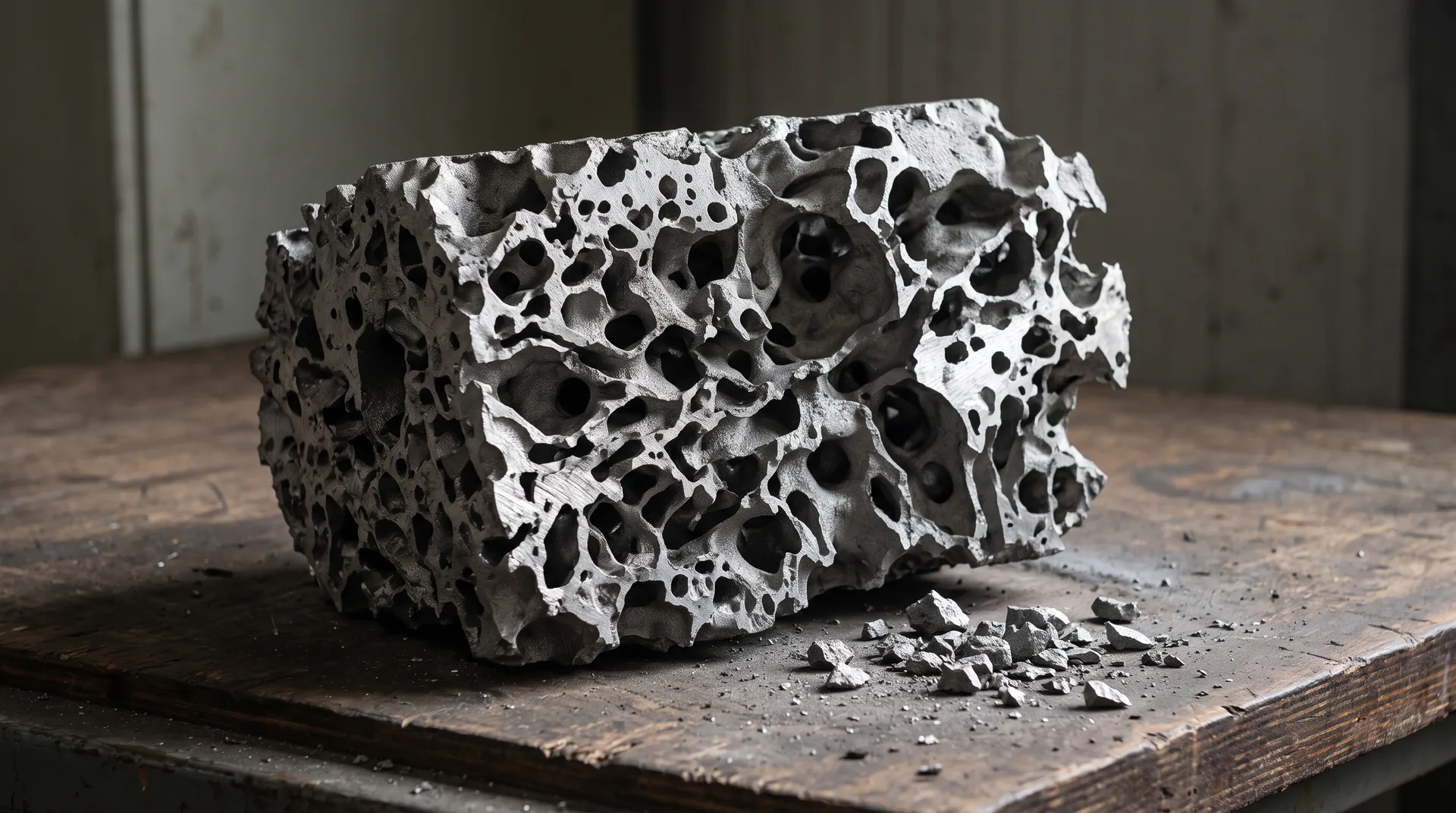
The Kroll route reduces titanium tetrachloride with magnesium to produce a porous metal called sponge, which is then purified and melted. The literature's verdict on it is oddly two-sided, and both sides are true.
A review of titanium resources and production methods calls it expensive and energy-consuming and characterises it as a discontinuous, energy-, and labor-intensive process — discontinuous meaning it runs in batches rather than as a continuous flow, which caps throughput in a way continuous processes are not capped. In the same account it is highly matured and optimized.
The review also locates where the energy goes, which is not where a reader might expect. It attributes to purification the observation that 70% of the total energy consumption is considered for the distillation to produce the sponge metal. The reduction reaction is not the expensive part. Getting the magnesium and magnesium chloride back out of the sponge is.
That matters for anyone designing a replacement, because it means a new reduction chemistry that does not also solve the purification problem has attacked the smaller share of the bill.
What the challengers are, and where they have got to
The alternatives are not new. They are a long-running programme, and the review names several families of them.
Among the thermochemical routes it identifies the Armstrong process, framed as a continuous alternative to batch operation, and the TiRO process, which uses fluidised-bed reactors to increase reaction rates. Among electrochemical routes it names the FFC Cambridge process, based on electrolytic reduction. It also names HAMR, a hydrogen-assisted magnesium reduction route, as a more recent development.
What none of them has is general commercial adoption, and the review states the outlook in its own hedged words: overall, it is expected that it will take several years before any new process will be in commercial production and compete with the Kroll process. "Expected", "several years" — that is a forecast of continued incumbency, made by people sympathetic to the alternatives.
The Kroll process is not defended by being good. It is defended by being finished — decades of accumulated optimisation that a challenger has to match on its first day of commercial operation.
It is often said that aerospace qualification is what keeps a new titanium route out of the market. That may well be true, and this article does not assert it: no primary or peer-reviewed source could be found stating it. What is documented is qualification of new sponge sources, which is a narrower claim about supply chains than about production chemistry, and the two should not be merged.
Where the incumbent actually is
The geography of the surviving process is itself part of the story, and the USGS records it plainly.
In its 2026 assessment: the United States did not produce titanium sponge metal in 2025, and the last domestic sponge plant closed in 2024. Two further US facilities are recorded as idle — a second sponge facility in Henderson, NV, with an estimated capacity of 12,600 tons per year has been idled since 2020, and a third facility in Rowley, UT, with an estimated capacity of 10,900 tons per year has remained idle since 2016.
The same publication's estimated 2025 sponge capacity column gives a world total, rounded, of 470,000 tons — tons, which is the unit the source prints. Its per-country rows are not reproduced here: no retrieved extract of the chapter carries its per-country sponge production rows, the one read that returned the capacity column returned it without the table's footnote apparatus, and a separate read of the same chapter records that its world totals row came back corrupted in conversion. Those rows need reading off the printed page before any of them is quoted. Nothing is asserted here about which countries do or do not appear among them. The European position is taken instead from the figures held in this publication's verified EU reference, drawn from SCRREEN's titanium factsheet — EU titanium metal consumption of 9,812 tonnes a year against approximately nil EU sponge capacity and 100% import reliance, on a 2016-2020 data-year basis, quoted without a link because no public URL is held. The two sources are on different vintages and should not be read as contemporaneous.
The USGS also notes where the metal goes: the majority of titanium metal was used in aerospace applications, with the remainder spread across armour, chemical processing, marine hardware, medical implants and power generation.
Why this sits at the far end of a mineral article
There is a distance between a deposit and any of this that is worth stating, because it is easy to collapse.
Almost none of the titanium that leaves a mine becomes metal. In the United States, more than 95% of titanium mineral concentrates were consumed by domestic TiO₂ pigment producers, with metal sharing the remainder with welding-rod coatings, carbides and chemicals. A deposit described as rutile-dominant — as Osmond describes Orión, reporting bulk channel sample rutile percentages that the 19 February 2026 release gives as estimates based on bulk sampling rather than direct measurement — is, on the one national pattern of use the sources here measure, overwhelmingly a pigment feedstock, whatever the metal chain does. No world pigment share is held in this set, and the United States figure does not stand in for one.
So the interest of the Kroll question for a mineral producer is not commercial exposure. It is that the metal route is the one place in this industry where a stubborn, expensive, sixty-year-old process defines what the material can be used for. If it were replaced, the answer to "what is titanium for" would change. That it has not been replaced, despite decades of well-funded attempts, is the most informative thing about it.
Exploration results and mineralogical estimates only. Orión has no JORC-compliant Mineral Resource or Reserve; maiden MRE and Scoping Study pending.
Sources
- Minerals (MDPI) 11(12) 1425, 2021 — Titanium: An Overview of Resources and Production Methods
- USGS Mineral Commodity Summaries 2026 — Titanium and Titanium Dioxide
- USGS Mineral Commodity Summaries 2025 — Titanium Mineral Concentrates
- SCRREEN2 titanium factsheet (V1, January 2024), via the hub's verified EU reference — no public URL held
- Osmond figure: osm_grade — 19 February 2026 (ASX:OSM release)
Related reading
- What lithium titanate trades away follows titanium into the one battery chemistry built around it.
- The separation nobody would do for hafnium alone is the same question asked of zirconium: why a hard route survives.
- The uses you can never recycle explains what happens to the pigment share this article sets aside.
- Why aerospace still can't design titanium out (Applications · Rutile) covers the demand that keeps the metal route alive at all.
Sources
- PRIMARY'Titanium: An Overview of Resources and Production Methods', Minerals (MDPI) 11(12), article 1425, 2021 (Kroll process described as expensive and energy-consuming, highly matured and optimized, and a discontinuous, energy- and labor-intensive process; 70% of total energy consumption attributed to distillation to produce sponge metal; expectation of several years before any new process competes commercially; alternative routes named).
- PRIMARYUSGS Mineral Commodity Summaries 2026, 'Titanium and Titanium Dioxide' (United States produced no titanium sponge in 2025 and the last domestic sponge plant closed in 2024; idled capacity at Henderson, NV and Rowley, UT; world sponge production capacity table by country and world total; majority of titanium metal used in aerospace).
- PRIMARYUSGS Mineral Commodity Summaries 2025, 'Titanium Mineral Concentrates' (more than 95% of titanium mineral concentrates consumed by domestic TiO2 pigment producers; remainder to welding-rod coatings, carbides, chemicals and titanium metal). A United States domestic figure.
- SECONDARYSCRREEN2 titanium factsheet (V1, January 2024) as recorded in the hub's verified EU reference table: EU titanium metal consumption 9,812 t/yr against approximately nil EU sponge capacity, 100% import reliance; figures on a 2016-2020 data-year basis.
- PRIMARYosm_grade — ASX:OSM release, 19 February 2026 (Orión rutile-dominant; Zone 1 bulk channel sample rutile percentages).
- PRIMARYASX:OSM release, 16 July 2026, Appendix B (mineral percentages stated to be mass-balance estimates rather than direct measurement).
- UNVERIFIEDGAP: no primary or peer-reviewed source could be located stating that aerospace qualification of a new production route is itself a barrier to adoption. Trade coverage exists for qualification of new sponge sources, which is a different claim, and the article does not make the stronger one.Non-public document · no public URL