Minerals Hub / Mining & Production / The separation nobody would do for hafnium alone
Mining & Production · Zircon · 5 min read
The separation nobody would do for hafnium alone
Hafnium is not mined; it is what remains when zirconium is purified for a reactor, and that single fact shapes where it comes from and how much of it there is.
Reviewed by Peter Uppal
The short version
Hafnium has no mine of its own. The USGS states that zirconium and hafnium are typically contained in zircon at a ratio of about 50 to 1, and that world resources of hafnium are associated with those of zircon and baddeleyite. The separation that produces hafnium metal is performed because zirconium destined for nuclear fuel cladding has to be hafnium-free — a specification written for zirconium, from which hafnium falls out as the other half.
A ratio rather than a deposit
Most elements are described by a grade. Hafnium is described by a ratio, because it does not occur in concentrations anyone mines for their own sake; it sits inside zircon crystals, substituting for zirconium.
Two independent government sources put the same figure on it. The USGS states that zirconium and hafnium are typically contained in zircon at a ratio of about 50 to 1 — note "typically" and "about", which are the source's own words and are load-bearing, since the ratio varies. A US EPA sector description gives it as zirconium and hafnium occur together in ores at ratios of about 50:1. On the resource question the USGS is equally direct: world resources of hafnium are associated with those of zircon and baddeleyite.
This is why hafnium turns up in exploration reporting as a passenger. At Orión, Osmond reports hafnium oxide in parts per million in the same samples that carry its zircon figures: the Zone 1 bulk channel samples are reported at 1,178 to 1,204 ppm HfO₂. The convenient shorthand that hafnium "rides with zircon" is this publication's phrasing rather than the company's: Osmond reports the numbers without characterising the relationship in those words. It does pair the two itself, though, in its own product framing — describing its aim of becoming the EU's first producer of monazite (rare earths), zircon (zirconium / hafnium) and titanium minerals — so the distinction is one of wording, not of substance.
Why the separation is done at all
The answer is not hafnium. It is a specification for zirconium, and it comes from inside a reactor.
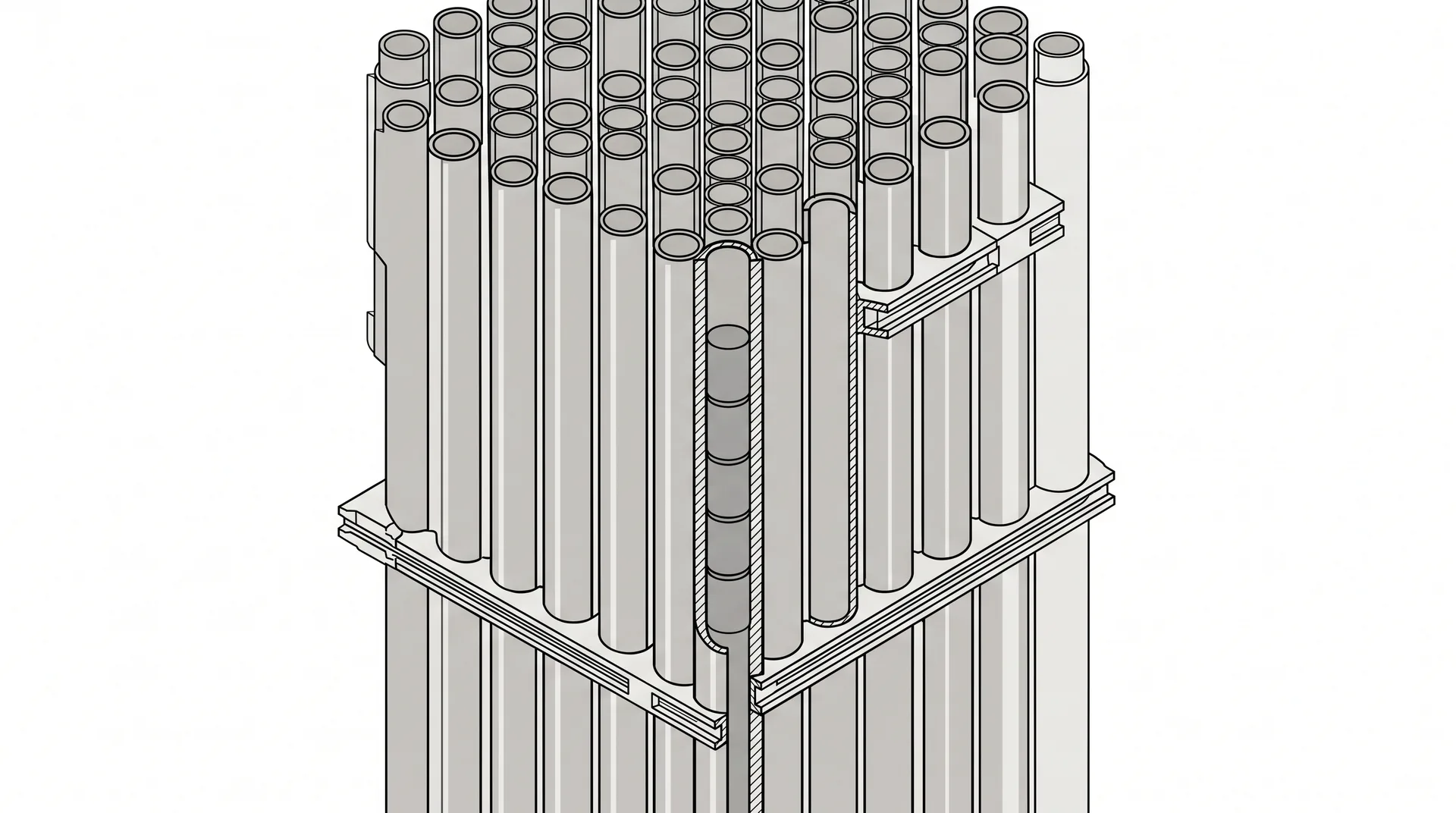
The EPA sector description states it plainly: because of the extremely opposite absorption characteristics for thermal neutrons in nuclear reactor cores, the zirconium-cladded fuel rods must be hafnium free. Zirconium is wanted in a reactor core precisely because it lets neutrons through. Hafnium, chemically its near-twin, stops them.
The USGS confirms where that demand sits, noting that the leading consumers of zirconium metal are the chemical process and nuclear energy industries. It also notes the mirror-image use: boron or cadmium-silver-indium alloys are sometimes used in lieu of hafnium metal in control rods at nuclear powerplants. The same neutron-absorbing property that disqualifies hafnium from the cladding qualifies it for the rods that shut the reaction down. Two opposite jobs, a few metres apart, filled by two elements that arrive in the same crystal.
Hafnium is what is left over when somebody makes zirconium clean enough for a reactor. Almost nobody sets out to make it.
Doing it is the hard part
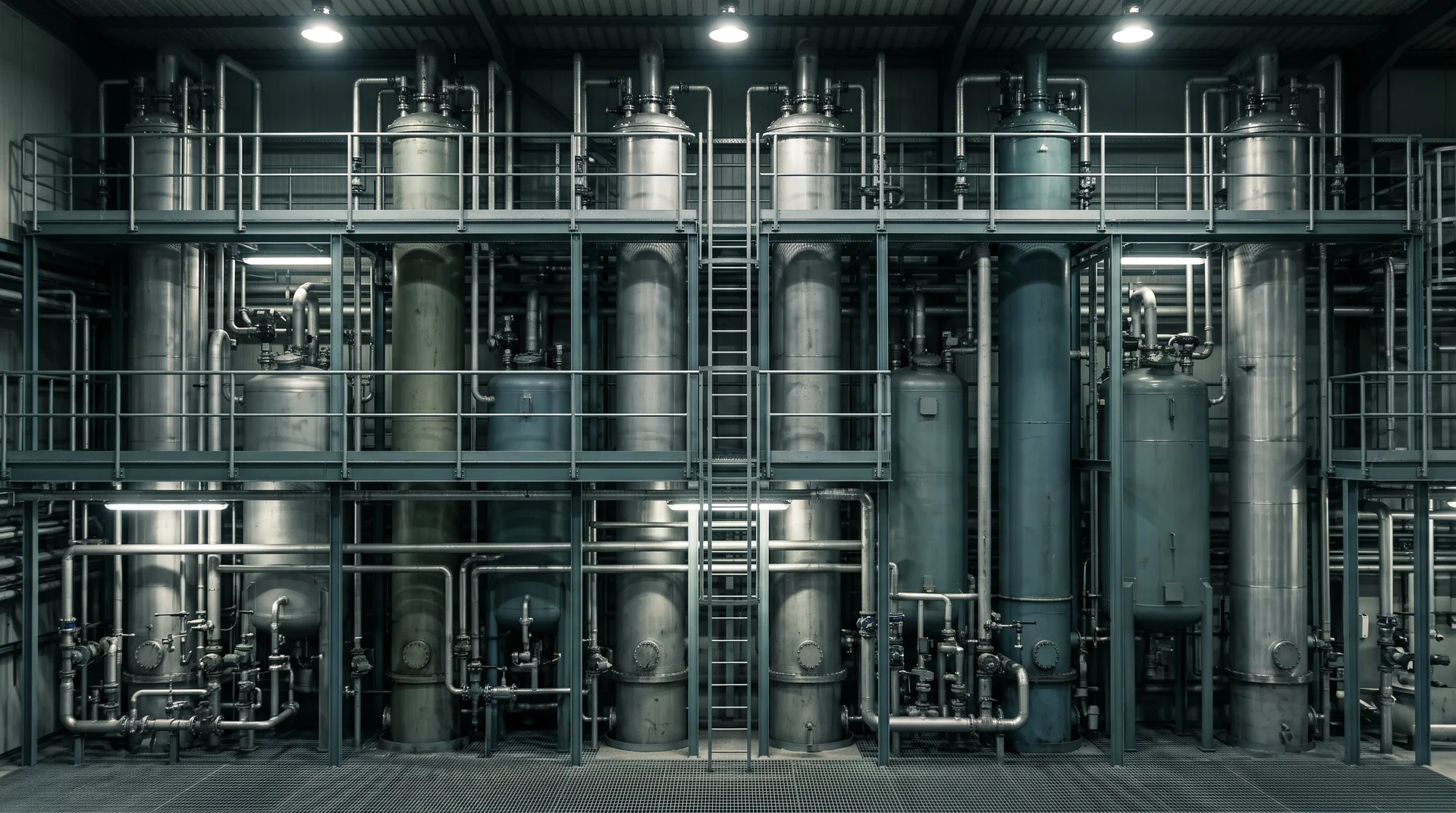
Separating two elements that behave almost identically in chemistry is not a single operation but a repeated one. The industrial route the EPA describes is liquid-liquid extraction, using methyl isobutyl ketone containing thiocyanate as a solvent, which separates zirconium from hafnium by preferentially extracting hafnium into the solvent phase.
Read that carefully and the difficulty is visible in the verb. The solvent does not take hafnium; it preferentially takes hafnium. A small preference is what has to turn a 50-to-1 ratio into nuclear-grade zirconium at one end and hafnium at the other. As a matter of general chemistry rather than any source cited here, the two elements are close enough in size and behaviour that no single clean reaction divides them, which is why the operation is counted among the more demanding separations the industry performs.
What this makes of Europe's position
Hafnium is where Europe's relationship with these minerals reads most strangely, and the reason is everything above.
On the SCRREEN factsheet figures held in this publication's verified EU reference — quoted without a link because no public URL is held for them — EU hafnium metal production is 35 tonnes a year, making France the world's largest producer at roughly 49% of world output on SCRREEN's own estimate, against EU consumption of 11.3 tonnes a year on a 2016 data year. Those numbers deserve their qualifications: the world total of 71 tonnes a year is SCRREEN's estimate alone, and the USGS states that world primary hafnium production data and quantitative estimates of hafnium reserves were not available. When the world's most authoritative minerals statistician declines to publish a number, a single estimate should not be treated as one.
What survives the caveats is the structure. Europe is a net exporter of an element it does not mine, made from zircon it imports, as the residue of purifying zirconium for reactors. Hafnium is on the EU's list of critical raw materials — critical, not strategic, so the Critical Raw Materials Act's extraction and processing benchmarks do not attach to it — and it is a European strength rather than a European gap.
That strength has a dependency written into it that no refining capacity can remove. The plant that separates hafnium cannot run on nothing. It runs on zircon, and the zircon comes from somewhere else.
Exploration results and mineralogical estimates only. Orión has no JORC-compliant Mineral Resource or Reserve; maiden MRE and Scoping Study pending.
Sources
- USGS Mineral Commodity Summaries 2025 — Zirconium and Hafnium
- US EPA — "Zirconium and Hafnium" (the document as fetched carries no title block or date)
- SCRREEN2 Hafnium factsheet (update 2, January 2024), via the hub's verified EU reference — no public URL held
- Osmond figure: osm_grade — 19 February 2026 (ASX:OSM release)
Related reading
- How two properties sort four minerals covers the physical separation that stops exactly where this chemistry begins.
- Why the Kroll process is still standing is the same question asked of titanium: why a difficult route survives.
- The uses you can never recycle explains why secondary supply does not relieve a chain like this one.
- From 50.2% to premium: the zircon target (Science · Zircon) covers the mineral this element travels inside.
Sources
- PRIMARYUSGS Mineral Commodity Summaries 2025, 'Zirconium and Hafnium' (zirconium and hafnium contained in zircon at a ratio of about 50 to 1; world hafnium production data and reserve estimates not available; world resources of hafnium associated with zircon and baddeleyite; leading consumers of zirconium metal).
- PRIMARYUS EPA, 'Identification and Description of Mineral Processing Sectors and Waste Streams — Zirconium/Hafnium' (ratio in ores; liquid-liquid extraction with methyl isobutyl ketone containing thiocyanate; requirement that zirconium-cladded fuel rods be hafnium free).
- SECONDARYSCRREEN2 factsheet, Hafnium (update 2, January 2024), as recorded in the hub's verified EU reference table: EU hafnium metal production 35 t/yr, France the world's largest producer at approximately 49% on SCRREEN's estimate; EU consumption 11.3 t/yr (2016 data year); world production 71 t/yr, SCRREEN estimate only.
- PRIMARYRegulation (EU) 2024/1252 — widely called the Critical Raw Materials Act, a popular short name the instrument itself never uses (zero occurrences in its text). Annex II is the CRITICAL raw materials list, 34 entries; the STRATEGIC list is Annex I, 17 entries. Hafnium occurs exactly once in the whole instrument, at Annex II, Section 1, point (o) — critical, not strategic, and not on Annex I. Zirconium and zircon occur nowhere in the instrument at all: absent from both lists, which is not the same claim as considered and excluded, and the document nowhere says they were considered. Annexes I and II read directly from the Publications Office (CELLAR) distribution of the Official Journal text as adopted 11 April 2024, completeness verified against the document's own closing block; this is the text as published, not a consolidated version, so any later amendment of either list is outside what it can show.
- PRIMARYosm_grade — ASX:OSM release, 19 February 2026 (Zone 1 bulk channel samples: HfO2 1,178-1,204 ppm alongside zircon and ZrO2 figures).
- ANALYSISOur framing: 'hafnium rides with zircon', and the observation that hafnium's availability is therefore set by demand for nuclear-grade zirconium rather than by demand for hafnium. Osmond reports HfO2 in ppm and does not use this wording, though it does pair the two elements in its own product framing ('zircon (zirconium / hafnium)'); no source consulted states the availability point.Non-public document · no public URL