Minerals Hub / Applications & Industries / Zirconium in the nuclear revival
Applications & Industries · Zircon · 4 min read
Zirconium in the nuclear revival
Reactors are being built again — and the metal that wraps their fuel barely absorbs neutrons, which is exactly why zirconium is hard to replace.
Reviewed by Peter Uppal
The short version
Zirconium alloys clad the fuel rods in most nuclear reactors because zirconium barely absorbs neutrons and resists corrosion at high temperature (World Nuclear Association). Hafnium, which occurs alongside zirconium in nature, does the opposite and must be stripped out to make reactor-grade metal (Britannica). Osmond reports both zirconium and hafnium in Orión's bulk channel samples, and a preliminary zircon concentrate grading 50.2% ZrO₂ (osm_zircon) — preliminary testwork, not a resource.
Why zirconium is inside the reactor
Nuclear reactors run on a delicate neutron economy: the chain reaction depends on keeping enough neutrons in circulation. So the materials you put inside the core matter enormously — anything that soaks up neutrons for no reason works against the reaction.
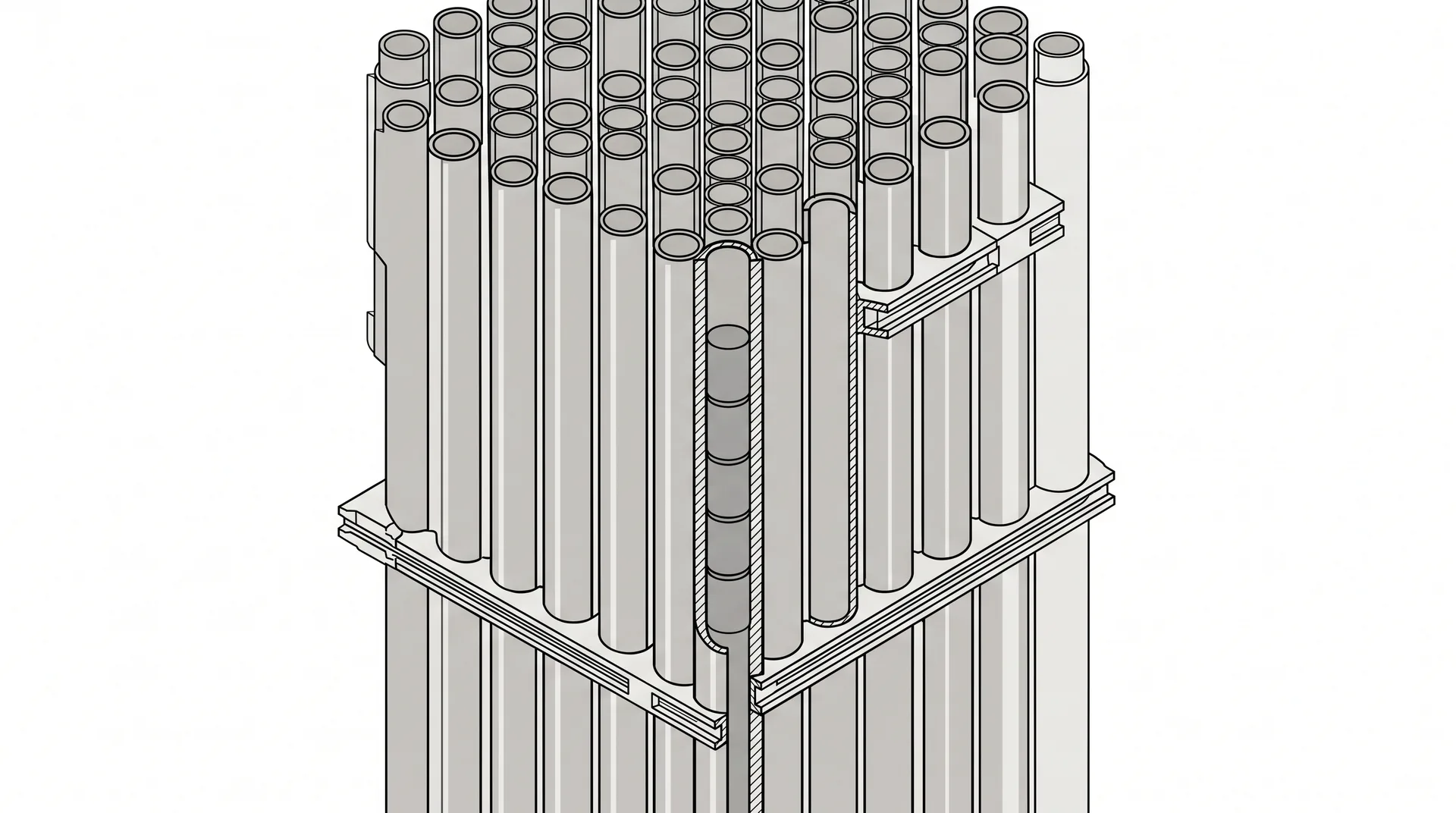
That is what makes zirconium special. It has an unusually low absorption cross section for thermal neutrons, meaning neutrons pass through it rather than being captured, and it resists corrosion in hot, high-pressure water (Britannica; World Nuclear Association). Those two traits are why zirconium alloys — known as zircaloy, zirconium blended with small amounts of tin, niobium, iron, chromium and nickel — are the standard material for fuel cladding, the thin metal tubes that contain the nuclear fuel and form the first barrier between it and the coolant (World Nuclear Association). Cladding is not a glamorous component, but it is safety-critical, and few materials do the job as well.
The hafnium problem
Here is the twist that ties zirconium to another mineral in Osmond's assemblage. Zirconium and hafnium are chemically almost identical twins and occur together in nature.
That pairing matters here for one reason. Hafnium has a very high neutron-capture cross section — the exact property you do not want in cladding (Britannica) — so it has to be separated out of the zirconium before the metal can be used in a reactor core, which is why Osmond's HfO₂ figure for Orión is worth reporting at all. The hafnium that comes out is itself the feedstock for reactor control rods. The chemistry of that separation, and hafnium's own uses, are covered on the hafnium reference page.
The revival, and where Orión fits
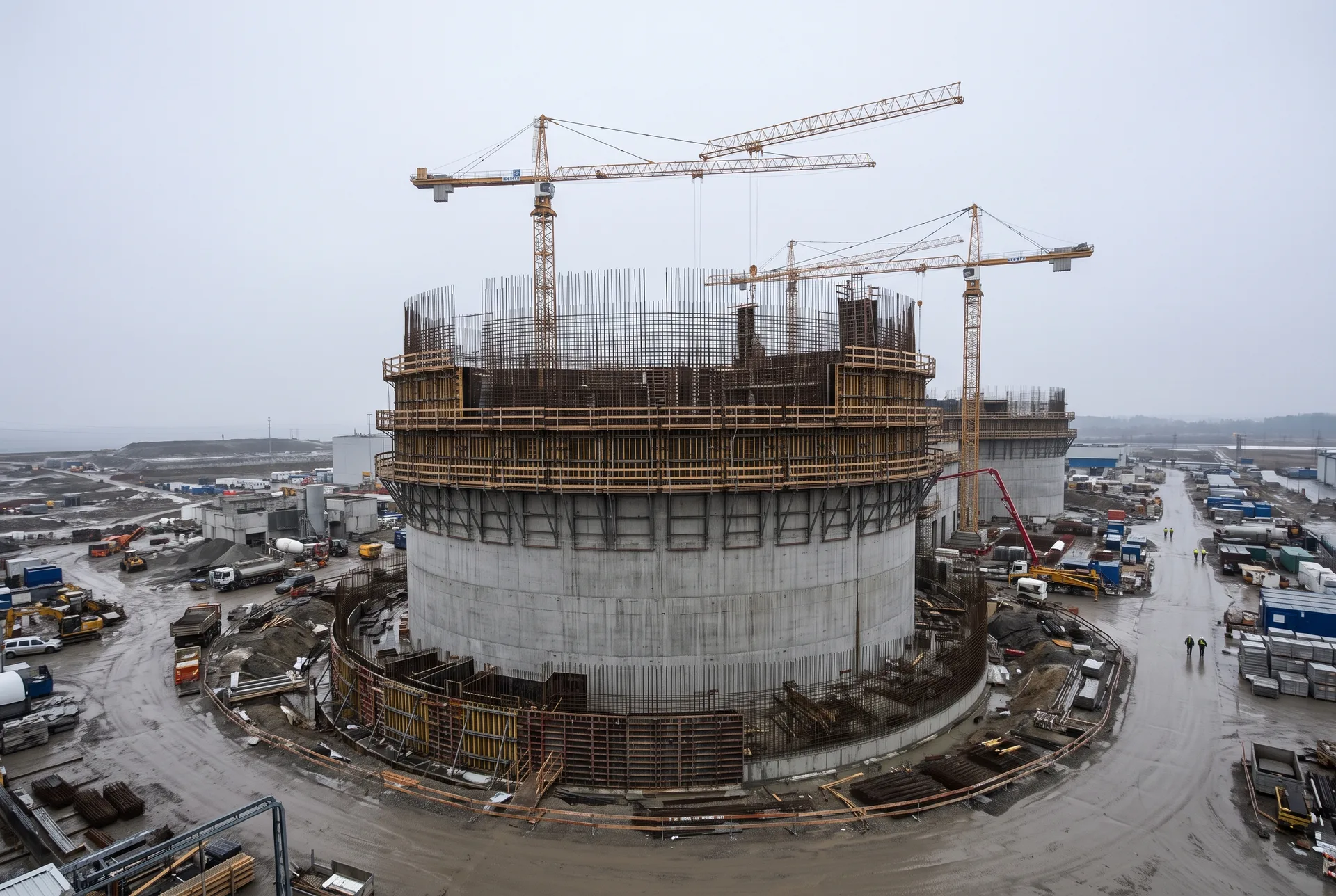
The reason this matters commercially is that nuclear is expanding again. According to the IEA, interest in nuclear power is at its highest since the 1970s, with support for expansion in more than 40 countries, a global fleet of around 420 reactors, and a substantial pipeline under construction — alongside a wave of small modular reactor designs in development (IEA, 2025). More reactors means sustained demand for the zirconium that clads their fuel. That zirconium, in turn, starts from zircon the EU mostly buys abroad: on SCRREEN's figures (2016–2020 basis), its zircon import reliance is about 83% (SCRREEN2 Zirconium factsheet). Hafnium is a separate story with the opposite shape, and the hub covers it in its own article.
For Orión, the discipline is the same as everywhere in this hub: only Osmond's own numbers. Osmond reports hafnium alongside zirconium in the zircon-bearing samples; that hafnium accompanies zirconium in zircon is settled mineralogy, set out on the hafnium reference page, while the commercial reading we place on those results is our analysis, not Osmond's wording. In the Zone 1 bulk channel samples, ZrO₂ runs 5.07% to 5.57% and HfO₂ 1,178 to 1,204 ppm (osm_grade). Preliminary metallurgy produced a combined zircon concentrate grading 50.2% ZrO₂ at about 70% recovery, with Osmond targeting ≥66% ZrO₂ of concentrate, by mass, which Osmond describes as a premium grade, in the next round of testwork (osm_zircon).
A clear boundary to close on: Osmond has not stated that Orión's zircon is destined for nuclear cladding, and mineral-sands zircon serves many markets beyond nuclear. What the releases establish is narrower and still meaningful — that Orión carries zirconium and hafnium together, in the mineral, at the grades quoted. The nuclear story explains why zirconium, and the hafnium recovered as a byproduct of zircon processing, are worth caring about; the deposit story stays inside what has been measured.
Orión data card — Zirconium (with hafnium)
| Status | Assayed / quantified |
| Bulk channel samples | ZrO₂ 5.07–5.57%; HfO₂ 1,178–1,204 ppm (osm_grade) |
| Preliminary concentrate | 50.2% ZrO₂ at ~70% recovery; target ≥66% ZrO₂ of concentrate, by mass (osm_zircon) |
| Hafnium | HfO₂ 1,178–1,204 ppm in the zircon-bearing bulk samples (osm_grade). Hafnium accompanies zirconium in zircon as settled mineralogy (hafnium reference page); the commercial reading of that pairing is our analysis, not Osmond's wording |
| Nuclear role (general) | Zircaloy cladding — low neutron absorption; hafnium removed for reactor grade (WNA; Britannica) |
→ See the full Zirconium dossier in the mineral hub.
Exploration results and mineralogical estimates only. Orión has no JORC-compliant Mineral Resource or Reserve; maiden MRE and Scoping Study pending, targeted Q3 CY26.
Sources
- Osmond figures: [osm_grade — 19 Feb 2026], [osm_zircon — 3 Mar 2026] (ASX:OSM releases); EU zircon import reliance 83% — SCRREEN2 Zirconium factsheet (2016–2020 basis)
- World Nuclear Association — Nuclear Fuel and its Fabrication
- Encyclopaedia Britannica — Hafnium
- IEA — The Path to a New Era for Nuclear Energy (2025)
Related reading
- Europe makes the world's hafnium. It just can't dig it. (Supply & the EU · Hafnium)
- From 50.2% to premium: the zircon target (Science · Zircon)
- Why co-products change mineral-sands economics (Investment · How the category works)
Sources
- PRIMARYosm_grade — ASX:OSM release, 19 Feb 2026 (bulk-sample ZrO₂ and HfO₂ grades Table 3).
- PRIMARYosm_zircon — ASX:OSM release, 3 Mar 2026 (zircon concentrate 50.2% ZrO₂ at ~70% recovery, target ≥66%, p.1/p.3).
- SECONDARYSCRREEN2 Zirconium factsheet — EU zircon import reliance 83% (2016–2020 basis).
- SECONDARYWorld Nuclear Association, 'Nuclear Fuel and its Fabrication' (zircaloy cladding and its role): https://world-nuclear.org/information-library/nuclear-fuel-cycle/conversion-enrichment-and-fabrication/fuel-fabrication
- SECONDARYEncyclopaedia Britannica, 'Hafnium' (zirconium's low neutron-absorption cross section; hafnium's high cross section; separation for reactor-grade metal): https://www.britannica.com/science/hafnium
- SECONDARYIEA, 'The Path to a New Era for Nuclear Energy' (2025) — scale of the nuclear revival and reactors under construction: https://www.iea.org/reports/the-path-to-a-new-era-for-nuclear-energy/executive-summary