Minerals Hub / Markets & Economics / How to read an early-stage mineral-sands explorer
Markets & Economics · Rutile · 4 min read
How to read an early-stage mineral-sands explorer
Exploration result, resource, reserve — three words that mean very different things, and the difference is most of what a newcomer needs to know.
Reviewed by Peter Uppal

The short version
Early-stage explorers publish exploration results — drill intercepts and sample grades — which sit well below a Mineral Resource, which in turn sits below an Ore Reserve, in the JORC framework of increasing confidence. Knowing which of the three you're reading, plus what a cut-off grade and a Scoping Study are, is the core literacy. Orión is at the earliest rung: exploration results, with a maiden resource still to come. None of this is advice — it's how to read the disclosures.
The ladder: results, resource, reserve
Australian-listed explorers report under the JORC Code, and its central idea is a ladder of confidence. At the bottom are Exploration Results — individual drill intercepts, channel samples, mineralogical estimates. Above them sits a Mineral Resource, an estimate of tonnage and grade with reasonable prospects of eventual economic extraction, graded by confidence into Inferred, Indicated and Measured. At the top is an Ore Reserve — the portion of a Measured or Indicated Resource that has survived the "modifying factors" (mining, processing, economic, legal, environmental) and been shown to be economically mineable — reported as Probable or Proved (JORC 2012).
Each step demands more evidence than the last. An Inferred Resource, notably, must not be reported as though it were a reserve. The whole structure exists so that a reader can tell, at a glance, how much confidence a number actually carries.
Why the three words are not interchangeable
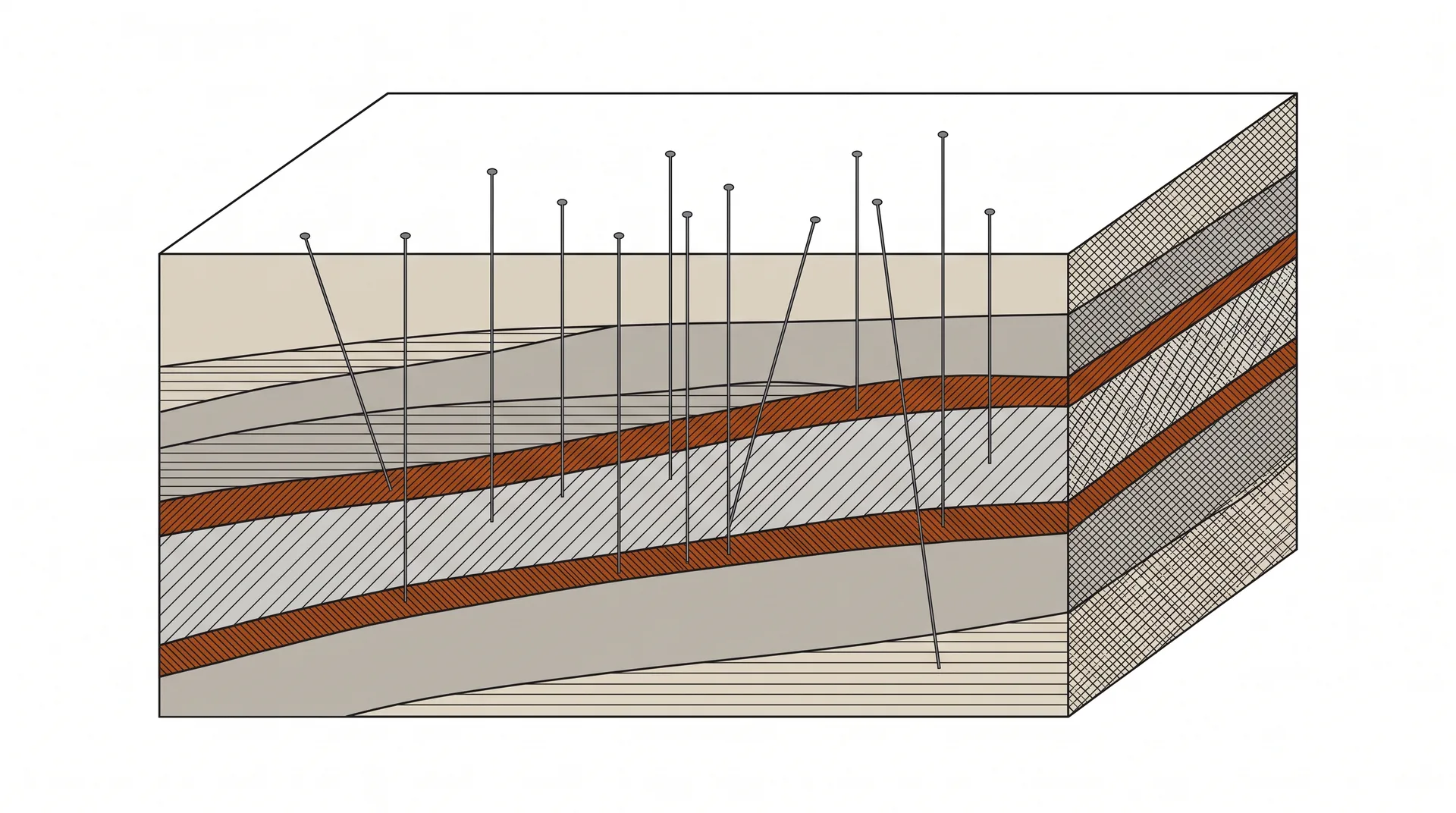
A high-grade drill result and a Mineral Resource are different things, and the gap between them is most of what a newcomer needs to grasp. A high-grade intercept tells you what one hole hit; a resource tells you, with a Competent Person's sign-off, how much material is there and how confident the estimate is; a reserve tells you how much of that is economically mineable under real-world constraints.
Orión is a useful, concrete illustration of the bottom rung. Osmond is an exploration-stage company, and Orión has no JORC-compliant Mineral Resource or Reserve; what has been published so far is exploration results and preliminary testwork. That is not a criticism — it's simply the stage — but it is the single most important fact to hold while reading anything else about the project.
A grade is not a resource; a resource is not a reserve. Most of the hard questions live in the gaps between the three.
Cut-off grades, and what they aren't
A term that trips up newcomers is the cut-off grade — the minimum grade a slice of rock must average to be counted in an intercept or, later, a resource. Orión's exploration results use weighted-average cut-offs of 2%, 5% and 8% TiO₂ (primary, secondary and ternary), a way of reporting intervals at different grade thresholds (osm_grade).
The thing to understand is what a cut-off is for: it's a reporting and, eventually, an economic filter — a line between "ore-grade" and "waste." It is not itself a statement of value, and a low cut-off is not a red flag or a green light. It's a convention, and reading it correctly means knowing which threshold a given number was reported at.
What a Scoping Study is — and isn't
Further up the road come the economic studies, and they, too, come in rungs of rigour. A Scoping Study is the first and most preliminary — an order-of-magnitude look at whether a project could work, based on a resource and broad assumptions. It is explicitly not a feasibility study; a Pre-Feasibility Study (PFS) and then a Definitive Feasibility Study (DFS) follow, each tightening the assumptions and the confidence.
In Orión's case, Osmond has said it is targeting a maiden MRE to support a Scoping Study before the end of Q3 CY26 (osm_drivers) — "targeted" being the company's own word for a forward-looking plan. Reading that correctly means recognising a Scoping Study as an early, high-level study, not a green-lit mine.
Putting it together
Reading an early-stage explorer well is mostly discipline: identify which JORC category a number belongs to, note the cut-off it was reported at, treat estimates marked with a "~" as estimates, and keep forward-looking dates in the conditional tense their qualifiers require. Do that, and the disclosures become legible.
Once they're legible, you can see what stage a company is at and how much confidence each number carries. What any of it is worth is a separate judgment — and yours to make, not this hub's.
Reader's card — the JORC ladder
| Rung | What it is | Confidence |
|---|---|---|
| Exploration Results | Drill intercepts, sample grades, estimates | Lowest — single data points |
| Mineral Resource | Tonnage + grade estimate (Inferred → Indicated → Measured) | Rising, Competent-Person signed |
| Ore Reserve | Economically mineable subset (Probable → Proved) | Highest — modifying factors applied |
| Orión today | Exploration results only; no resource or reserve | Earliest rung |
→ See the Orión project overview in the hub.
Exploration results and mineralogical estimates only. Orión has no JORC-compliant Mineral Resource or Reserve; maiden MRE and Scoping Study pending, targeted Q3 CY26.
Sources
- Osmond figures: [osm_grade — 19 Feb 2026], [osm_drivers — 3 Jul 2026] (ASX:OSM releases)
- JORC Code (2012 Edition)
Related reading
- The road to a maiden resource: what has to happen, and when (Investment)
- Why co-products change mineral-sands economics (Investment · How the category works)
- What a lithified placer actually is (Science)
Sources
- PRIMARYosm_grade — ASX:OSM release, 19 Feb 2026 (weighted-average cut-off grades 2% / 5% / 8% TiO₂; exploration-stage status).
- PRIMARYosm_drivers — ASX:OSM release, 3 Jul 2026 (maiden MRE targeted to support a Scoping Study before end Q3 CY26).
- PRIMARYJORC Code (2012 Edition) — Exploration Results, Mineral Resources (Inferred/Indicated/Measured), Ore Reserves (Probable/Proved), modifying factors, and the Competent Person: https://www.jorc.org/docs/JORC_code_2012.pdf