 ASX: OSM · Orión Project
Minerals Hub / Elements / Titanium
Ti · element
Titanium
Carried in — the Orión minerals that yield it
What it is
Titanium is element 22, a d-block metal in group 4, period 4, with the electron configuration [Ar] 3d² 4s². Its standard atomic weight is 47.867(1), adopted in 1993 by CIAAW — before which titanium carried the largest relative atomic-weight uncertainty of any element at 626 parts per million. It has five stable isotopes, ⁴⁶Ti through ⁵⁰Ti, with ⁴⁸Ti the dominant one at 73.72%.
Titanium does not occur in nature as a free metal. In the vast majority of its compounds, it presents as Ti(IV), losing all four valence electrons, and nearly all of it is used industrially in that oxidised form — as TiO₂.
Discovered in 1791 by the English clergyman William Gregor, who found it in the iron-titanium mineral ilmenite (FeTiO₃), Gregor named the mineral menachanite and the element menachin after Menachan parish in Cornwall. The German chemist Martin Heinrich Klaproth independently rediscovered it in 1795 and gave it the name titanium: he chose the name because the element had no characteristic property to name it for, and drew on the Latin titans — in mythology, the first sons of the earth.
Properties
Titanium melts at 1,668 °C (1,941 K) and boils at 3,287 °C (3,560 K). Its density is 4.506 g/cm³ at 20 °C — placing it between aluminium and stainless steel, lighter than most structural metals yet considerably denser than aluminium. For comparative purposes, approximately 4.5 g/cm³ captures this position without false precision.
The metal exists in two solid forms. Below 882.5 °C it adopts the alpha phase, a hexagonal close-packed structure. Above that temperature it transforms to the beta phase, body-centred cubic. Alloying elements push this transition up or down: alpha-stabilisers keep the hcp structure to higher temperatures, beta-stabilisers retain the bcc phase down to room temperature. That retained beta is the basis of heat-treatable titanium alloys.
Titanium's celebrated corrosion resistance stems from a spontaneous, continuous and tightly adherent passive oxide film that forms instantly on its surface. This film holds firm in seawater, chloride solutions, oxidising acids and alkalis — environments that attack most other structural metals.
Occurrence
Titanium is the ninth most abundant element in Earth's crust. The upper continental crust contains 0.64 ± 0.08 wt% TiO₂, equivalent to approximately 0.38 wt% (≈ 3,800 ppm) titanium — the distinction between oxide basis and elemental basis matters, since the circulating figure of "≈ 0.6% titanium" is an oxide-basis value that has been widely mislabelled as elemental.
It occurs in anatase, brookite, ilmenite, leucoxene, perovskite, rutile and sphene (titanite), but only ilmenite, leucoxene and rutile carry significant economic importance. Which mineral hosts the titanium depends strongly on metamorphic grade: titanite, biotite and hornblende carry titanium in lower-grade rocks; from sillimanite grade upward, titanium binds preferentially into ilmenite and rutile; in granulite facies, oxide phases dominate entirely and titanium-rich silicates disappear.
The three natural TiO₂ polymorphs — rutile, anatase and brookite — differ in crystal system and stability. Rutile is tetragonal and the stable bulk phase; anatase is also tetragonal but metastable; brookite is orthorhombic. Their enthalpies relative to bulk rutile are: brookite +0.71 ± 0.38 kJ/mol, anatase +2.61 ± 0.41 kJ/mol. Surface enthalpies run in the opposite direction (rutile 2.2, brookite 1.0, anatase 0.4 J/m²), producing a nanoscale stability crossover in which anatase and brookite become the preferred phases at very small particle sizes.
The economically important minerals break down as follows. Ilmenite (Fe²⁺TiO₃) is typically the most abundant titanium mineral in heavy-mineral-sand deposits. Stoichiometrically it contains 53% TiO₂ — that is its theoretical formula value — but natural heavy-mineral-sand ilmenite typically runs 55–65% TiO₂, because post-depositional weathering leaches iron and upgrades the ore. Rutile is TiO₂ by formula — 100% in the pure mineral — while natural rutile or concentrate typically reaches approximately 95% TiO₂, the balance being oxides of silicon, chromium, vanadium, aluminium and iron; rutile is usually less abundant than ilmenite in heavy-mineral-sand deposits but is the purest natural titanium source. Leucoxene is an informal name for altered ilmenite, spanning the compositional range from FeTiO₃ to mostly TiO₂, with a specific gravity of 3.5–4.5, formed by progressive iron leaching during weathering. Titanite (sphene), CaTiO(SiO₄), has a specific gravity of 3.4–3.6; computed from stoichiometry, it contains approximately 40.7 wt% TiO₂.
As of a 2013 compilation reported by USGS in 2018, roughly 90% of rutile and 30% of ilmenite produced globally came from coastal placer heavy-mineral-sand deposits, where separation proceeds gravity-first on the basis of density contrast, followed by magnetic, electric and electrostatic separation.
Applications
TiO₂'s dominance as a pigment rests on physics: its refractive index is exceptionally high, producing strong light scattering, and therefore outstanding hiding power and brightness. Particle size is controlled to approximately 0.2–0.4 µm to maximise scattering efficiency. In the United States, leading uses of TiO₂ pigment in descending order are paints (including lacquers and varnishes), plastics and paper, with further applications in catalysts, ceramics, coated fabrics and textiles, floor coverings, printing ink and roofing granules.
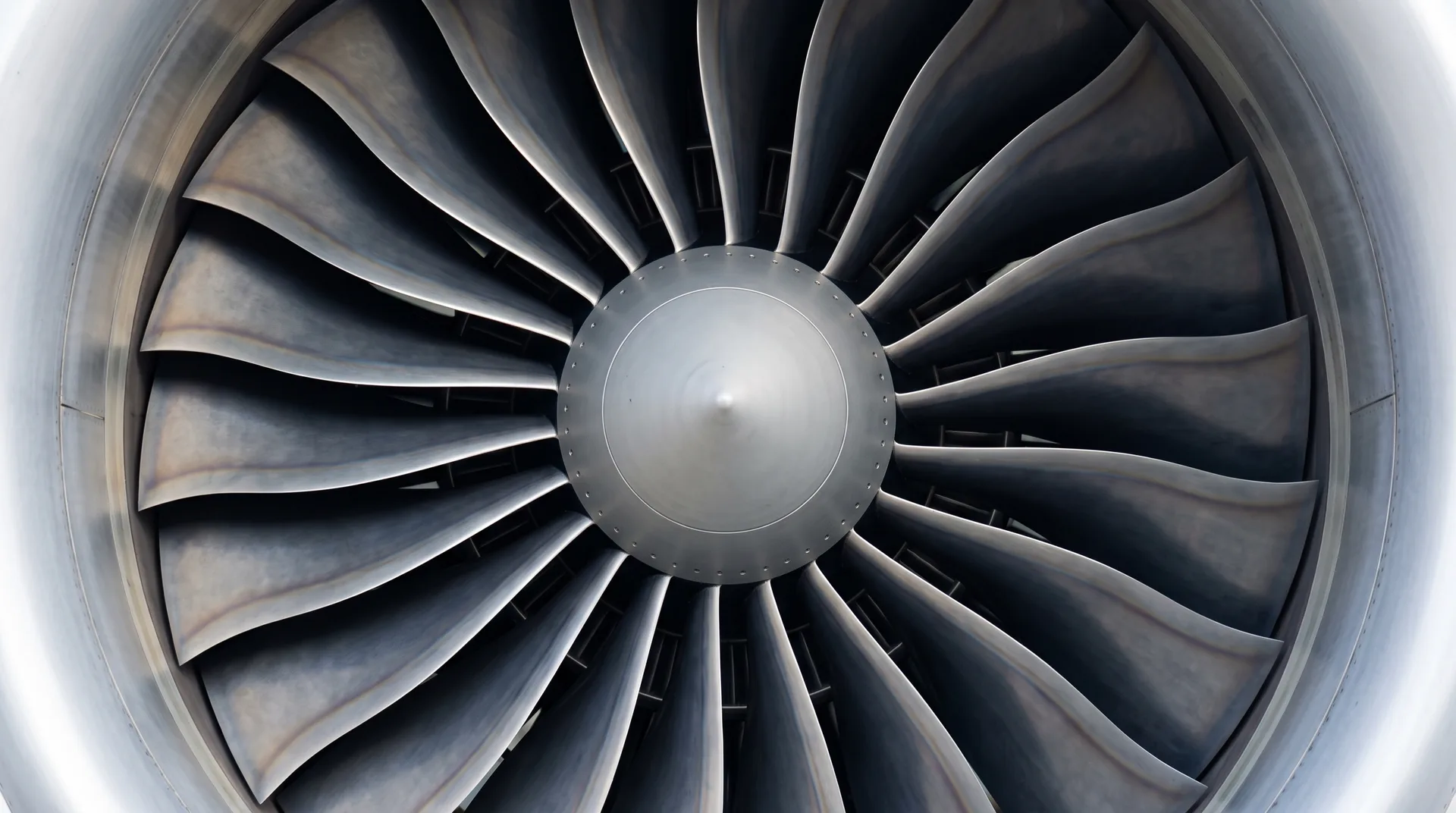
Titanium metal's properties — high strength-to-weight ratio, corrosion resistance from its passive oxide film, and an elastic modulus closer to bone than most metals — make it the material of choice where mass, durability or biological compatibility cannot be traded away. In the United States, the majority of titanium metal consumption goes to aerospace; the remainder serves armour, chemical processing equipment, marine hardware, medical implants and power generation. In medicine, titanium and its alloys are used for dental, orthopaedic and cardiovascular implants, where their combination of mechanical strength, corrosion resistance, low elastic modulus and biocompatibility is difficult to match.
Industrial importance
Ilmenite accounts for roughly 90% of world consumption of titanium minerals. That single statistic frames the element's industrial logic: a relatively common oxide mineral, upgraded through chemistry into either a pigment that whitens nearly every painted surface on Earth, or a metal that enables aircraft structures and surgical implants that no cheaper alternative can reliably replace.
The reader who knows titanium as the aerospace metal and the reader who knows it as the white pigment in their paint tin are both correct — they are simply looking at the 5% and the 95% of the same element's industrial life. What connects both streams is TiO₂: the pigment is TiO₂ refined to optical purity, and the metal is TiO₂ stripped of its oxygen by one of the most energy-intensive reduction processes in commercial metallurgy. Titanium's abundance in the crust is not in question; it is the difficulty of that reduction, and the perfection of the pigment, that give the element its industrial character.
How it is extracted
Titanium leads two almost entirely separate industrial lives, and it is worth naming that split plainly: roughly 95% of all titanium consumed worldwide goes into TiO₂ pigment — a story about optics and white paint — while the titanium metal famous in aerospace and medicine accounts for only a small fraction. Both streams begin with the same minerals but diverge immediately in chemistry.
The pigment stream. Because pigment production tolerates a range of feedstocks, both ilmenite and rutile feed the two main routes. The sulfate process digests ilmenite or titaniferous slag in sulfuric acid, hydrolyses the resulting titanyl sulfate solution, and calcines the oxide hydrate at 900–1,000 °C. The chloride process reacts natural or synthetic rutile with carbon and chlorine at 850–1,000 °C to produce titanium tetrachloride (TiCl₄), which is then burned with an oxygen-containing gas at 1,200–1,370 °C to yield TiO₂. Both routes can produce the rutile crystal form of TiO₂; the sulfate route yields anatase by default and rutile only by seeding, while the chloride route runs as a continuous process and the sulfate route as a batch process. The chloride route demands high-TiO₂ feed — natural or synthetic rutile — because economical pigment yield requires ≥ 60% TiO₂ in the concentrate; the sulfate route tolerates ilmenite as low as 40% TiO₂.
Where ilmenite's iron content is too high for direct use in the chloride route, it is upgraded. Rotary-kiln heating with air converts iron to Fe(III) oxide, which is then selectively leached or thermally reduced, leaving a synthetic rutile of ≥ 90% TiO₂. Ilmenite also upgrades to titaniferous slag by smelting. Rutile and leucoxene can be blended to a "HiTi" product running 70–95% TiO₂, feeding both pigment production and titanium metal manufacture.
The metal stream. The Kroll process remains the only commercially viable method for producing titanium metal. It begins with carbochlorination: TiO₂ reacts with chlorine and carbon in a fluidised bed at around 1,000 °C to yield TiCl₄ (TiO₂ + 2Cl₂ + 2C → TiCl₄ + 2CO). The purified TiCl₄ is then reduced by molten magnesium at 800 °C in an air-free, highly exothermic reaction running 36–50 hours: TiCl₄ + 2Mg → Ti + 2MgCl₂. The product is sponge titanium. The magnesium chloride by-product is electrolysed to recover both magnesium and chlorine for recycling, and vacuum distillation removes residual impurities including any remaining MgCl₂.
- PRIMARYIUPAC Periodic Table
- PRIMARYCIAAW (Commission on Isotopic Abundances and Atomic Weights)
- PRIMARYGreenwood & Earnshaw, Chemistry of the ElementsNo public URL · citation pending
- PRIMARYCRC Handbook of Chemistry and PhysicsNo public URL · citation pending
- PRIMARYASM Metals Handbook / MassalskiNo public URL · citation pending
- PRIMARYRudnick & Gao, Treatise on GeochemistryNo public URL · citation pending
- PRIMARYUSGS Mineral Resources Program / SIR 2018–5045
- PRIMARYUSGS Mineral Commodity Summaries 2026
- PRIMARYIARC Monograph 47 (1989)
- PRIMARYRanade et al., PNAS 99 (2002)
- PRIMARYMatsanga et al., Minerals 15(1):17