Minerals Hub / Companies & Organisations / The rungs between a beaker and a plant
Companies & Organisations · · 5 min read
The rungs between a beaker and a plant
Research organisations produce results at a scale nobody can build from, and the ladder between that result and an operating circuit is both formally defined and reliably underestimated.
Reviewed by Peter Uppal
The short version
Between a promising laboratory result and a working plant sit several defined stages, each of which exists because the previous one cannot answer the questions the next one raises. The European Commission's scale runs from TRL 1 – basic principles observed to TRL 9 – actual system proven in operational environment. In minerals the intermediate rung has a name and a purpose: pilot plants 'are used to reduce the risk of scaling laboratory results to full scale production'. The gap is not a formality, and the historical record on crossing it is sobering.
A ladder somebody wrote down
The reason a research finding is not a technology is easier to see once the intervening stages are named. The Commission's definitions are terse and worth having in full at the middle rungs, where the interesting failures happen: TRL 4 – technology validated in lab; TRL 5 – technology validated in relevant environment (industrially relevant environment in the case of key enabling technologies); TRL 6 – technology demonstrated in relevant environment (industrially relevant environment in the case of key enabling technologies); TRL 7 – system prototype demonstration in operational environment.
The scale originates with NASA, whose version says the same thing in more physical language — component/subsystem validation in laboratory environment at level four, and, at nine, actual system 'mission proven' through successful mission operations. The distance between 'validated in lab' and 'validated in a relevant environment' is one line of text and, frequently, several years.
Minerals has its own version of the same ladder
A process-development account written for the minerals industry describes the sequence concretely: batch laboratory tests to evaluate the major variables, then locked cycle testwork, then — where warranted — a pilot campaign. The source gives three reasons for that last step, not one: pilot plant tests 'are usually required to demonstrate a high risk process, to increase the confidence level on a marginal project or for the production of concentrate or other downstream products for other testwork'. Usually, and for any of those three: the hedge is the source's, and it matters, because piloting is expensive and is not done reflexively.
What a pilot buys is continuity. A bench test is a sequence of discrete experiments; a plant is a circulating system in which the tailings of one step become the feed of another and the reagents accumulate. Scale-up literature is explicit that these are issues difficult to investigate during bench scale tests, and that the mechanical and operating difficulties which arise are part of what is being tested.
The historical record, quoted carefully
The most quantified thing available on how often this goes wrong is old and comes from a different industry. A 1981 study of pioneer process plants — a sample its publisher describes as 44 plants built by 34 oil, chemical, and mineral companies — found that over 50 percent of the plants in the sample 'failed to achieve their production goals in the second six months after start-up'.
That figure is not about mineral processing, and it is not transferred to it here. It is cited because nothing equivalent for this industry was obtained, and because the direction it points is the one every practitioner account also points in. The honest summary is that a laboratory result is a weak predictor of plant performance, that this is well known, and that the size of the effect in minerals specifically is not something this article can source.
A bench test asks whether the chemistry works. A pilot asks whether it keeps working when its own output comes back around the loop.
Why some of this equipment is public
Piloting is where the funding question becomes structural. The facilities are expensive, intermittently used, and useless to own if you only need one campaign — which is precisely the profile of infrastructure that ends up publicly held.
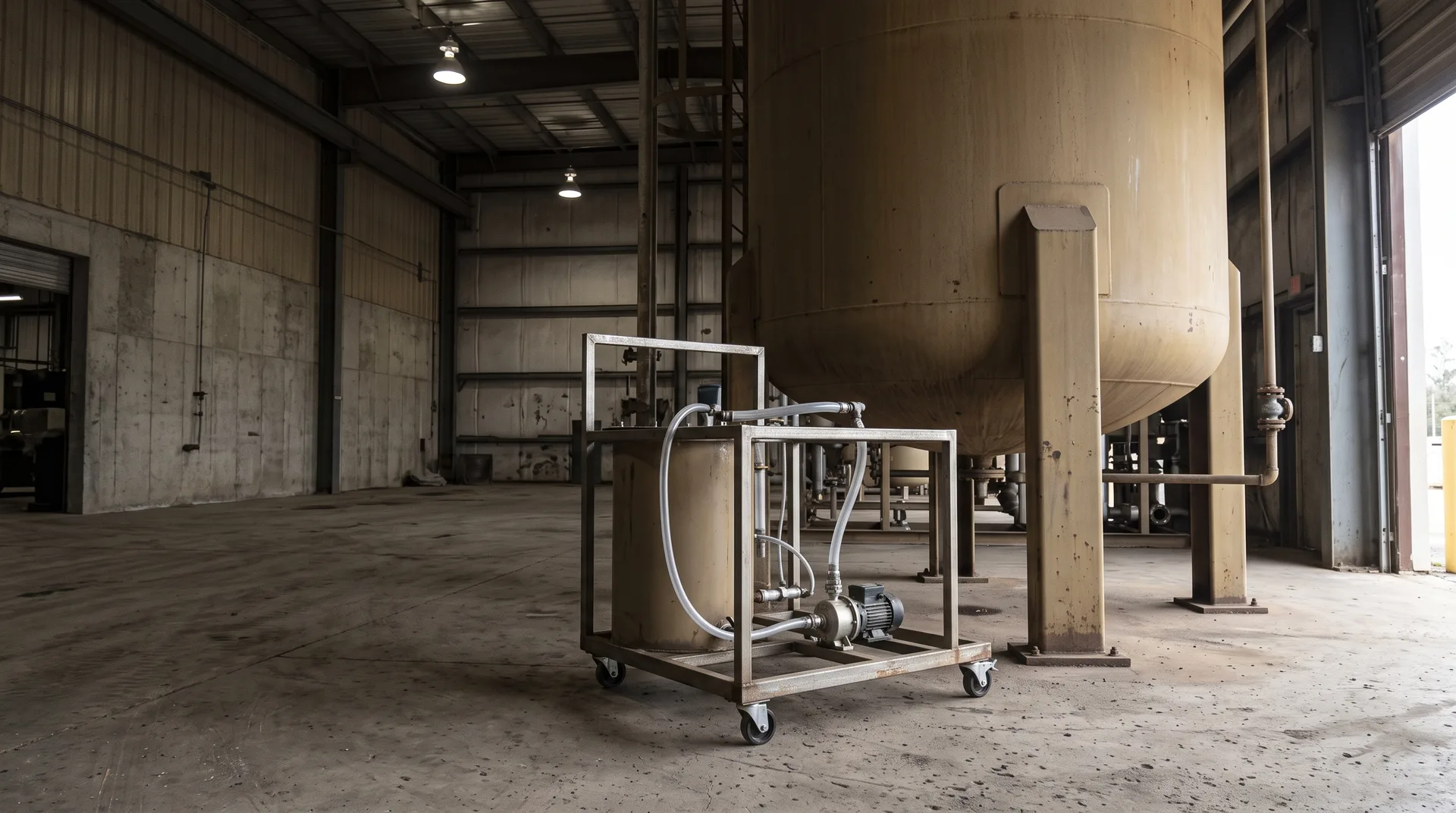
A national geological survey describes its own as a unique service package combining mineral research laboratories with an industrial-scale pilot plant, a testing platform for the long-term behaviour of extractive waste and a tailing area, offering users a unique opportunity to test new procedures and processes. The European Commission generalises the category, defining technology infrastructures as facilities, equipment, capabilities and resources required to develop, test, upscale and validate technology — including test beds, pilot lines, pilot plants and demonstration facilities, whose stated purpose is to let firms derisk their R&D&I investments before market introduction.
That is the answer to the question of what a public research organisation is for at this stage: it owns the rung nobody can justify owning alone.
How the work is meant to travel
The routes out of a research organisation are also formally defined. The Commission distinguishes dissemination — the public disclosure of the results not only by scientific publications but via any pertinent medium — from exploitation, defined as the use of results in developing, creating and marketing or improving a product or process, or in creating and providing a service in standardisation activities or shaping a policy. Publication and use are different obligations, and a finding can satisfy the first for years without touching the second.
Which is a useful frame for reading any early metallurgical result, including this publisher's own. Osmond's preliminary testwork, carried out at a commercial laboratory, produced a monazite concentrate of 19.4% TREO excluding yttrium at approximately 76% recovery and a zircon concentrate of 50.2% ZrO₂ at approximately 70% recovery — work the company describes as preliminary, performed on a fraction of a bulk composite, on crushed bulk ore that was not optimised. On the ladder above, that is a low rung, honestly labelled. The distance from there to a plant is the subject of this article, and it is not short.
Exploration results and mineralogical estimates only. Orión has no JORC-compliant Mineral Resource or Reserve; maiden MRE and Scoping Study pending, targeted Q3 CY26.
Related
- Metallurgy — the discipline the testwork belongs to
- Technology Providers — the commercial laboratories that run much of it
- New Processing Technologies — where this work is most active
Sources
- PRIMARYEuropean Commission, HORIZON 2020 Work Programme 2018-2020, General Annexes, Annex G — Technology readiness levels (TRL), extract from Commission Decision C(2017)7124. The nine levels quoted verbatim, from 'TRL 1 – basic principles observed' to 'TRL 9 – actual system proven in operational environment'.
- PRIMARYNASA Earth Science Technology Office, 'Definition Of Technology Readiness Levels' (undated) — the origin scale, including TRL 4 'Component/subsystem validation in laboratory environment' and TRL 9 'Actual system "mission proven" through successful mission operations (ground or space)'.
- SECONDARYLunt, D., Ritchie, I., Fleay, J., 'Metallurgical Process Development for Plant Design', MINDEV 97 Paper No. 10, hosted by AusIMM — the sequence of batch laboratory rougher and cleaner flotation tests and locked cycle testwork, and 'Pilot plant tests are usually required to demonstrate a high risk process'. Some passages were retrieved with ellipses and sentence boundaries have not been fully verified.
- PRIMARYSinche Gonzalez, M., Luukkanen, S., Paavola, M., 'Considerations in Mineral Processing of Scale-up from Bench to Pilot Plant to Full Production', 3rd World Congress on Mechanical, Chemical, and Material Engineering, Rome, 8–10 June 2017 — 'Pilot plants are used to reduce the risk of scaling laboratory results to full scale production.' The paper states no failure-rate statistics.
- PRIMARYMerrow, E.W., Phillips, K., Myers, C.W., 'Understanding Cost Growth and Performance Shortfalls in Pioneer Process Plants', RAND Corporation, R-2569-DOE, 1981, Summary — 'Over 50 percent of the plants in our sample failed to achieve their production goals in the second six months after start-up.' The publisher describes the sample as 44 process plants built by 34 oil, chemical, and mineral companies; the study dates from 1981.
- PRIMARYGeological Survey of Finland (GTK), 'Mining' service page and news item of 4 October 2022 — 'GTK Mintec is a unique service package combining mineral research laboratories with an industrial-scale pilot plant, a testing platform for the long-term behaviour of extractive waste and a tailing area', offering 'a unique opportunity to test new procedures and processes'.
- PRIMARYEuropean Commission, DG Research and Innovation, 'Technology Infrastructures' (page updated 13 August 2025) — technology infrastructures as 'facilities, equipment, capabilities and resources required to develop, test, upscale and validate technology… test beds, pilot lines, pilot plants and demonstration facilities, cleanrooms, and living labs', allowing companies 'to derisk their R&D&I investments before market introduction'.
- PRIMARYEuropean Commission, DG Research and Innovation, 'Dissemination and exploitation of research results' (undated) — dissemination as 'The public disclosure of the results not only by scientific publications but via any pertinent medium', and exploitation as 'The use of results in developing, creating and marketing or improving a product or process, or in creating and providing a service in standardisation activities or shaping a policy'.
- PRIMARYosm_zircon — ASX:OSM release, 3 Mar 2026 (preliminary metallurgical testwork at SGS Lakefield on Orión material; monazite concentrate 19.4% TREO excl. Y at approximately 76% recovery; zircon concentrate 50.2% ZrO₂ at approximately 70% recovery; the work described as preliminary, on a fraction of the Zone 1 bulk composite and on crushed bulk ore that was not optimised).
- UNVERIFIEDGAP — no quantified, citable statement specific to mineral processing was obtained on how often laboratory metallurgical results fail to reproduce at plant scale. The nearest sourced figure concerns pioneer energy and chemical process plants in a 1981 study, and is presented as such rather than transferred to this industry.Non-public document · no public URL