Minerals Hub / Geography & Supply Chains / Why monazite ships under the radioactive-materials rules
Geography & Supply Chains · Monazite · 4 min read
Why monazite ships under the radioactive-materials rules
Transport law does not classify minerals by name; it classifies them by activity concentration against a table — and a monazite concentrate can land on either side of that line.
Pending review
The short version
International transport law does not have a list of radioactive minerals. It has a threshold expressed as activity concentration, and a rule that natural materials and ores may carry up to ten times the tabulated value before the regulations apply. Monazite matters here because it carries thorium in its structure — so a monazite concentrate can be offered for carriage as Class 7 radioactive material, and a different monazite concentrate can be assessed as falling outside the framework altogether.
The rule is a number, not a mineral
The IAEA's transport regulations set out what is excluded from their scope, and one of the exclusions is written for exactly this situation. The regulations do not apply to natural material and ores containing naturally occurring radionuclides, "which may have been processed, provided the activity concentration of the material does not exceed 10 times the values specified in Table 2". Note what that clause does not say: there is no requirement that the material be unprocessed, and no test of what the shipper intends to do with it.
Table 2 supplies the values. For the two long-lived natural-series head nuclides that matter for this mineral group, the activity concentration for exempt material is 1 × 10¹ Bq/g for Th-232 and 1 × 10¹ Bq/g for U-238. The ores allowance is a factor of ten on those figures; the multiplication is left here to the reader, because the regulation states the factor and the table separately and the operative calculation for any real consignment is done on measured activity, not on a mineral name. These are the transport framework's numbers; instruments written for other purposes — exemption and clearance among them — set different values for the same radionuclides.
The paperwork does not describe the mineral. It describes a measurement someone made on one particular pile of it.
Which is why monazite comes up
Monazite is the mineral that brings thorium into this assemblage. A page on the Australian Radiation Protection and Nuclear Safety Agency's website describes it as a mineral "with reasonable thorium concentration (5-7%)", and identifies dry plant separation and "the processing, handling and storage of monazite" as carrying the highest exposure risk in mineral sands work, predominantly by inhalation of dust.
A product document for an actual shipped concentrate gives a different measure again, and the two should not be run together. RZ Resources' safety data sheet for its monazite lists composition as Thorium Phosphate at 4–6% and Uranium Phosphate at 0.3–0.4%. ARPANSA's figure is a thorium concentration in a mineral; the data sheet's is a compound percentage in a product. They are adjacent facts, not the same fact, and averaging them would produce a number neither source stands behind.
What the classification actually changes
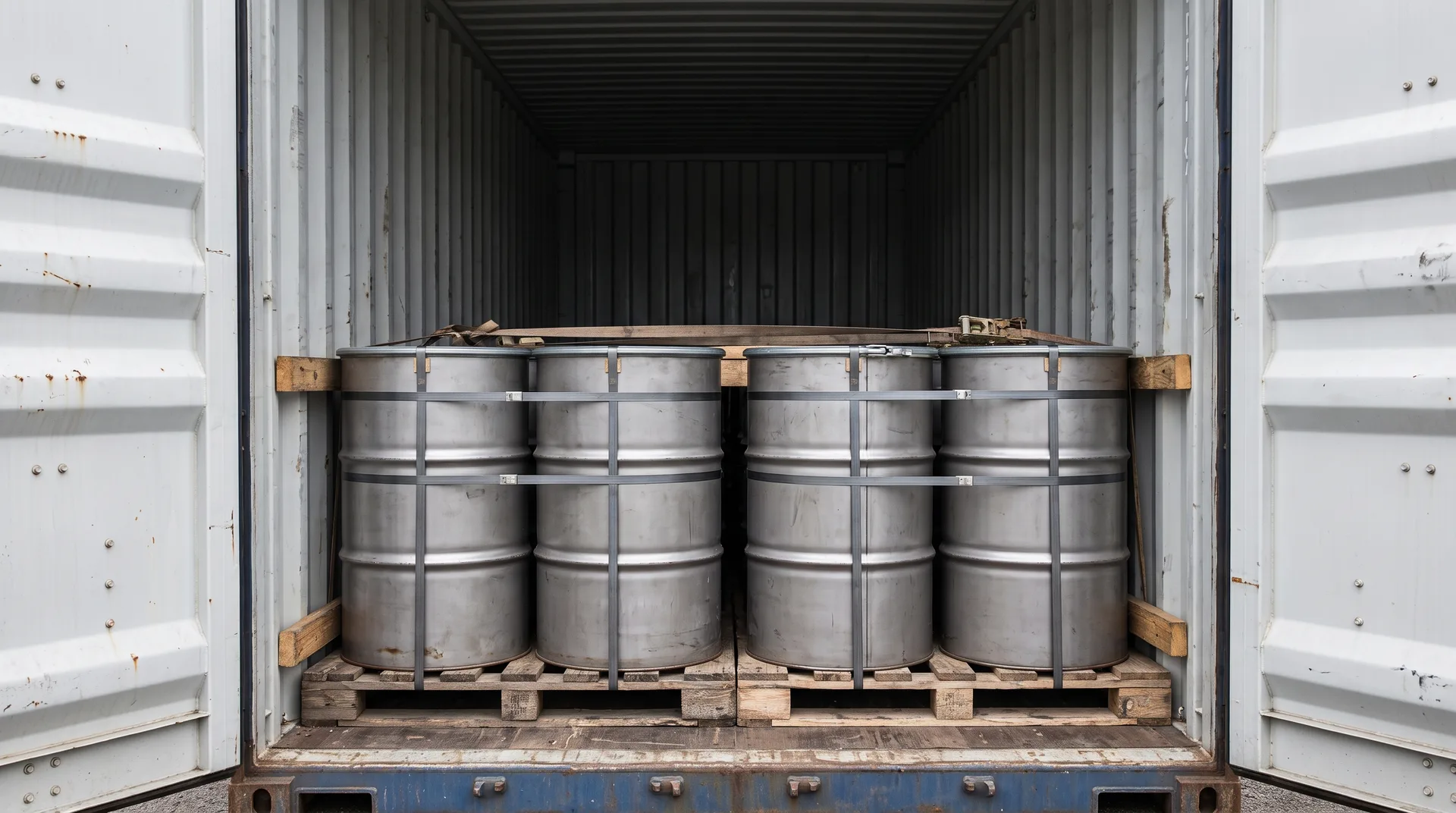
The same data sheet shows what the threshold does when a concentrate crosses it. Section 14 declares the product as UN 2912, "RADIOACTIVE MATERIAL, LOW SPECIFIC ACTIVITY (LSA-I), non fissile or fissile-excepted", transport hazard class 7, packing group "None allocated".
That declaration is not a formality attached at the port. It selects the packaging regime, the documentation, the handling and the carriers willing to take the consignment — which is the part that surprises people meeting this mineral group for the first time. Trade coverage of a recent assessment describes the burden from the other direction, as Class 7 requirements that typically impose "additional packaging, documentation, carrier restrictions and regulatory oversight on materials deemed radioactive".
And why it is not automatic
That report is worth reading precisely because it is the negative case. Mining Weekly reported in February 2026 that Lindian Resources had announced that the Australian Nuclear Science and Technology Organisation had completed a radiological assessment of its Kangankunde monazite concentrate, and that on that assessment the material "would not be classified as radioactive for transport under the International Atomic Energy Agency's SSR-6 framework". The determination itself has not been read here; what is being reported is a news account of it.
Take the two cases together and the general point holds: monazite from one deposit ships as Class 7, monazite from another is assessed as outside the framework, and the deciding factor is a measurement rather than the mineral's name.
The historical shadow of that is worth noting because it is often stated as though it were still current. USGS's 2017 rare-earth chapter records that "Heavy-mineral sands produced in Australia contain significant quantities of REEs; however, monazite has not been produced from heavy-mineral sands operations since the 1990s to avoid the concentration of naturally occurring radioactive minerals". A monazite product data sheet published in 2022 shows one company offering a monazite concentrate as a product at that date — a document for one concentrate, which states nothing about monazite in general and does not say whether the material came from a heavy-mineral-sands operation. This article does not attempt to reconcile the two; they are both accurate about their own dates, and the distance between them is roughly the distance the industry has travelled.
Related
- Export Routes — the corridors a Class 7 consignment can actually use
- Ore Processing — where a monazite stream is separated or rejected
- Regulation — the wider handling and carriage rules that apply
- Global Trade — the classification and terms attached to the same shipment
- Supply Chain Risk — what a narrow set of willing carriers does to a chain
Sources
- PRIMARYIAEA Safety Standards Series No. SSR-6 (Rev.1), Regulations for the Safe Transport of Radioactive Material, 2018 Edition. Paragraph 107(f), the exclusion for natural material and ores containing naturally occurring radionuclides at up to 10 times the values specified in Table 2; Table 2 activity concentration for exempt material for Th-232 and U-238 (1 × 10¹ Bq/g each). Read on the IAEA publication PDF and cross-checked against the copy hosted by the U.S. Department of Energy's RAMPAC.
- PRIMARYRZ Resources, Safety Data Sheet — Monazite, 4 October 2022. Section 14 Transport Information: UN 2912; proper shipping name 'RADIOACTIVE MATERIAL, LOW SPECIFIC ACTIVITY (LSA-I), non fissile or fissile-excepted'; transport hazard class 7; packing group 'None allocated'. Section 3 Composition: 'Thorium Phosphate 14485-31-5 - 4-6%' and 'Uranium Phosphate 18433-48-2 242-306-9 0.3 -0.4%'. A single company's product document for one concentrate, not a general specification.
- PRIMARYPage on the Australian Radiation Protection and Nuclear Safety Agency (ARPANSA) website at the URL below; the retrieved page text carries no title, publisher or date, so the 'Occupational exposure — mineral sand' identification rests on the URL rather than on anything printed in the document. Monazite described as 'a mineral with reasonable thorium concentration (5-7%)'; dry plant separation and the processing, handling and storage of monazite identified as carrying the highest exposure risk, predominantly by the inhalation-of-dust pathway.
- PRIMARYVan Gosen, B.S., Verplanck, P.L., Seal, R.R., II, Long, K.R., and Gambogi, Joseph, 2017, Rare-earth elements, chap. O of Critical mineral resources of the United States: U.S. Geological Survey Professional Paper 1802, p. O1–O31. Statement, scoped to heavy-mineral sands produced in Australia, that monazite has not been produced from heavy-mineral sands operations since the 1990s to avoid the concentration of naturally occurring radioactive minerals. Dated 2017; not a statement about current practice.
- SECONDARYMining Weekly, 'ANSTO ruling gives Lindian transport and cost edge at Kangankunde', 26 February 2026 — a news report of a company announcement that the Australian Nuclear Science and Technology Organisation had completed a radiological assessment of Kangankunde monazite concentrate, that the material would not be classified as radioactive for transport under SSR-6, and describing what Class 7 requirements typically impose. Reported, not read at source; the ANSTO determination itself was not obtained.
- ANALYSISANALYSIS — the framing that the classification is a property of a particular consignment rather than of the mineral, and the observation that a 2017 USGS statement and a 2022 product safety data sheet describe different practice, are this publication's. Note what is NOT claimed: no source consulted here documents a named carrier or port refusing a monazite shipment, and no arithmetic is performed on the Table 2 values.Non-public document · no public URL