Minerals Hub / Innovation & Technology / The robot in the sample preparation room
Innovation & Technology · · 6 min read
The robot in the sample preparation room
The least visible robots in the industry crush, split and pulverise rock before it is assayed — and what they change is not speed so much as the shape of the errors.
Reviewed by Peter Uppal
The short version
Between a drill core and an assay result sits a room where rock is crushed, split and pulverised, and commercial laboratories now run parts of that room robotically. The reason it deserves attention is not throughput: it is that this is where two specific errors enter, contamination from the equipment itself and segregation during splitting, and published work on sampling error puts the preparation stage's own error, expressed as a coefficient of variation, in a range it gives as likely to be 5 to 40 percent for gold ores — material, though smaller than the range for primary sampling. Automating the room changes how those errors behave rather than removing them.
What the machines in the room do
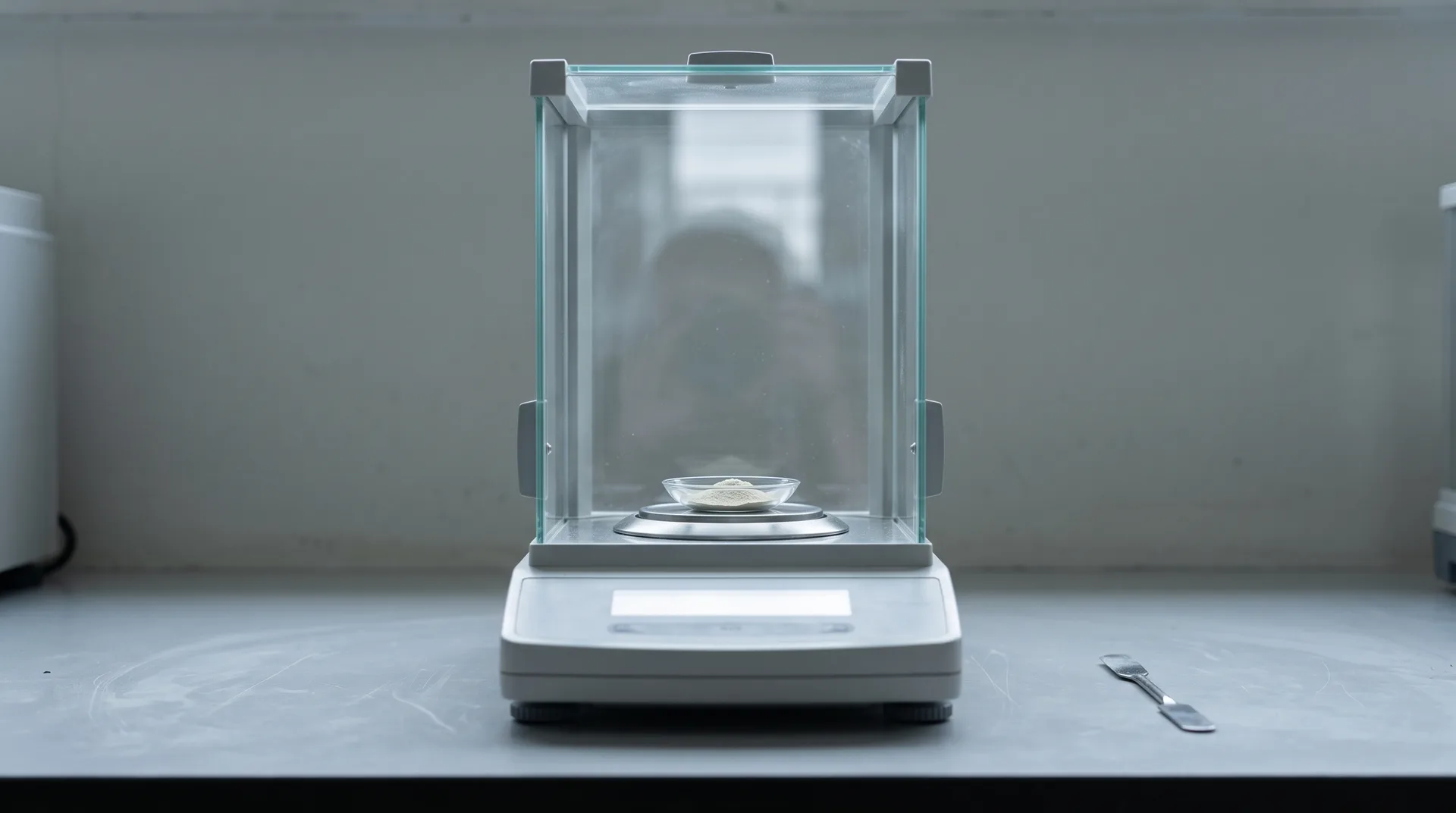
The sequence is unglamorous and precisely specified. A laboratory's own description of its procedures sets it out: fine crushing of material is required for samples that need to be split and pulverised, followed by division of the crushed material and then pulverising to a stated fineness. The splitting is done by defined mechanisms — a rotary splitter involves a vibrating feed chute that delivers crushed material to a divided rotating sample catcher, or alternatively a riffle splitter dividing the sample into two equal portions.
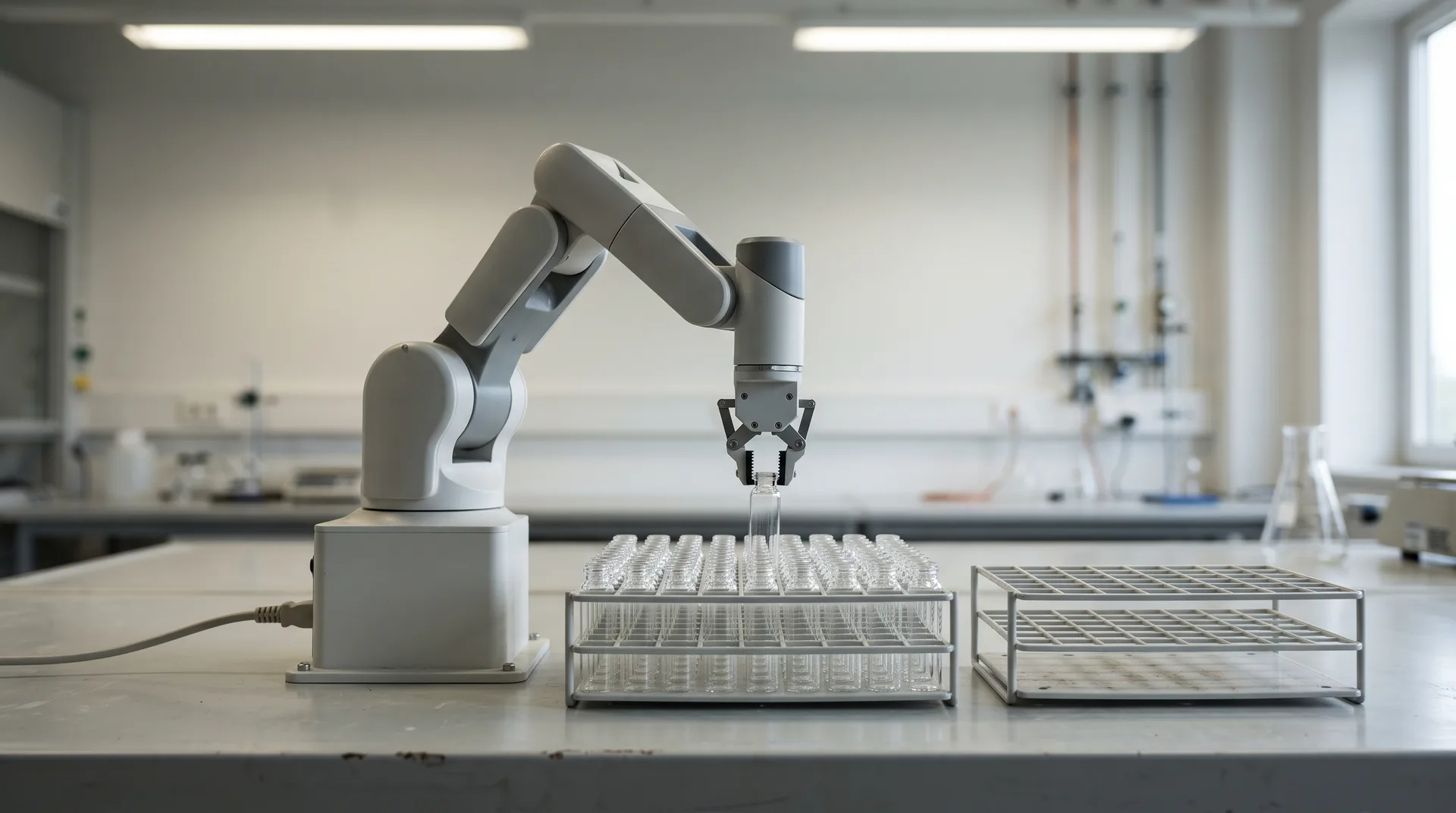
Robots have been brought to this. One commercial laboratory states that it uses in-house designed and built robotic systems for high volume processing of mining and exploration samples, and claims — this is the company's own claim about its own service — that its process controls ensure the analytical results can be trusted. Handling many thousands of nearly identical samples, each requiring the same sequence of weighings and transfers, is close to the ideal case for automation.
The two errors this room adds
The first is contamination, and the frankest statement of it comes from the laboratory rather than from the literature: all crushing and pulverising equipment will impart some elements to a rock sample. Not may. Will. The mitigation is to choose what it imparts: the standard equipment used at ALS preparation laboratories is low Cr-steel, however substitution of bowl material type may be required when specific elements that may be imparted by Cr-steel equipment are of interest, with alternatives including tungsten carbide, agate and zirconium.
That list rewards a moment's thought on a project whose products include zircon. A zirconium-lined bowl solves a chromium problem and would create a far worse one for anyone assaying for zirconium — an observation this publication is making, not one any source states, but it illustrates the general point exactly: the bowl is not neutral equipment, it is a chosen contaminant. A standard reference on assay data quality puts the stakes plainly: contamination of the samples caused by incorrect preparation procedures can completely destroy the integrity of the samples.
The second error is segregation, and here the laboratory's own caution lands directly on this deposit type. Describing the rotary splitter, it warns that samples with nuggety or native metals may not be optimally split this way as the vibration in the chute can segregate heavy minerals. Vibration sorts by density; that is the operating principle of half the equipment in a mineral-sands plant. A splitter whose feed chute vibrates is, for a few seconds, a small gravity concentrator — and any concentration that happens there biases the sub-sample that goes on to be assayed.
A robot's virtue is that it does exactly the same thing to every sample. That is also, precisely, the risk.
How much of the total error this stage carries
It is tempting to conclude that preparation is where accuracy is won or lost. The published figures do not support putting it first.
A study integrating sampling theory into grade control reports that total sampling error (as COV) is likely to be in the range 25-100% for gold ores, with components of 20-90% (sampling), 5-40% (preparation) and 1-25% (analytical) respectively. Those ranges are for gold ores, a notoriously heterogeneous case, and they should not be transferred to a fine-grained heavy-mineral sand without qualification. But the ordering within them is informative: primary sampling in the field dominates, preparation is a material second, and the analysis itself is the smallest term. The same work notes that errors can propagate from sample collection through sample preparation to assay results, which is why a well-run laboratory cannot rescue a badly taken sample.
What automation actually changes
Here is the part that is reasoning rather than citation, and it is offered as such.
An automated line removes the variation that comes from different people doing the same job differently — the pace of feeding, the thoroughness of cleaning between samples, the exact moment a split is taken. That is a reduction in scatter. What it does not do is notice that the procedure it is executing has a flaw. A vibrating chute that segregates heavy minerals will segregate them in the same direction on every sample it processes, and consistency turns that from noise into bias. A bias is harder to find than noise, because it does not announce itself in repeat measurements.
Which is why the quality-control apparatus around the room matters more, not less, once it is automated. The standard instruments are well defined: certified reference materials, described as a substance for which one or more properties are established sufficiently well to calibrate a chemical analyser; blanks, materials of negligibly low grade used to monitor for contamination; field duplicates, another sample taken from the same blast hole cone as the original sample and following exactly the same procedures; and pulp duplicates, second aliquots from the pulverised material. Each is aimed at a different failure. Only the blank finds the bowl. Only the duplicate pair finds the splitter.
The reporting codes assume all of this. The JORC Code's Table 1 asks reporters to describe the nature and quality of sampling and to include reference to measures taken to ensure sample representivity and the appropriate calibration of any measurement tools or systems used. "Systems" is doing quiet work in that sentence. A robotic preparation line is a measurement tool, and it is subject to the same requirement to be shown correct as any instrument that produces a number.
Exploration results and mineralogical estimates only. Orión has no JORC-compliant Mineral Resource or Reserve; maiden MRE and Scoping Study pending.
Sources
- Bureau Veritas Commodities — Sample Preparation
- ALS Global — Individual preparation procedures
- Abzalov, chapter 31, pp. 612-644 of 'Applications and Experiences of Quality Control' — Sampling Errors and Control of Assay Data Quality in Exploration and Mining Geology
- Minerals (MDPI) 9(4) 238, 2019 — Integrating the Theory of Sampling into Underground Mine Grade Control Strategies
- JORC Code 2012
Related reading
- The model that decides which mineral you found picks the sample up where this article puts it down, at the point of analysis.
- Reconciling a mine that makes four products shows what a preparation bias eventually looks like from the far end.
- Automating a mine that keeps moving covers automation where the constraint is the environment rather than the procedure.
- The temperature a robot joint magnet must survive (Applications & Industries · Robotics) treats robots as buyers of these minerals rather than as tools for producing them.
Sources
- SECONDARYBureau Veritas Commodities, 'Sample Preparation' service page (in-house designed and built robotic systems for high volume processing of mining and exploration samples; process control claims). A company's own description of its services.
- SECONDARYALS Global, 'Individual preparation procedures' (fine crushing before splitting and pulverising; rotary splitter with vibrating feed chute; vibration in the chute able to segregate heavy minerals; all crushing and pulverising equipment imparting some elements; low-Cr steel as standard with substitution of bowl material where specific elements are of interest; tungsten carbide, agate and zirconium bowls). A laboratory company's own technical description.
- SECONDARYAbzalov, M., 'Sampling Errors and Control of Assay Data Quality in Exploration and Mining Geology', chapter 31, pp. 612-644 of 'Applications and Experiences of Quality Control'; no publisher, editor or year is printed on the copy consulted (contamination from incorrect preparation procedures destroying sample integrity; definitions of certified reference materials, blanks, field duplicates and pulp duplicates and what each monitors).
- PRIMARYDominy, Glass, O'Connor, Lam and Purevgerel, 'Integrating the Theory of Sampling into Underground Mine Grade Control Strategies: Case Studies from Gold Operations', Minerals (MDPI) 9(4), article 238, 17 April 2019 (total sampling error ranges and the sampling, preparation and analytical components, for gold ores; error propagation; definition of the fundamental sampling error; criticality of QAQC).
- PRIMARYJORC Code 2012, Table 1 Section 1, 'Sampling techniques' criterion (nature and quality of sampling; reference to measures taken to ensure sample representivity and appropriate calibration of measurement tools or systems).
- ANALYSISOur framing: that an automated preparation line removes variation between operators while reproducing any systematic fault faithfully across every sample, and that a zirconium-lined pulverising bowl would be an unhelpful choice on a project assaying for zirconium. No source consulted states either point; both are reasoning from the sourced material.Non-public document · no public URL