Minerals Hub / Companies & Organisations / What a plant keeps buying after the machine arrives
Companies & Organisations · · 4 min read
What a plant keeps buying after the machine arrives
A competition regulator has ruled on what an equipment supplier really sells, and the answer is not the equipment — which explains the shape of the whole supplier relationship.
Pending review
The short version
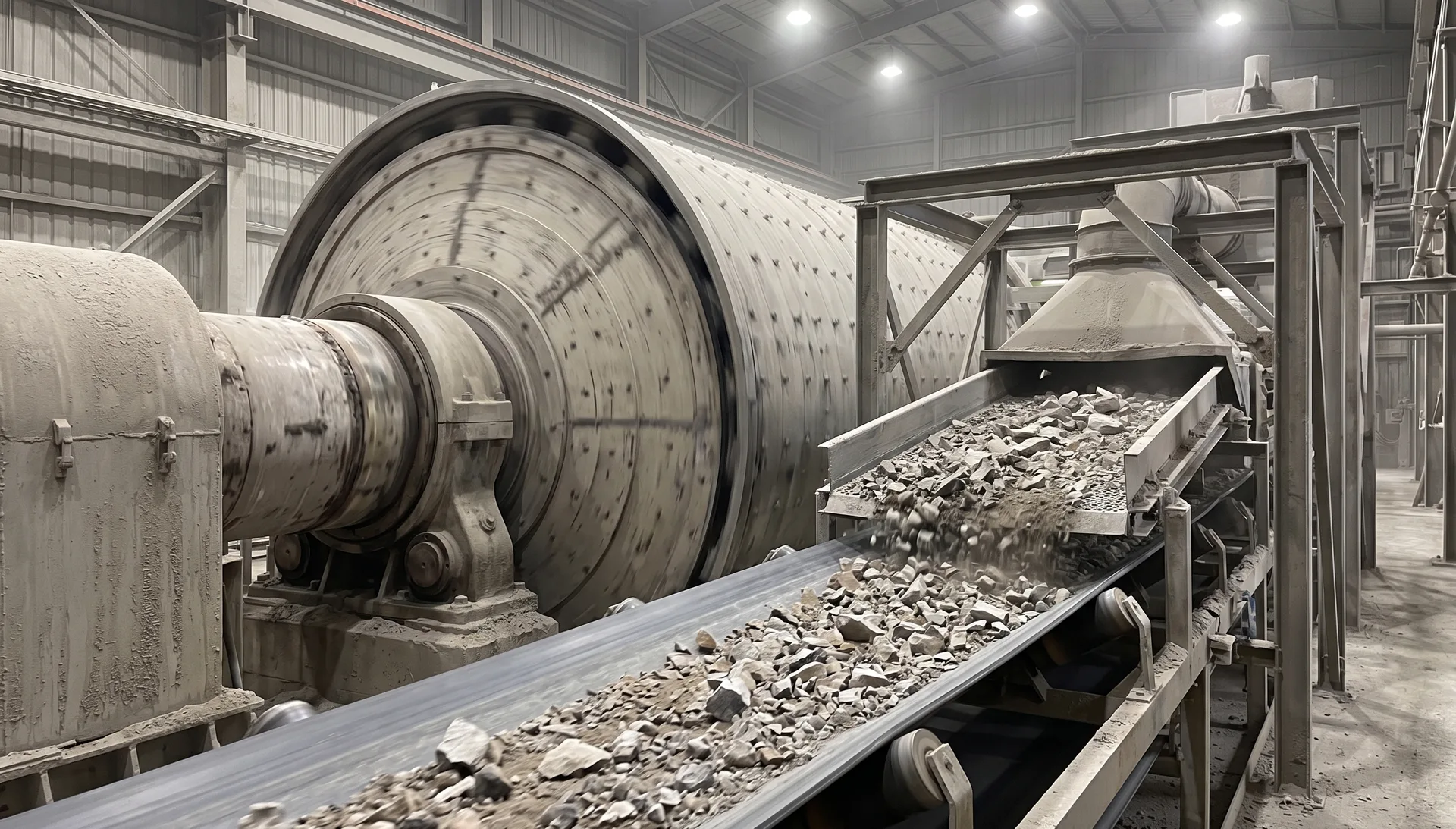
The clearest available statement of what an equipment supplier's business consists of comes not from the industry but from a competition authority. Examining a mining-equipment merger in 2020, the European Commission concluded that the aftermarket for each type of capital equipment it examined — grinding, flotation, filtration and iron ore pelletizing — 'constitutes a separate market from the supply of the respective mining capital equipment'. The machine and everything the machine subsequently needs are, in a regulator's analysis, two different products sold into two different markets — by, usually, the same supplier.
Three things that are not the same
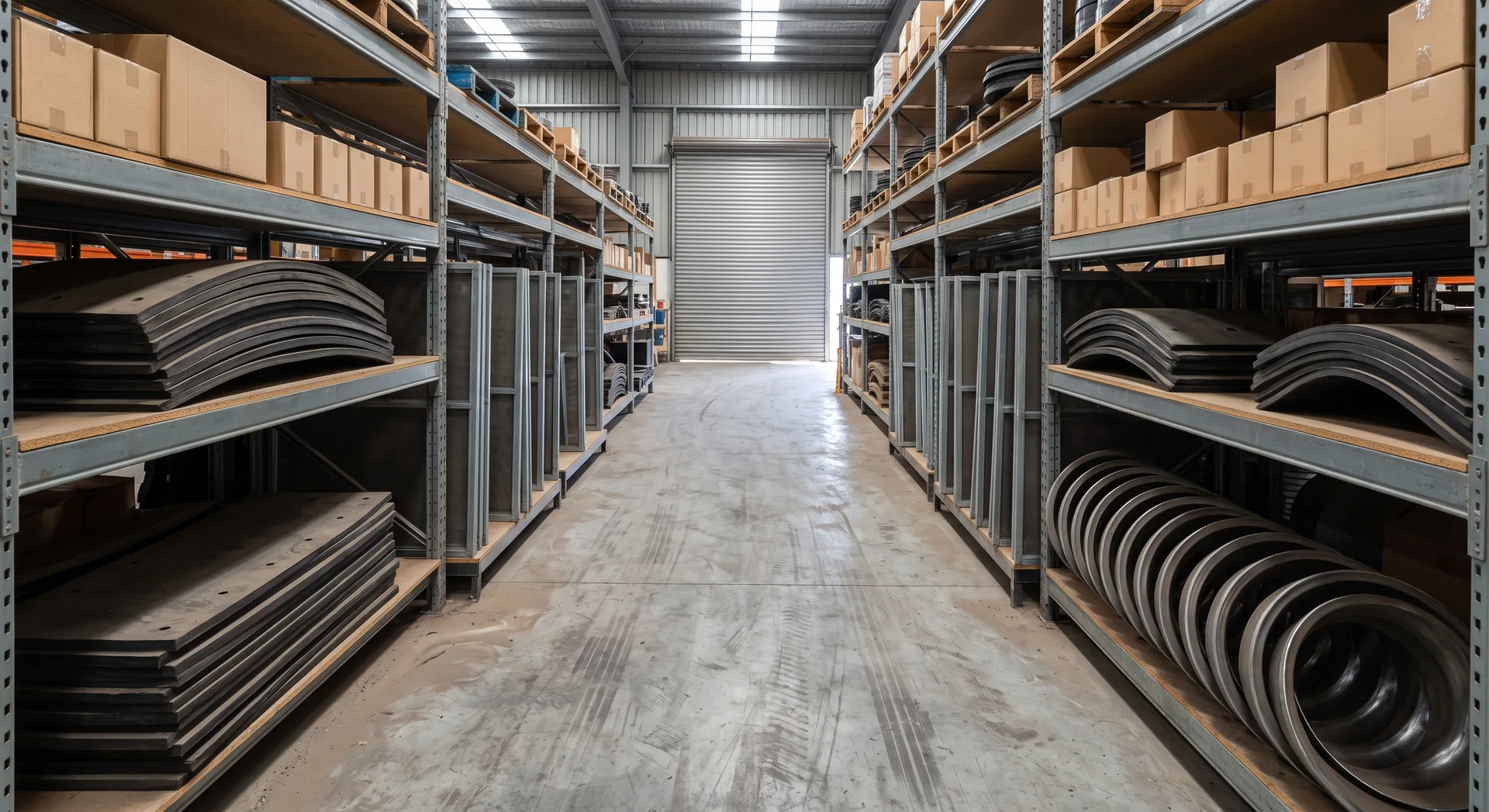
That decision is useful because it defines terms an industry ordinarily uses loosely. Recording the parties' own taxonomy, the Commission set out that the aftermarket comprises spare parts, described as 'worn out/broken components that are not designed to be replaced regularly'; services, meaning 'labour to maintain and/or repair the equipment, including the installation of wear and spare parts'; and wear parts, 'parts that are subject to wear and tear, typically in direct contact with the feed material', designed to be replaced regularly.
The third category is the one that shapes the relationship. A wear part is not a failure; it is a consumable with a design life, and buying the machine is the act of committing to buy them. The Commission's finding that these constitute a separate market rested on evidence: a majority of competitors and customers responding to the market investigation confirmed that aftermarkets are separate from capital equipment supply 'due to limited substitutability in terms of service characteristics, technicians' skills, prices, and timing delivery'.
Why abrasive duty makes this sharper
Wear is a materials problem before it is a commercial one. It is the removal of material by the mechanical action of an abrasive, and whether it happens at all turns on a hardness comparison: one review of the mechanics states that an indenter will scratch a surface only if the hardness ratio Hi/Hw is at least 1.2, with mild and severe regimes distinguished by that same ratio.
Heavy mineral sands are an unhelpful feed by that measure. Quartz — the bulk of the sand a separation plant handles — sits at 7 on the Mohs scale, above feldspar and apatite and below only topaz, sapphire and diamond among the reference minerals. Abrasive wear alone has been estimated to cost 1–4% of the gross national product of industrialized nations, a figure that is economy-wide rather than specific to this industry and is quoted here as such. What share of a mineral-sands operating cost goes to wear parts is not a number this article has; it was looked for and not found.
The purchase is a one-off. The abrasion is continuous. The commercial relationship follows the abrasion, not the purchase.
Mature equipment, narrow expertise
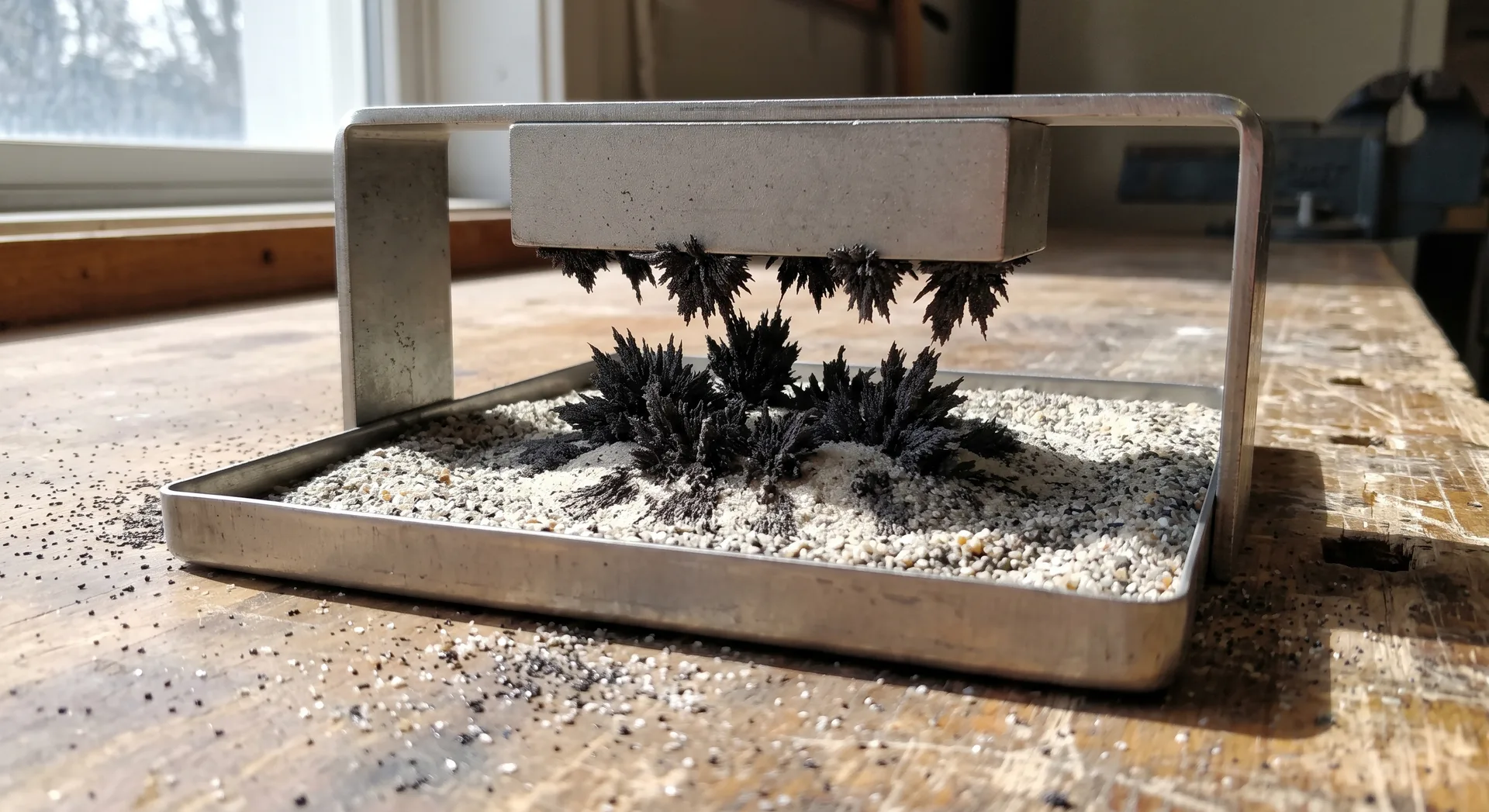
The other structural feature is that the machinery is old. The processing route is unglamorous and long-established. An IAEA report on the zircon and zirconia industries describes heavy mineral sand deposits as typically containing 1–10% heavy minerals, processed by gravity separation to a concentrate containing more than 95% heavy minerals, after which zircon and the other minerals of value 'are separated from the complex mineral mix by magnetic and electrostatic separation processes' — though that report's own scope clause states that the mining of heavy mineral sands and the processes by which the heavy minerals 'are concentrated and separated' are 'not included within the scope of this report, but a brief overview is provided in Annex I', so this is background the report carries rather than the subject it sets out to treat. Gravity, magnetism, electrostatics — three physical properties, exploited by machines whose principles have not changed in a long time. One industry account notes that gravity separation techniques 'have been in use in the mineral sands industry for decades', and a conference paper on the magnetic side that magnetic separation 'has long been used to upgrade and beneficiate a wide variety of industrial minerals'.
Maturity narrows rather than widens the supplier field, because there is no technological churn to let new entrants in. The Commission's investigation found the supply side notably rigid: almost two thirds of suppliers considered that their companies would not be able easily to start offering a specific type of grinding equipment not yet offered, or to switch between different types of grinding mills, and that such a switch would take longer than two years. A buyer's practical choice is therefore narrower than a catalogue suggests.
What this article does not establish
Two absences worth naming rather than papering over. There is no sourced figure here for delivery lead times on major equipment, and none for how concentrated the supplier base is — the decision that would most obviously contain the latter redacts every market share it discusses.
And nothing here describes what a supplier's performance guarantee covers. That term has at least two meanings in official documents, and the one located under that name refers to a corporate parent's undertaking rather than to a plant's guaranteed throughput. Rather than blend them, this article leaves the point open: the guarantee is central to how plant is procured, and its content is not sourced here.
Related
- Technology Providers — the know-how side of the same supplier market
- Processing Technology — the machines themselves, described in their own right
- Ore Processing — the operations these suppliers serve
Sources
- PRIMARYEuropean Commission (DG Competition), Case M.9585 — OUTOTEC / METSO (MINERALS BUSINESS), decision of 13 May 2020 under Article 6(1)(b) of Regulation (EC) No 139/2004. Paragraph 68 sets out the three-way taxonomy of spare parts, services and wear parts; paragraph 76 records that respondents confirmed aftermarkets constitute a separate market from capital equipment; paragraph 80 states the Commission's conclusion; paragraph 57 records supplier responses on switching product lines. Market shares and competitor names are redacted throughout, so the decision yields no concentration figure.
- SECONDARYSwain, B., Bhuyan, S., Behera, R., Mohapatra, S.S., Behera, A., 'Wear: A Serious Problem in Industry', in Tribology in Materials and Manufacturing, IntechOpen, 2020 — 'Abrasive wear alone has been estimated to cost 1–4% of the gross national product of industrialized nations'; and 'Removal of material by the mechanical action of an abrasive is known as abrasive wear.' The cost figure is economy-wide and is not specific to mineral processing.
- SECONDARYPintaude, G., 'Remarks on Wear Transitions Related to Hardness and Size of Abrasive Particles', in Tribology of Machine Elements, IntechOpen, 2021 — an indenter 'will scratch the sheet's surface only if Hi/Hw ≥ 1.2', and the association of mild and severe abrasion regimes with the abrasive/worn-material hardness ratio.
- PRIMARYU.S. Geological Survey, 'Mineral Gemstones' (General Interest Publication) — the Mohs scale as published: 'Talc is 1, Gypsum is 2, Calcite is 3, Fluorite is 4, Apatite is 5, Feldspar is 6, Quartz is 7, Topaz is 8, Sapphire is 9, Diamond is 10'.
- PRIMARYInternational Atomic Energy Agency, Safety Reports Series No. 51, 'Radiation Protection and NORM Residue Management in the Zircon and Zirconia Industries' (IAEA, Vienna, 2007) — 'Heavy mineral sand deposits typically contain 1–10% heavy minerals. These are processed by gravity separation to produce a concentrate containing more than 95% heavy minerals. Zircon, along with other minerals of value, for example ilmenite, rutile and monazite, is separated from the complex mineral mix by magnetic and electrostatic separation processes.' The report's §1.3 scope clause places the mining of heavy mineral sands and the processes by which the heavy minerals 'are concentrated and separated' outside the scope of the report, 'but a brief overview is provided in Annex I'; the section reference is unconfirmed and this passage was not located in §2.2.1, which is headed 'Sources'. Cited for background only.
- SECONDARYWalklate, J.R. and Fourie, P.J., 'A history of gravity separation at Richards Bay Minerals', Journal of the SAIMM, Vol. 106, November 2006, pp. 741–748 (marked a Non-Refereed Paper) — 'Gravity separation techniques have been in use in the mineral sands industry for decades', and the description of wash-water spigots along the inside edge of a spiral.
- SECONDARYDobbins, M., Domenico, J., Dunn, P., 'A discussion of magnetic separation techniques for concentrating ilmenite and chromite ores', 6th International Heavy Minerals Conference, SAIMM, 2007, pp. 197–203 — 'Magnetic separation has long been used to upgrade and beneficiate a wide variety of industrial minerals', and the enumeration of wet high-intensity and dry high-intensity separator types used in mineral sands processing.
- UNVERIFIEDGAP — no official, peer-reviewed or regulatory figure for lead times on major mineral processing equipment was obtained, and no sourced measure of supplier-base concentration. The obvious primary document, the Commission's merger decision, redacts every market share and competitor name.Non-public document · no public URL
- UNVERIFIEDGAP — no source was obtained defining a performance guarantee in the process-plant sense (guaranteed throughput, recovery or product quality demonstrated at a performance test). The one official document located under that name defines a corporate parent guarantee, a different instrument. No claim about what a supplier guarantees is made in this article.Non-public document · no public URL
- UNVERIFIEDGAP — no figure was obtained for wear parts or liners as a share of total mine-site operating cost. Cost splits located in the literature are shares of comminution cost, not of site cost, and are not generalised here.Non-public document · no public URL